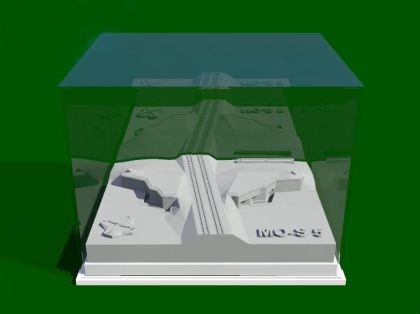
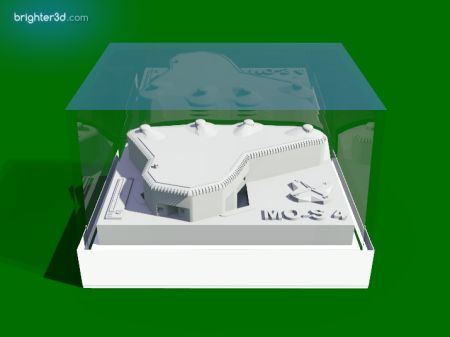
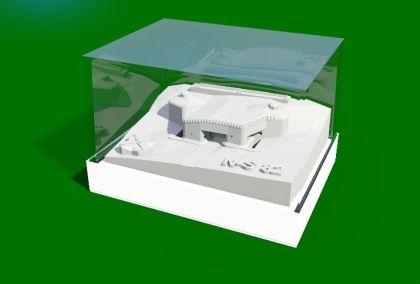
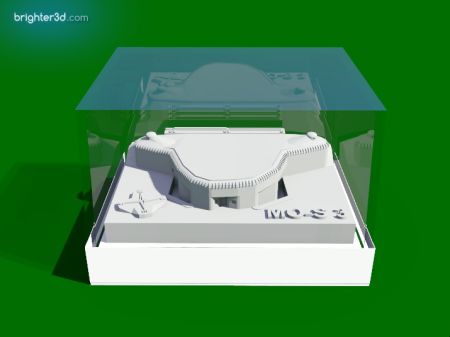
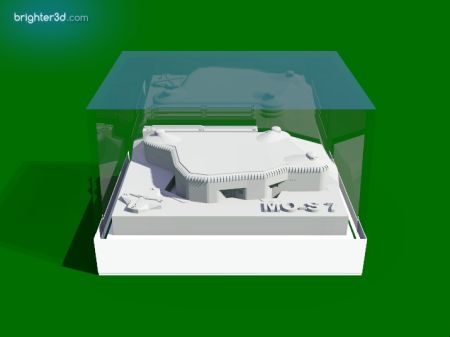
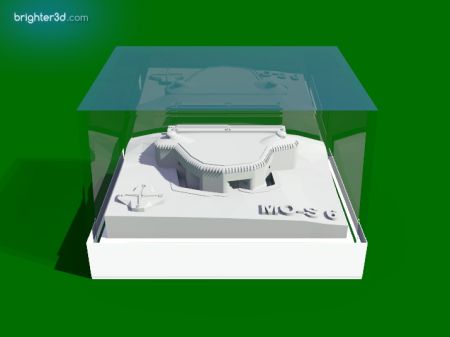
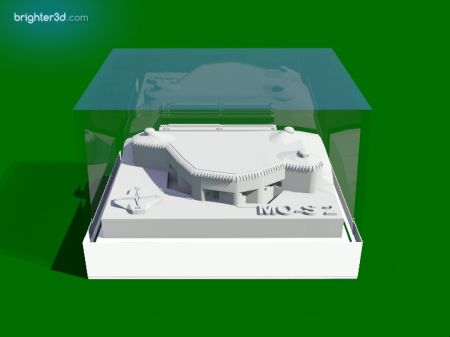
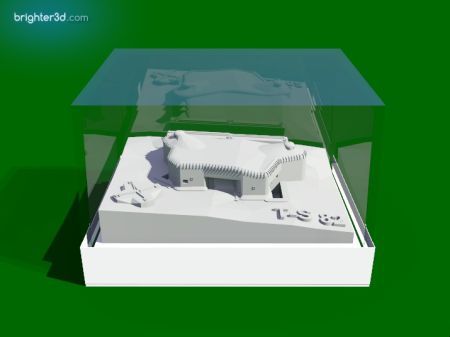
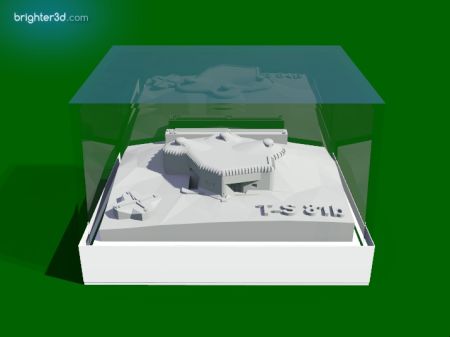
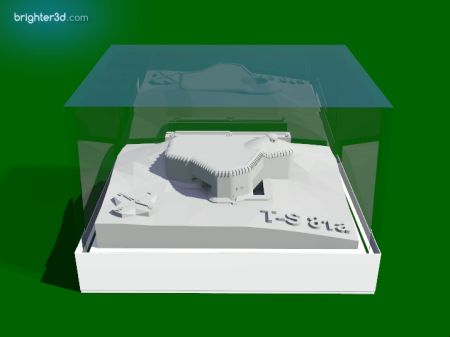
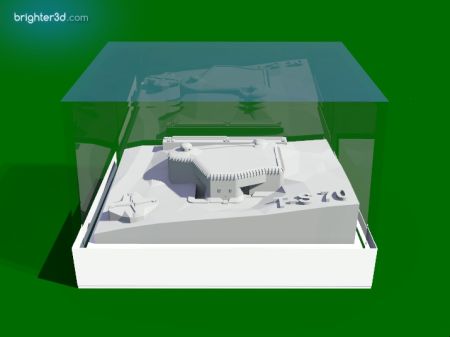
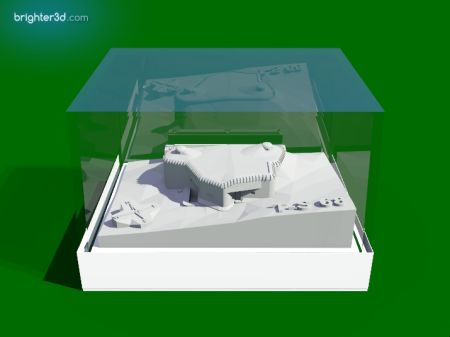
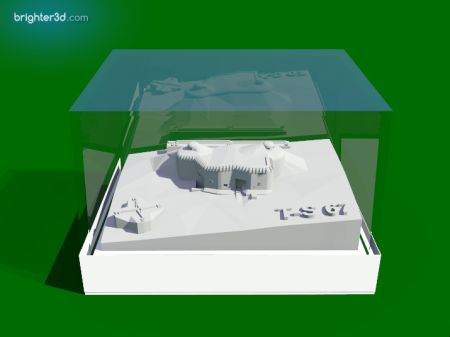
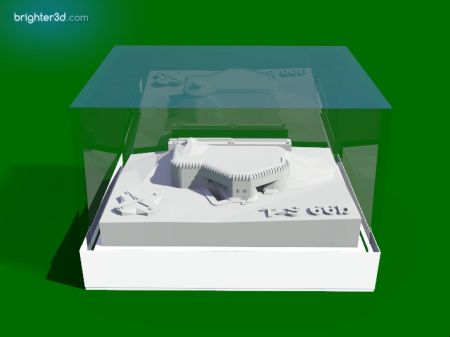
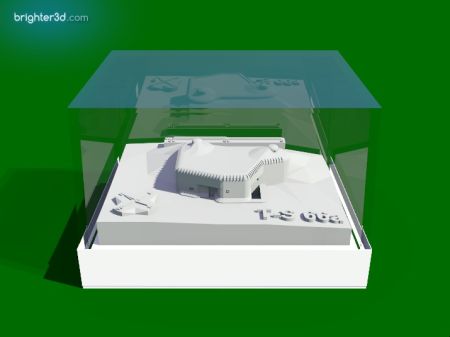
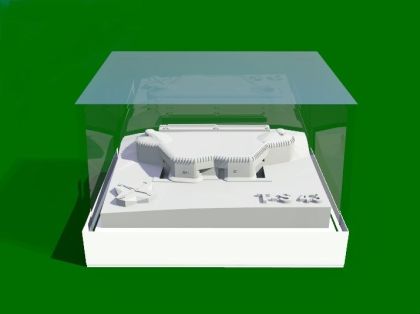
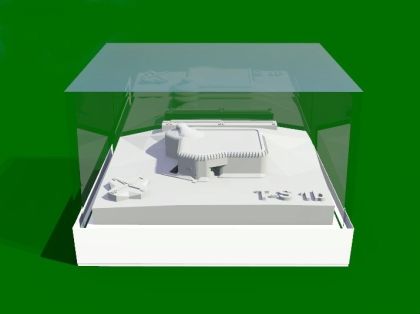
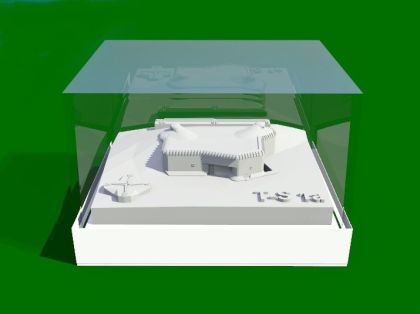
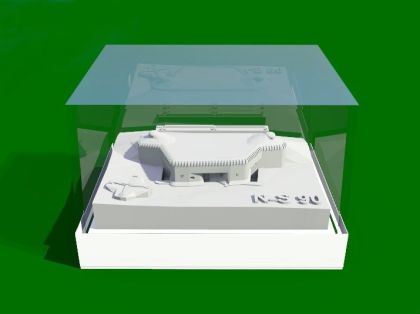
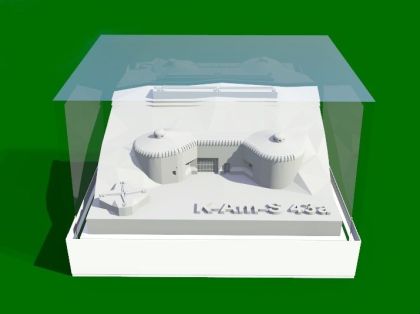
Collecting fortification by the sector rather than by the building is what 1:1000 is for. Each casting reproduces a named object of the Czechoslovak border line, heavy casemates and light pillboxes alike, carrying the cover name and serial number it was known by, and the result sits on a base about the size of a jam-jar lid. Line a dozen of them up and you can see how the objects along a line repeat and where they differ, which makes the series as much a typological reference as a collection.
Nothing is assembled at this size and nothing is pre-painted. Loopholes and rivets are beside the point; what counts is silhouette and footprint, so the whole result comes from a clean base coat and restrained shading.
Fortification was never designed as single buildings but as interlocking fields of fire, and 1:1000 is the only scale in which that idea fits on a shelf. An object becomes a thumbnail-sized block of concrete, correct in plan and silhouette, and once you have several of them the logic of a defensive line becomes visible in a way no single large model shows. The scale is given over to the heavy infantry casemates, each listed under the cover name it carried on the line; the light pillboxes are offered in the larger scales instead.
There is no assembly to speak of, so everything rests on the finish. Prime, lay a pale neutral concrete tone, then knock it back with a thin dark wash that settles into the embrasures and the joint between concrete and ground. Keep contrast low: at this size, heavy shading reads as dirt rather than as shape. Matt model paints thinned well are easier to control here than any weathering product.
One 1:1000 casting looks like an offcut; six of them on a common base look like a line of defence. Think about the group from the start and keep the ground treatment identical across all of them, with a single weathering approach so nothing stands out.
If a jar-lid base is too small to satisfy, the next step up is 1:144, which keeps several objects on one base while giving you loopholes you can actually see. A single object treated as a display piece belongs in 1:72.
Pieces this small need a frame to be read as models at all. A shallow wooden plinth from the display bases section, with the ground textured and the objects set into it, turns a handful of castings into a map. Label each one; the cover names and numbers are half the interest, and they are what makes a row of grey blocks legible.
The full span of pillboxes, casemates and obstacles is in the fortification models section.