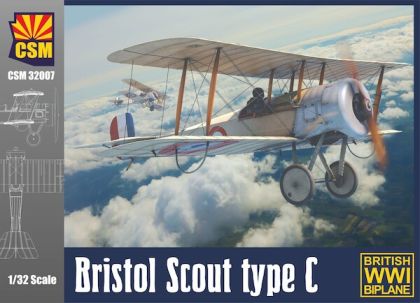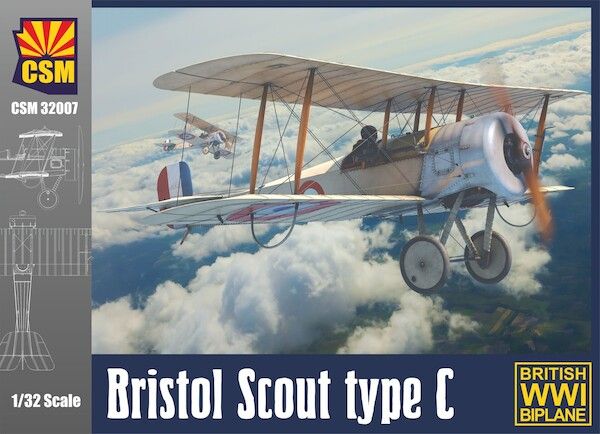
Bristol Scout (type C) in 1:32 scale from Copper State Models, an injection-molded plastic kit of the British single-seat biplane of the First World War, supplemented with photo-etch and decals for several machines.
Responsibility details are not available.
Injection-molded plastic kit of the British single-seat Bristol Scout type C biplane in the large 1:32 scale from the specialist manufacturer Copper State Models, which has long devoted itself exclusively to aircraft and equipment of the First World War. The kit is made up of injection-molded plastic with a finely rendered surface, supplemented by photo-etched parts, clear film for the screen in front of the pilot and decals for several markings. Thanks to the 1:32 scale the finished model is pleasantly large but still fits a display case: the span works out at about 23 cm and the length at roughly 20 cm.
The Bristol Scout was one of the scouts, the fast single-seat reconnaissance machines out of which real fighter aircraft only developed during the war. It appeared before the war and became famous for its agility and pleasant handling. It flew with the Royal Flying Corps and with the Royal Naval Air Service, at first unarmed, for reconnaissance. At the time it was in service no working synchronized machine gun existed that could fire through the propeller disc, so pilots fitted armament improvised. The best-known example is Lanoe Hawker, who had a Lewis gun mounted at an angle beside the cockpit of his Bristol Scout C so that the bullets missed the propeller, and with the machine armed in that way he earned the Victoria Cross in 1915. It is one of the most interesting periods of aviation, when fighter tactics were still being invented.
Building a First World War biplane stands and falls with the rigging: without it the model looks unfinished, and with it the effect is breathtaking. Allow for it being the most demanding and the longest part of the build: the kit does have the attachment points marked, but the tensioning itself is patient work by hand. It is therefore not a kit for complete beginners. Glue the plastic with liquid modeling cement and the photo-etch with cyanoacrylate glue. It is recommended to work in subassemblies: the cockpit and the fuselage interior, then the fuselage, the engine and only at the end the lower and upper wings; think the order through before you close the fuselage, so that the places the rigging runs through stay accessible. Paint ideally with an airbrush over primer; period fabric covering takes gentle emphasis of the ribs and restrained weathering.
The model is supplied unassembled and unpainted. Glue, paints and accessories are not included in the package, unless stated otherwise.
Naši poradci a znalci sortimentu jsou připraveni odpovídat na Vaše dotazy (Po–Pá, 8–18 hod).
Zeptejte se na co potřebujete, odpovíme co nejdříve.
Texts from customers in the advice section reflect solely the opinions and views of the customers. MNF trade s.r.o. does not approve or verify customer texts in advance.
There are no questions here yet. Be the first to ask!