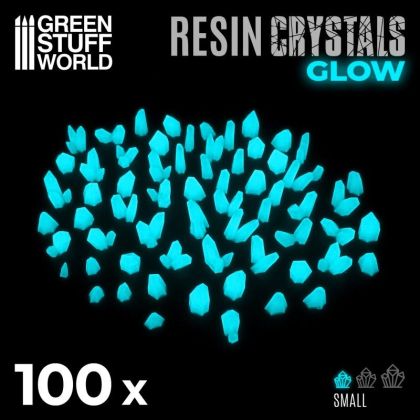
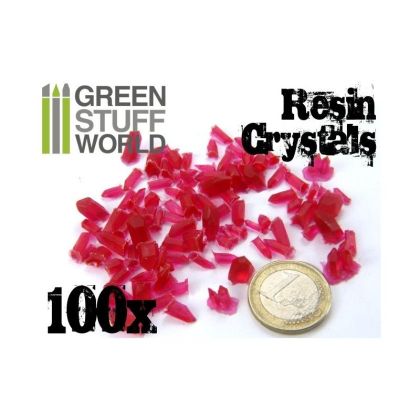
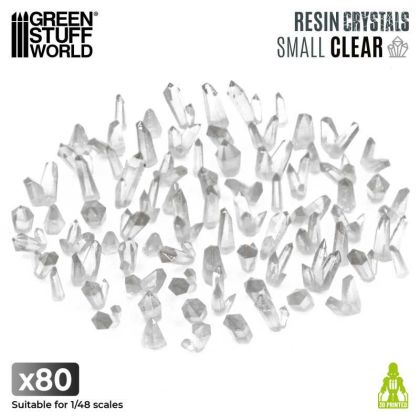
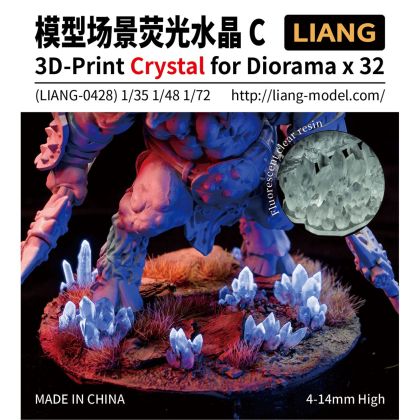
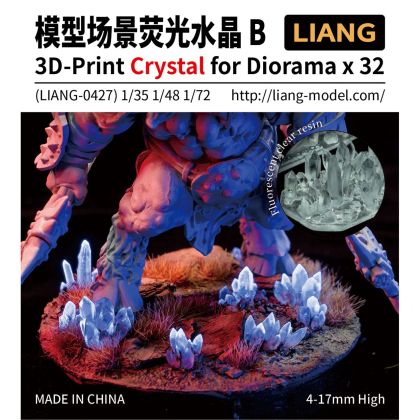
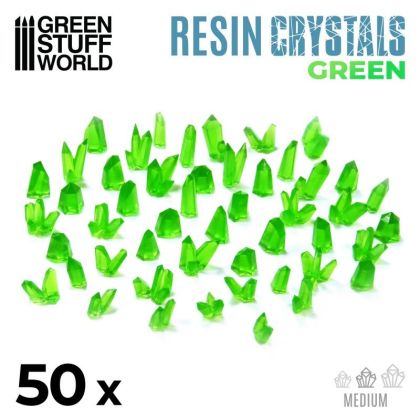
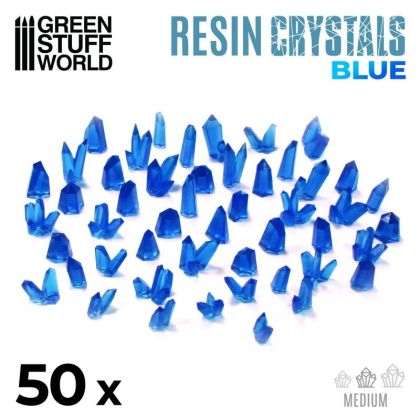
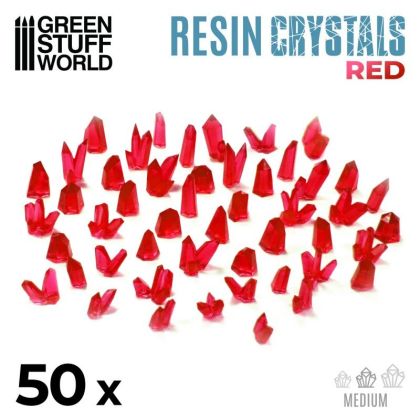
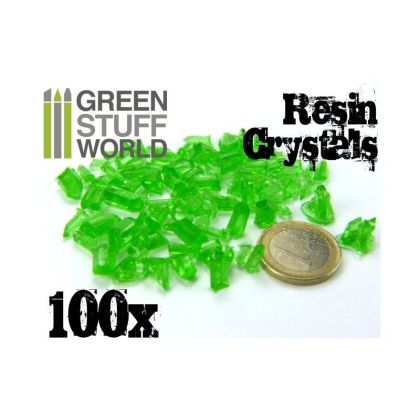
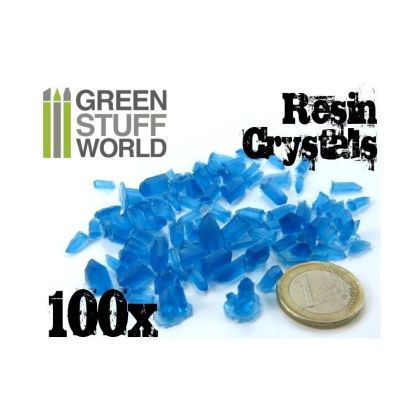
Crystals for dioramas are small translucent castings and 3D prints that stand in for mineral formations, ice, magical energy or alien growth on a base. There are clear resin crystals and coloured ones in several sizes - red, blue, green and a glowing turquoise - along with printed crystal clusters for scales from 1:72 to 1:35. They are used mainly on fantasy and science-fiction bases, but they earn a place in a cave or winter scene too.
How to group and light them is explained further down the page.
A crystal is the dominant feature of a base, the thing the whole composition turns around. It brings a colour no other scenic material offers, and because it is translucent it changes appearance depending on where the light falls. The usual settings are the bases of gaming and collector figures, cave scenes, and subjects built around a mineral vein or a worked quarry. On a winter scene it stands in for ice and icicles; in a science-fiction setting for an energy core or an unknown formation.
A single crystal on its own looks like a mislaid part. Real crystalline formations grow in clusters: one large, two medium and several small ones at the foot, each leaning at a slightly different angle. That arrangement always works and can be built from one pack.
The worst thing you can do is paint a crystal over with opaque colour. To change the shade, use a clear glaze or a tinted gloss varnish and apply it very thinly. Darken the lower part and leave the tip lightest - that creates the impression of light passing through the material.
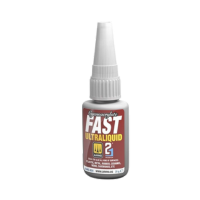
Crystals are fixed with cyanoacrylate and the foot is then disguised with fine rubble, sand or modelling compound so no join shows between casting and terrain. That detail is what decides whether a crystal grows out of the base or merely stands on it.
A crystal works best where it is the single colour accent in an otherwise restrained scene. Keep the surrounding surface muted and choose the rest of the materials from scenic accessories.