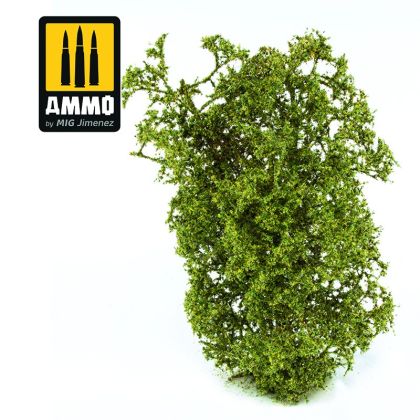
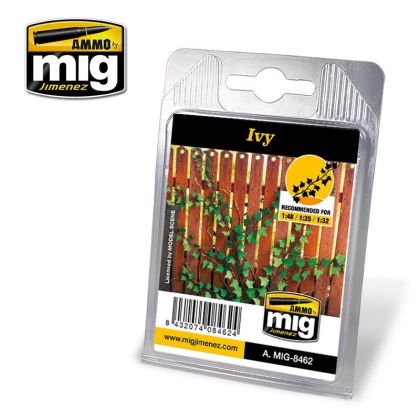
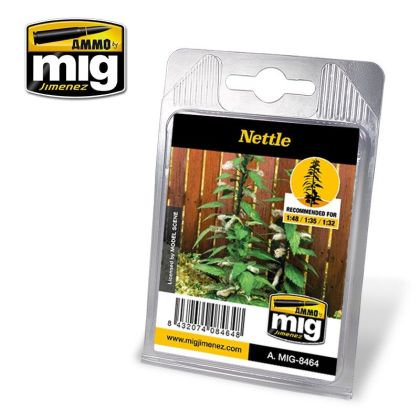
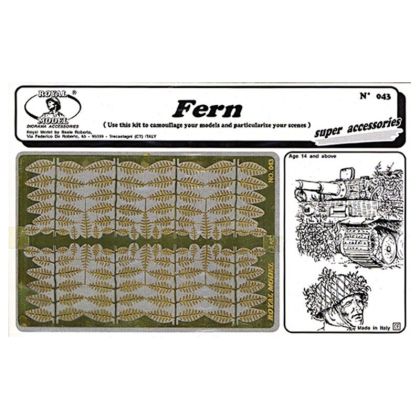
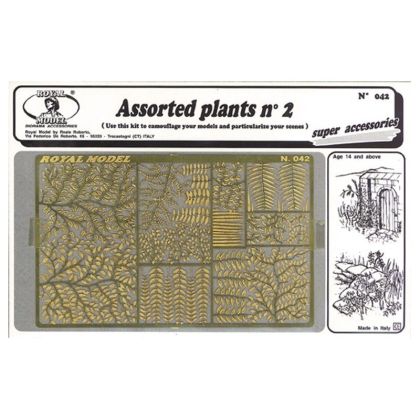
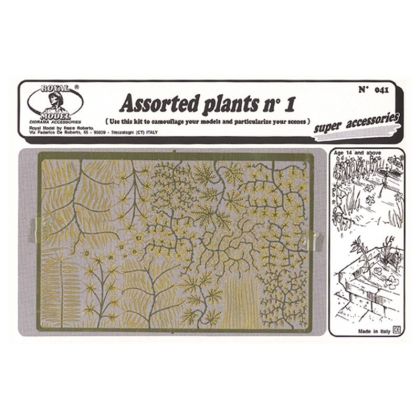
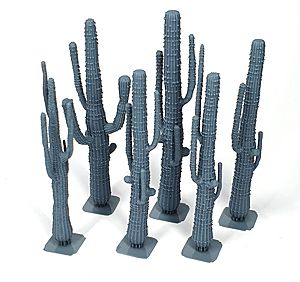
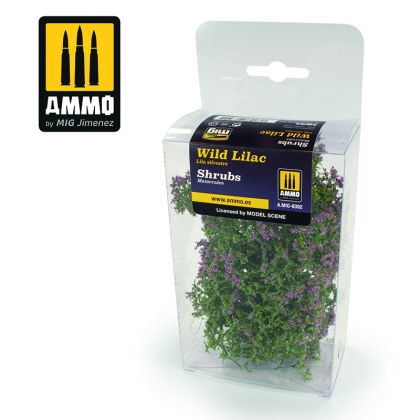
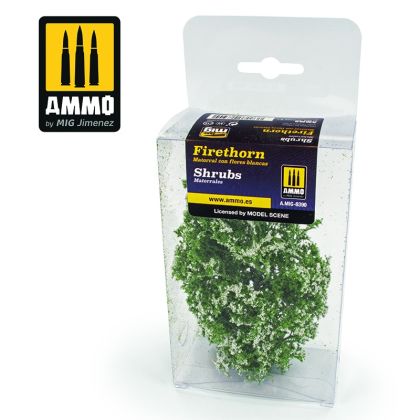
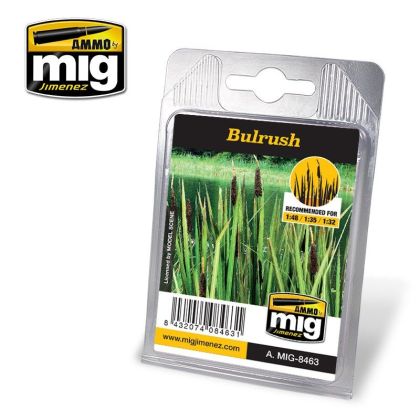
Model vegetation covers the bold individual plants that hold a place of their own on a scene: bamboo groves, ferns, maize, cacti, rushes, nettles, ready-made flowering shrubs and a long list of natural mosses and lichens in shades from ochre to dark green. The materials are resin, 3D print, dried plant matter and fine fibre.
Read on for how to seat a bold plant so that it grows out of the ground instead of looking stuck onto it.
Most greenery on a diorama is there to fill area. This group does the opposite: every item is an element the viewer notices and remembers. Bamboo says the scene is in Asia. A cactus moves it into semi-desert. Maize says late summer. Moss and lichen on stone talk about damp and shade. That is why these are chosen one piece at a time and placed deliberately - two such plants on a scene work, ten of them make a botanical garden.
Greenery works best where it would genuinely grow: in a crack in a wall, in a sheltered damp spot, by water, out of the wind. A plant standing in the middle of open ground looks applied, because it has no context. One clump in the corner of a wall gives a scene more than five spread across the middle.
Cast and printed plants are first washed in warm water with detergent to remove mould residue, then the sprue stubs come off and the surface is primed. Without primer, acrylic holds very poorly on smooth resin and rubs away as soon as the piece is handled.
Natural mosses and lichens are used two ways. Whole pieces make scrub and low growth in the smaller scales; torn up fine, they serve as undergrowth and as growth on stone. The material is naturally springy but goes brittle in dry air, so it is worth steaming it lightly before use and fixing it with thinned glue once placed.
One well-seated plant stays in the memory longer than dense cover. Choose the subject of the scene, add a single strong piece of greenery to it, and leave the rest of the area to materials from scenic accessories.