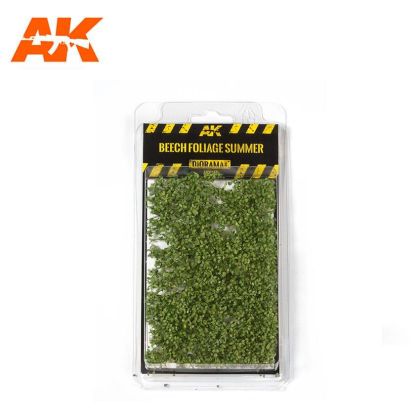
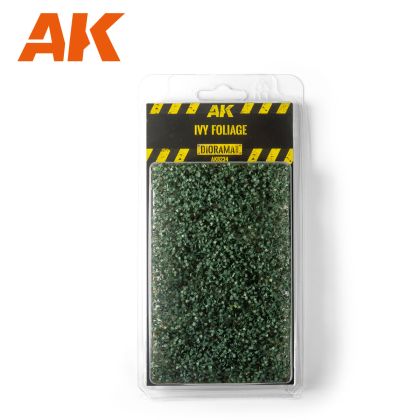
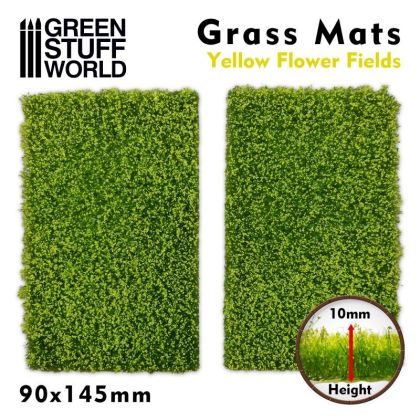
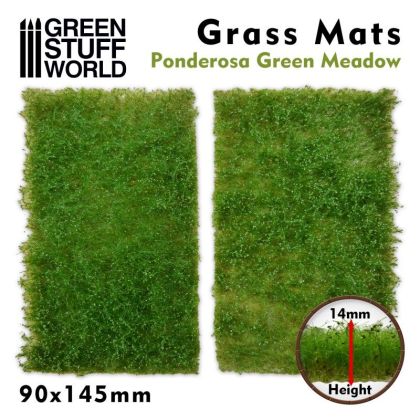
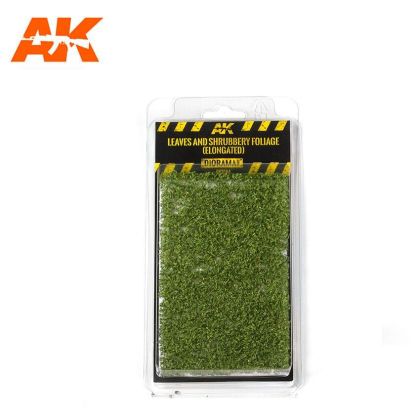
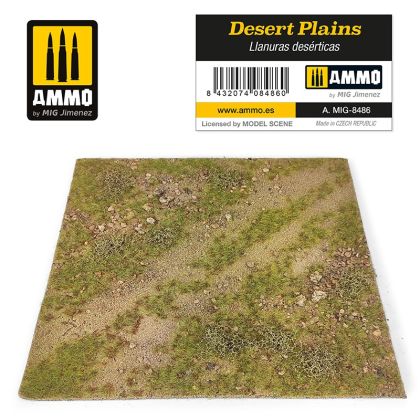
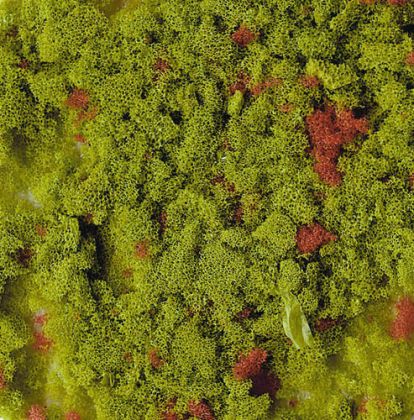
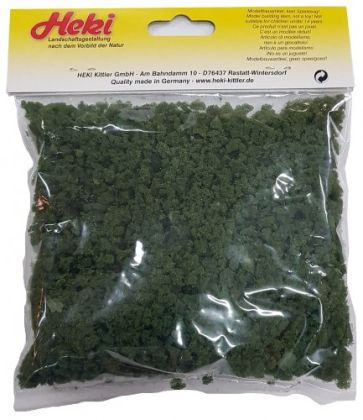
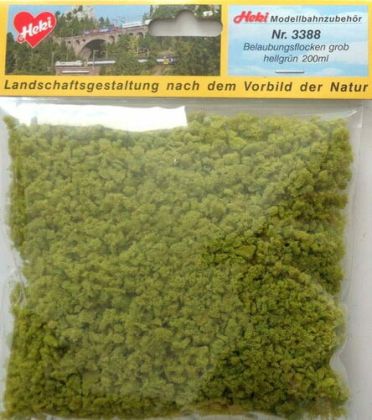
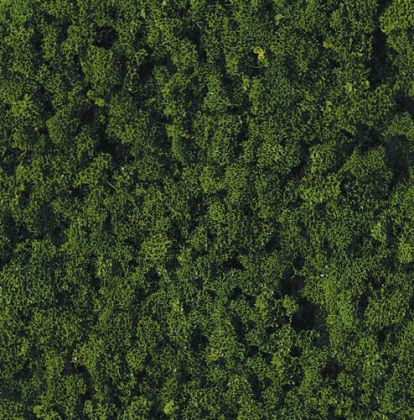
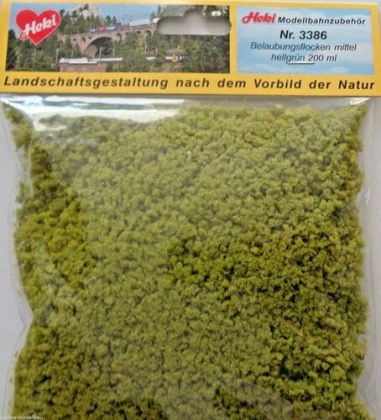
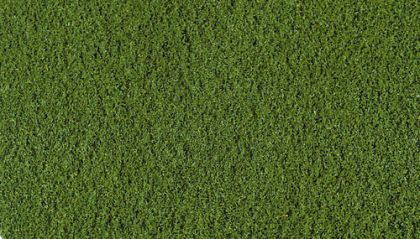
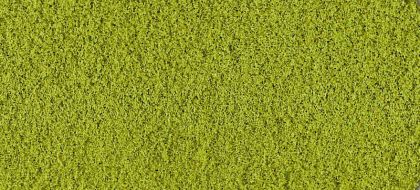
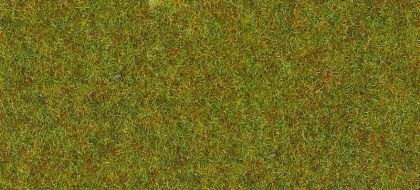
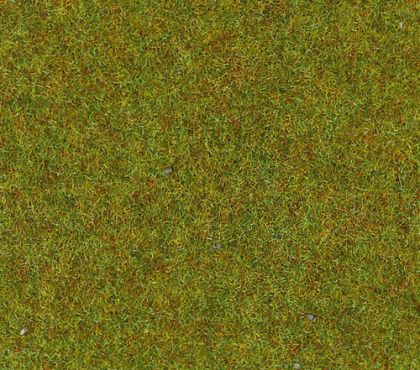
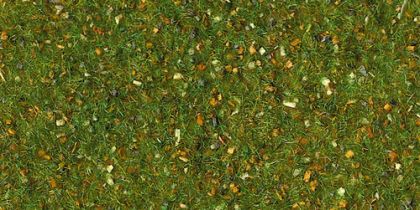
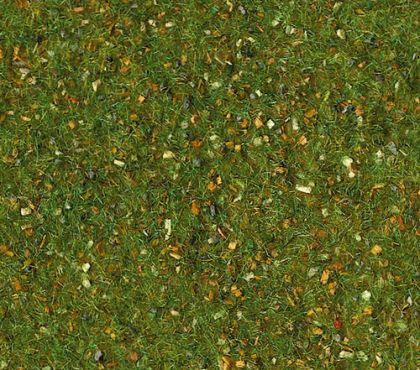
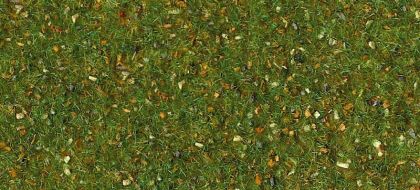
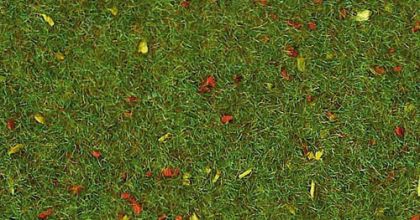
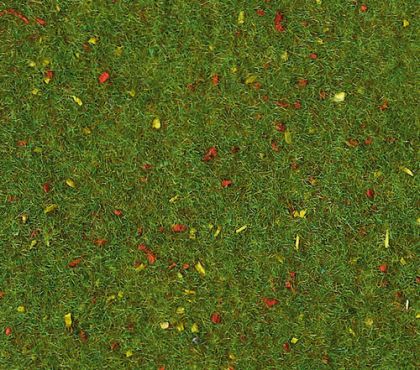
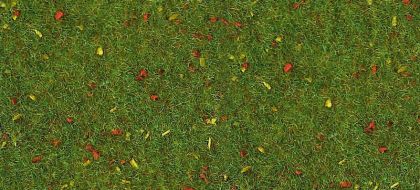
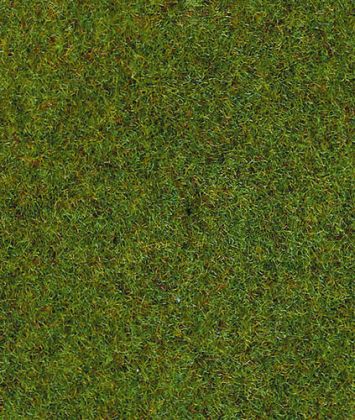
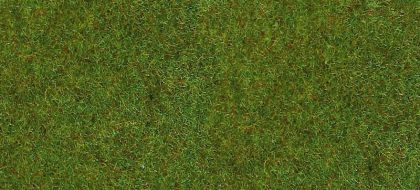
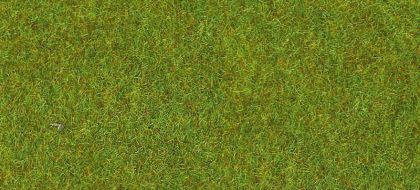
Grass foliage covers large areas of greenery quickly and without an electrostatic tool. The group holds coarse and fine flocking grasses in two-hundred-millilitre containers, larger foam granulates, and above all grass matting in rolls from 75 by 100 cm up to 100 by 300 cm, in dark and light green, autumn, forest floor and flowering meadow finishes.
When matting makes sense, and how to lay it so nobody can tell it is matting, is set out further down the page.
Grass foliage is scattered or sheet material that covers an area. It does not stand fibres upright the way static grass does, and it does not work piece by piece the way tufts do - its strength is sheer coverage. Flocking grasses are scattered onto glue in any thickness, foam granulates make coarser growth and low scrub, and matting is cut to shape and laid in one piece. That is why foliage is used as the base layer: greenery covers the terrain first, and the detail is added afterwards.
Cut matting laid down in one piece is obvious at a glance, because it has a regular structure and a factory colour. Tear irregular holes in it, pack soil underneath them and pull the edges out. Then scatter a second shade of flock over the mat and add tufts - the result stops looking like carpet.
Fine flock is grass and moss; coarse flock and larger foam granulates are low scrub, undergrowth and the crowns of small plants. Do not confuse them: granulate on a flat meadow looks like spilled upholstery foam, while fine flock on a bush simply disappears.
Scatter onto thin PVA spread across the area, not onto a blob. Mix two or three shades and scatter in several passes with gaps between them - factory green is always a step stronger than real growth, and intermediate layers knock it back.
Foliage is a sound base but it will not make a scene on its own. Once the area is covered, add height, dust and unevenness - the rest of the materials are in the scenic accessories overview.