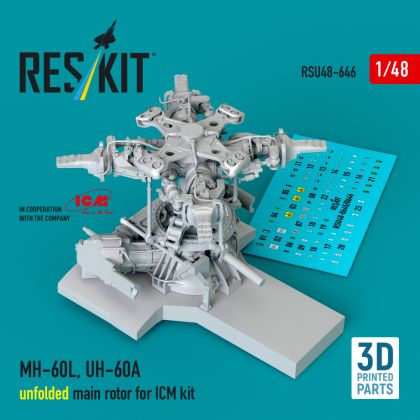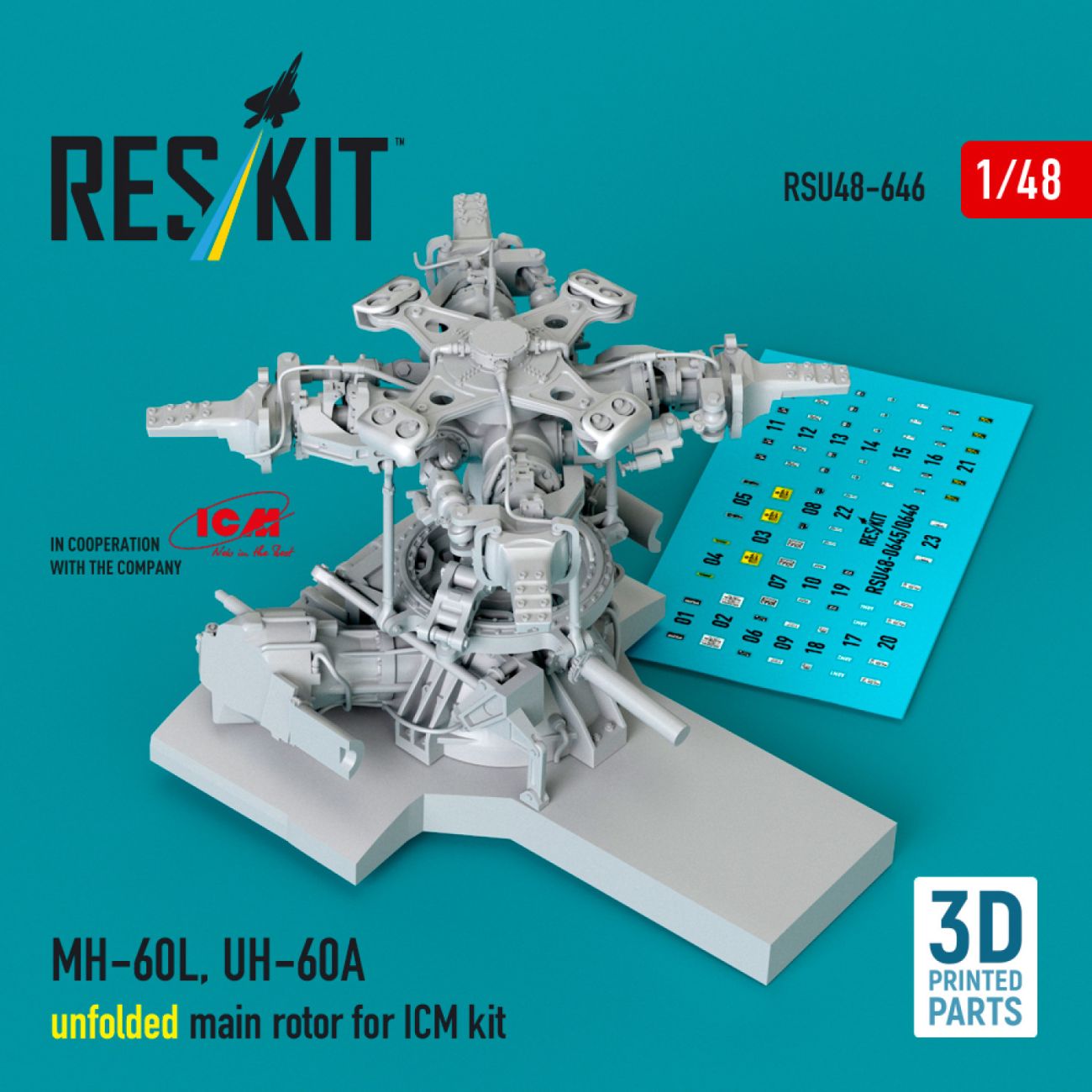
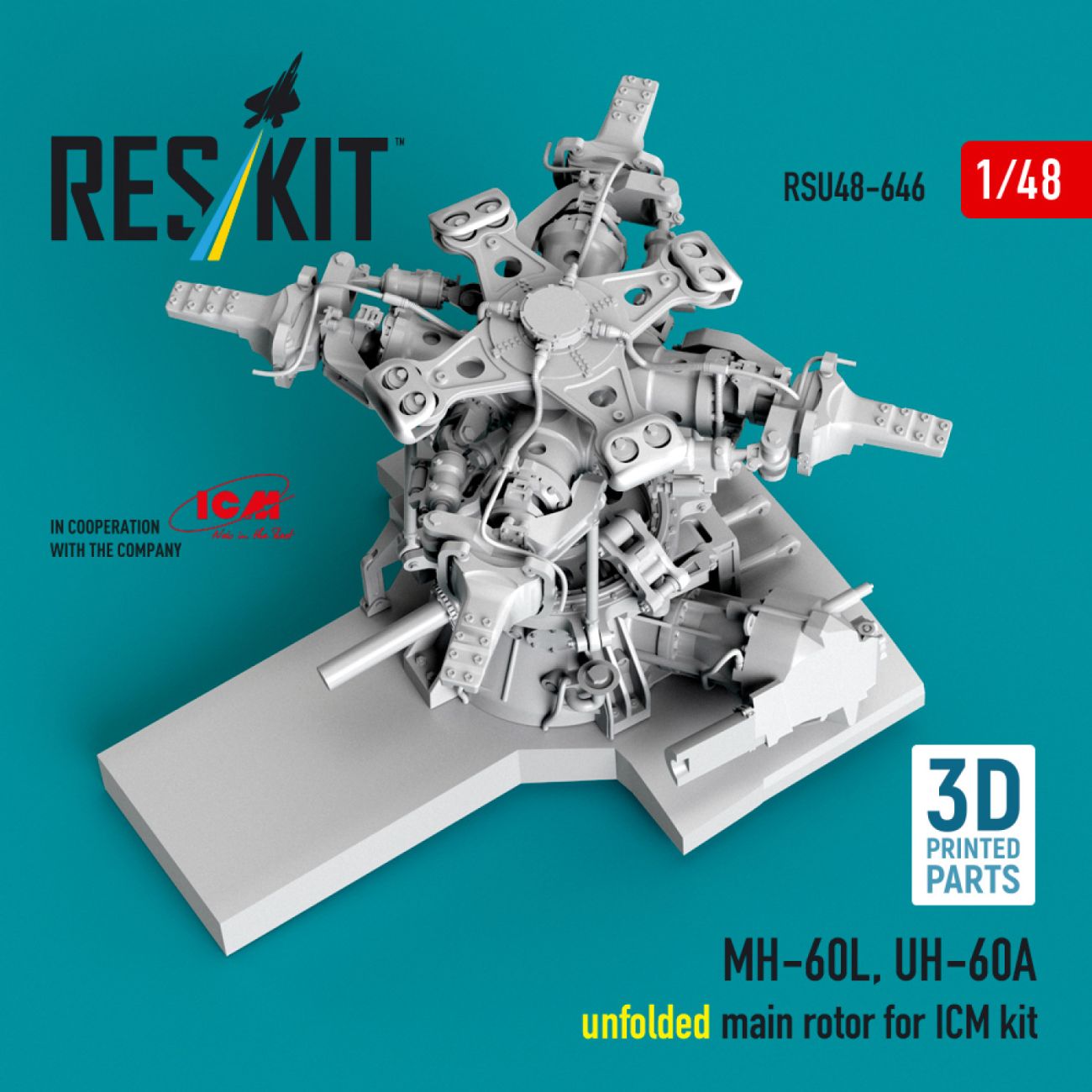
A four-blade main rotor in the unfolded, that is, flight position. A resin replacement with a detailed head and with blades that have the correct profile and droop. Intended for the ICM model.
Responsibility details are not available.
The rotor system of this helicopter was, in its day, a step aside from established solutions. The titanium head carries the blades in elastomeric bearings, that is, in flexible blocks that twist instead of turning. That did away with lubrication and with most of the checks on which ground crews used to spend hours. The blades themselves have a titanium spar, a honeycomb core and a leading edge protected against sand erosion, so they stand up even to hard service in the desert. The blade tip is swept back and down, which reduces noise and raises efficiency at higher speeds.
An injection-molded blade tends, because of the mold, to be straight and of the same thickness along its whole length. A real blade tapers toward the tip, changes profile and, standing still on the ground, drops noticeably under its own weight. The casting holds all of this, including the fine control rods and the vibration dampers under the head, of which there are unexpectedly many.
The blades are glued into the head one at a time and it is a good idea to line up their height above the plane in advance; an unevenly seated rotor spoils the impression of the whole machine more than missing small details on the fuselage. Painting is easier if the blades are sprayed before they are glued into the head, while you can still turn them in your fingers and reach the lower surface at the root.
Naši poradci a znalci sortimentu jsou připraveni odpovídat na Vaše dotazy (Po–Pá, 8–18 hod).
Zeptejte se na co potřebujete, odpovíme co nejdříve.
Texts from customers in the advice section reflect solely the opinions and views of the customers. MNF trade s.r.o. does not approve or verify customer texts in advance.
There are no questions here yet. Be the first to ask!