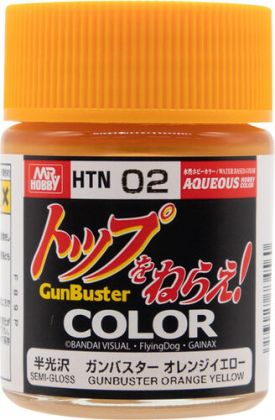
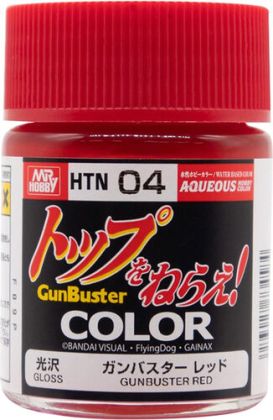
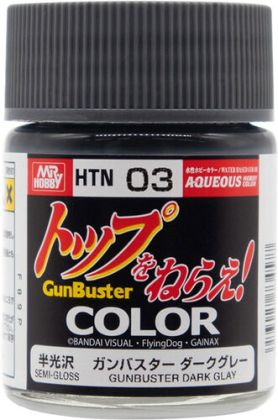
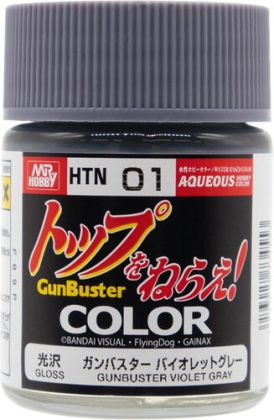
The HTN series is a short group of shades from the Mr.Color range assembled for robot and anime subjects. Four colours cover a gloss violet-grey, a satin orange-yellow and dark grey, and a saturated gloss red.
They are mixed to work together on one machine as a complete scheme, and the difference in sheen helps separate panels without drawing a dividing line or reaching for another palette. The notes below cover planning the surface split, preparing a gloss ground and the thinner this line insists on.
On robot subjects, colours are not chosen from historical tables but from the source material. A series like this therefore answers a different question from an ordinary palette: four shades form a finished scheme that holds together on the model. Two greys of differing darkness serve as the main surfaces and the mechanics, while the orange and red act as accents that bring the machine alive.
The split in sheen is the interesting part. Gloss shades are meant to read as a lacquered shell, satin ones as a technical component, and that distinction does more on a finished model than a small change of hue. Divide the surfaces in advance and these four will carry the whole machine, leaving only metals for joints and barrels.
Before you reach for the first colour, go over the model and decide what is shell and what is mechanics. Gloss and matt areas are then sprayed separately and masked from each other. Tapes and putties are in the masking supplies category.
Every imperfection shows on a gloss surface. Sand the parts before spraying, remove sprue gate marks and seal them with a product from surfacers and primers.
Apply the paint in several light passes with full flash-off between them. Use the thinner intended for the line; swapping types can curdle the paint or leave it dull once dry. A test on an offcut of sprue takes a minute and saves hours of repainting.
Further shades from the same brand, from opaques to metals, are in the Gunze Mr.Color category.