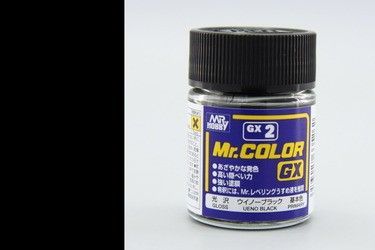
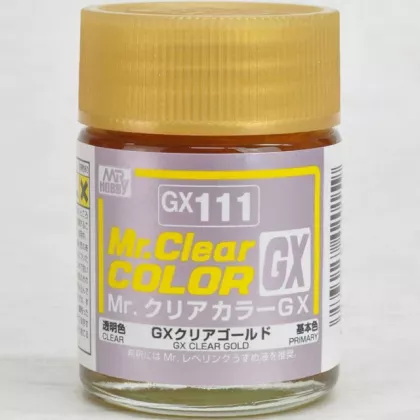
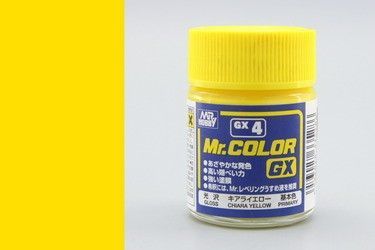
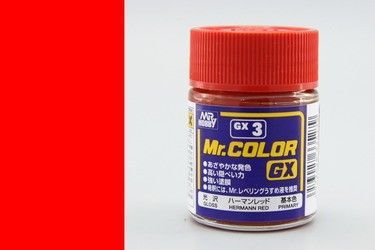
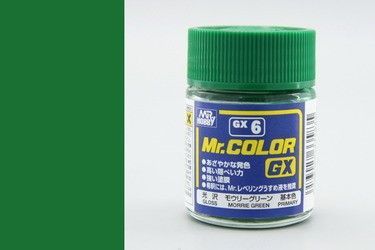
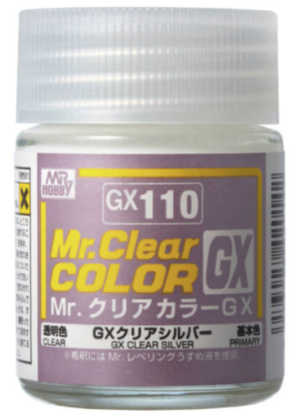
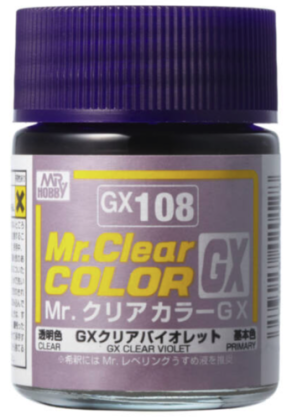
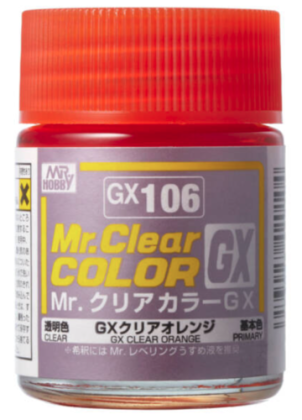
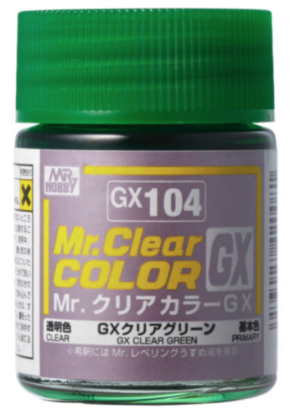
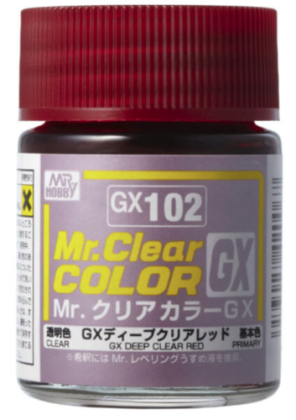
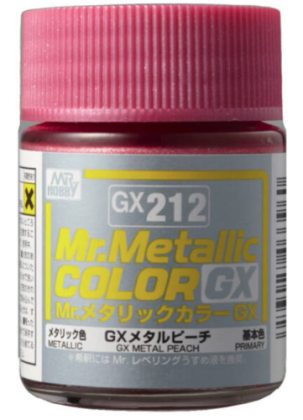
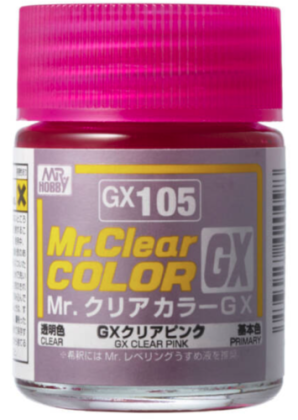
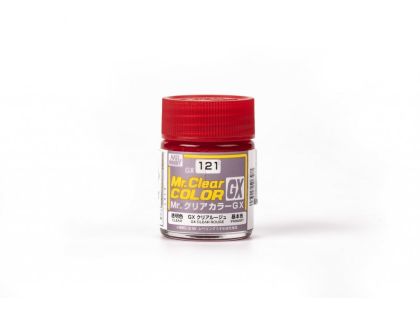
The GX series gathers clear and strongly glossy shades, paints that behave quite differently from ordinary opaque tones. It takes in clear silver, violet, orange, green and deep red for tinting transparent parts, pearl and metallic effects, and basic gloss colours in a larger jar.
What they share is a demand for a smooth ground, because on a matt surface these shades go grainy and lose the depth they are bought for. Below we go through why the ground decides the final tone, how saturation is built up in passes and which tools suit the work.
A clear colour does not cover, it tints. The final shade is therefore the product of the paint and whatever sits beneath it. Over a silver ground you get a deep glossy tone resembling lacquered metal; over white, a saturated translucent colour. That is why the same clear paint can behave quite differently on two models.
Before a clear shade goes on, smooth the area and bring it to gloss. Suitable products are in the clear coats category. Only then lay the clear layers, otherwise graininess appears.
Saturation is governed by the number of coats, not their thickness. Lay light passes and check the result against the light between them. A heavy coat runs and creates uneven dark edges.
Thin with the matching thinner and spray through a fine nozzle; the equipment is in the airbrush section. Applying clear shades to a large area by hand does not give an even result.
Clear shades get their heaviest use on the lights, indicators and covers of car and formula kits, though they serve equally on aircraft navigation lights and on the transparent sections of robot kits. The complete paint system is in the Gunze Mr.Color category.