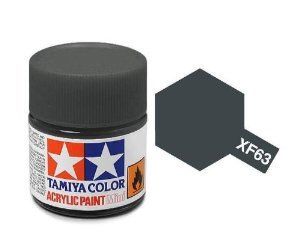
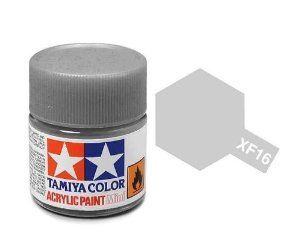
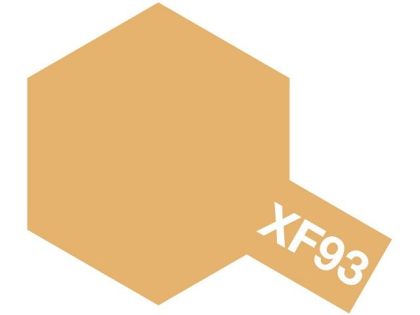
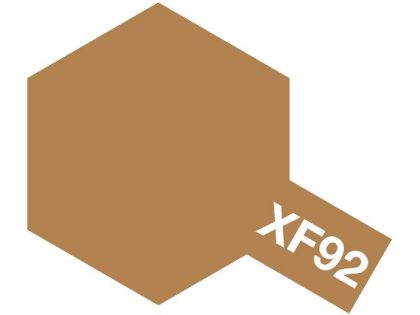
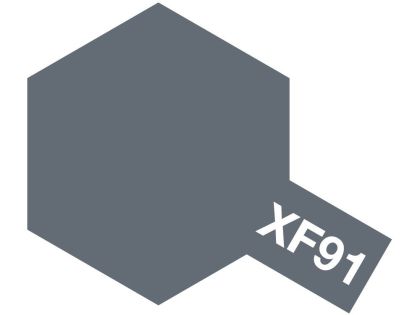
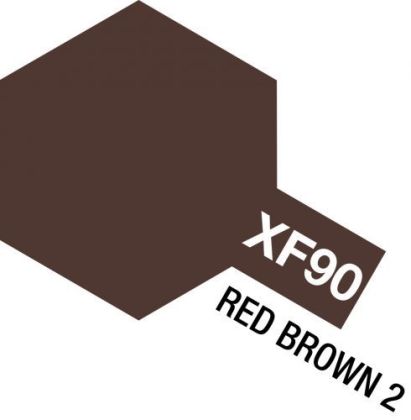
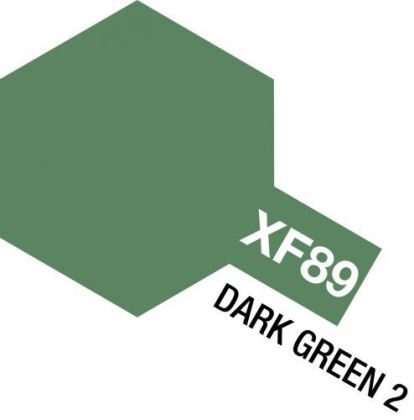
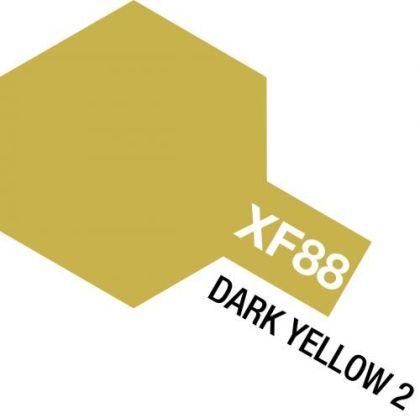
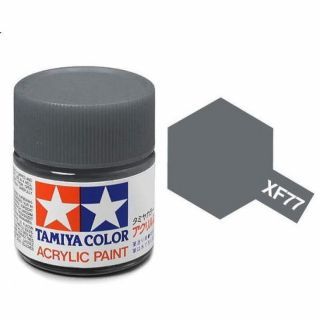
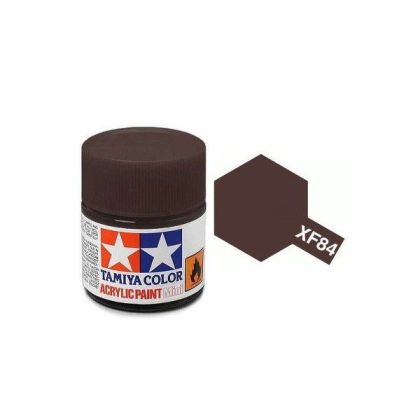
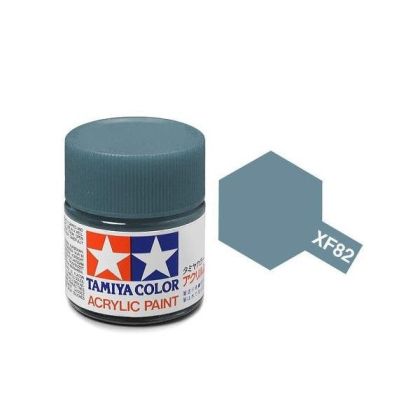
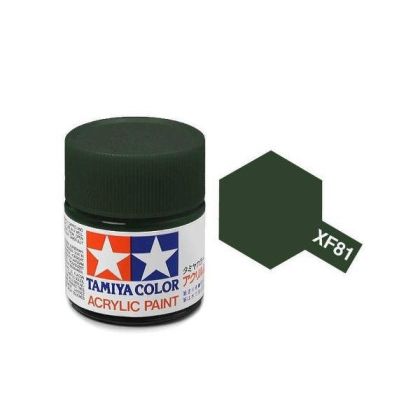
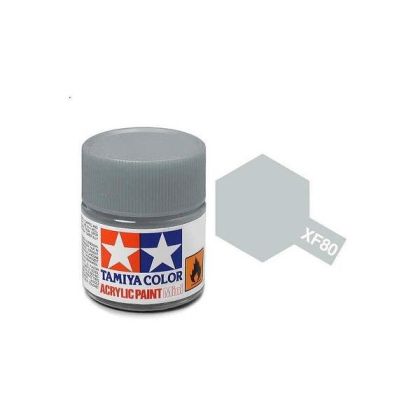
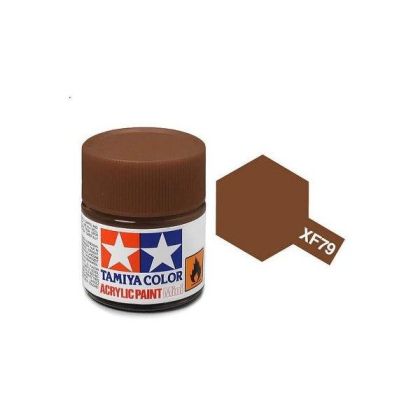
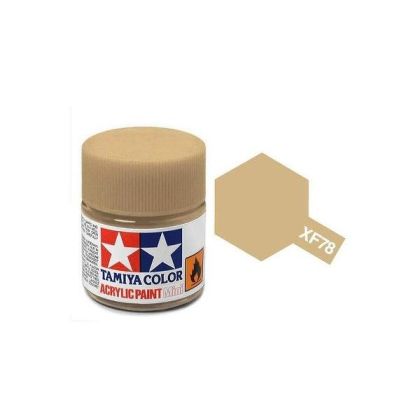
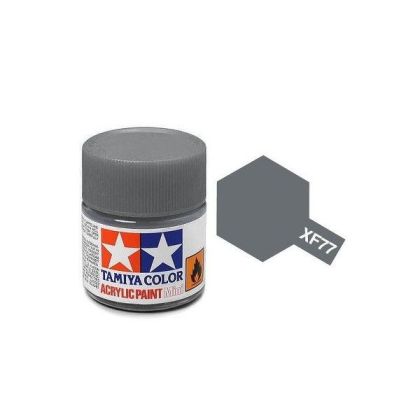
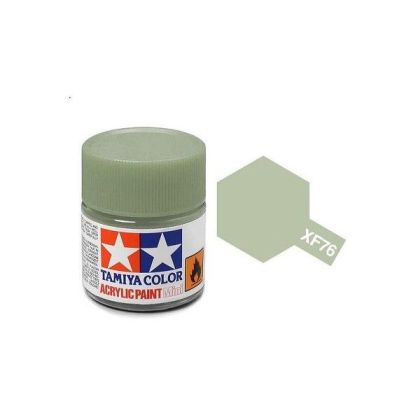
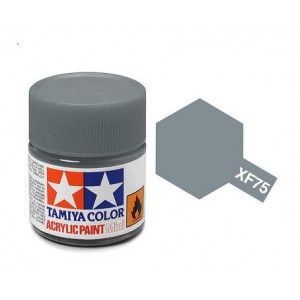
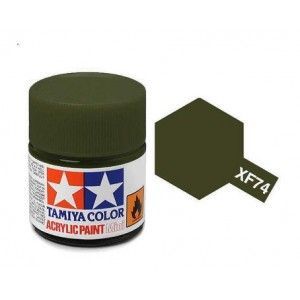
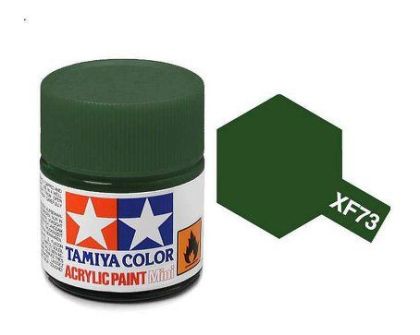
Matt shades carrying the XF prefix are the backbone of most military builds. Scaling a subject down changes the way light reflects off it, so a matt surface reads more convincingly than a gloss one.
The ten-millilitre range holds camouflage greens, browns and greys, cockpit interior tones, rubber black for tyres and a matt clear. Matt shades are also the best ground for weathering, dust and drybrushing, because the surface is absorbent and the products stay where you put them.
Shine on a scaled-down subject gives the plastic away immediately. A matt coat scatters the light, so the eye reads the shape and volume more readily. The second advantage is practical: a matt surface is slightly absorbent, which is why pigments, drybrushing and earth products hold onto it. Every grime technique works better over matt.
Move from a darker base towards lighter tones. For soft transitions, spray from further back without masking. For hard edges use masking tape, but only on a matured coat that will not lift.
On a matt ground, decals betray their carrier film. Bring the spots where they will go to gloss first, using a tone from the gloss shades category or a separate clear coat, and knock the whole model back to matt at the end.
A matt coat is the ideal base for dust, trapped grime and traces of service. The products for those effects are in the weathering section, but apply them only once the paint has fully cured.
Matt camouflage tones head mainly for military vehicle kits. The overview of the whole line, including its split by sheen, is in the Tamiya Acrylic Mini 10 ml category.