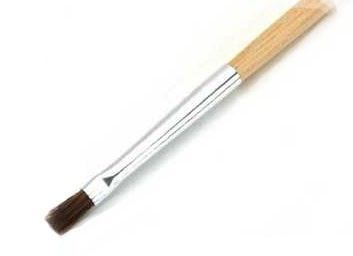
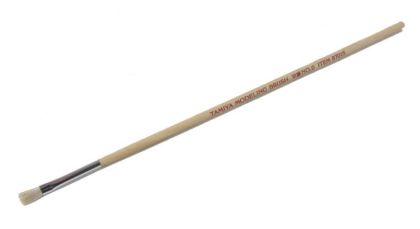
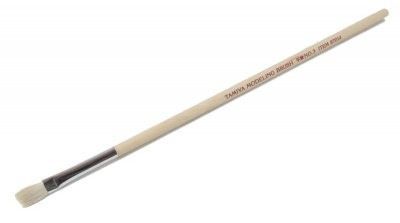
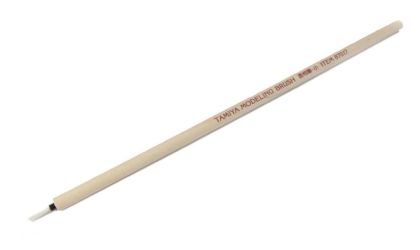
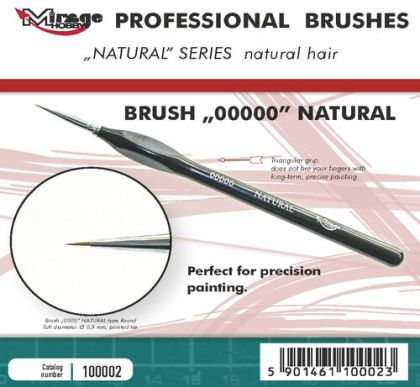
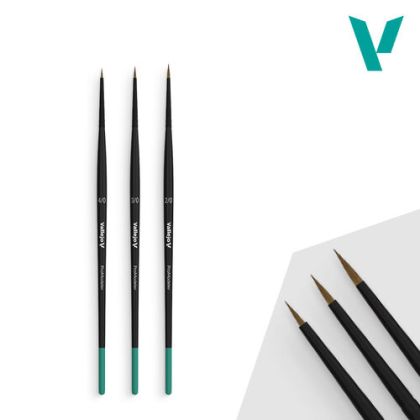
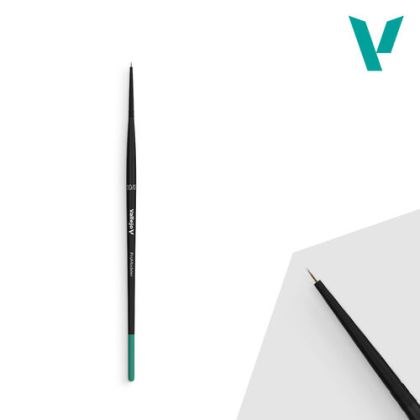
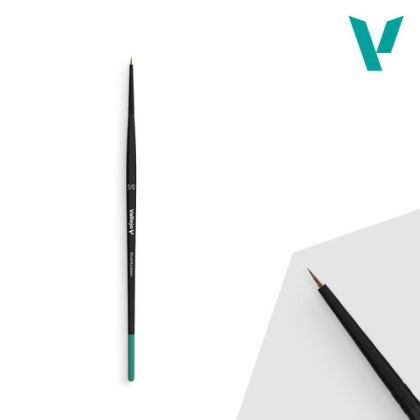
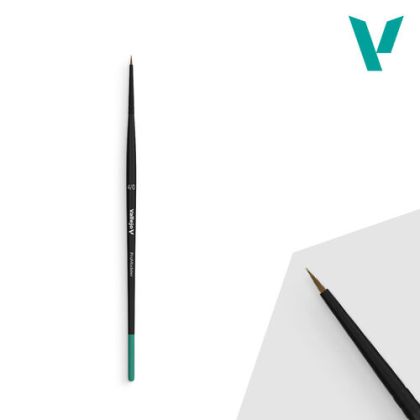
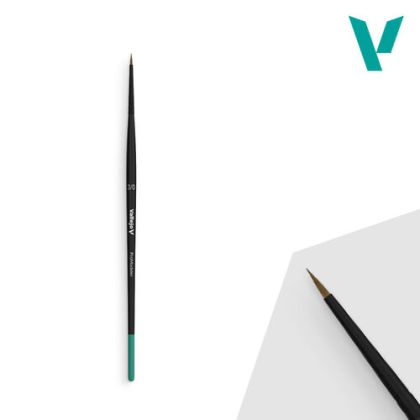
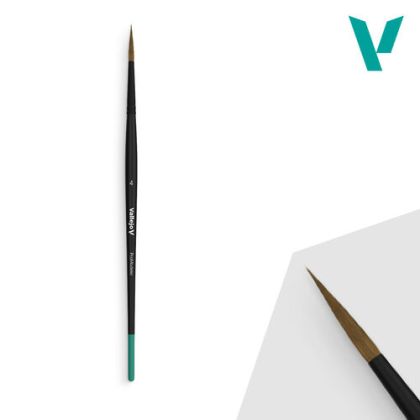
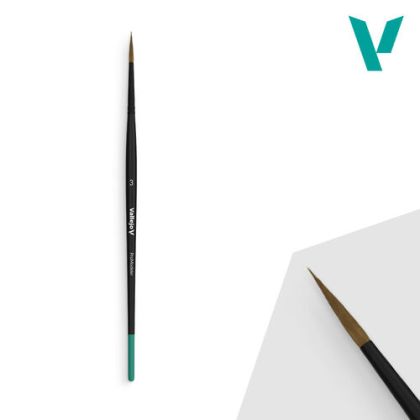
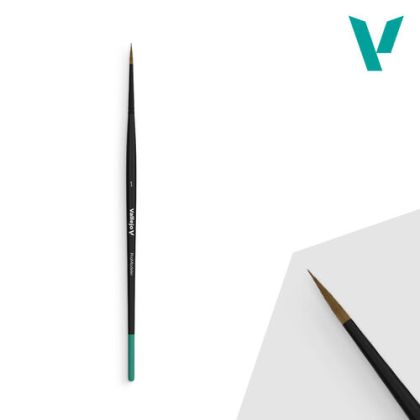
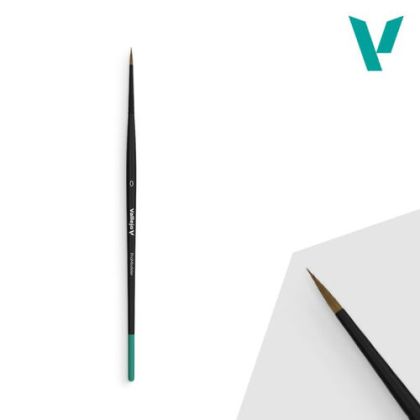
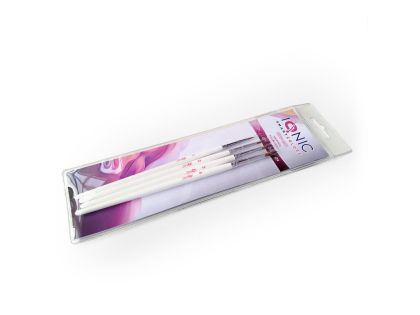
Natural hair modelling brushes hold their place in detail and figure painting for one reason: a flexible animal hair soaks up far more paint than a synthetic of the same thickness, and still draws itself back into a needle point. One loading therefore carries a longer stroke instead of running dry after two centimetres.
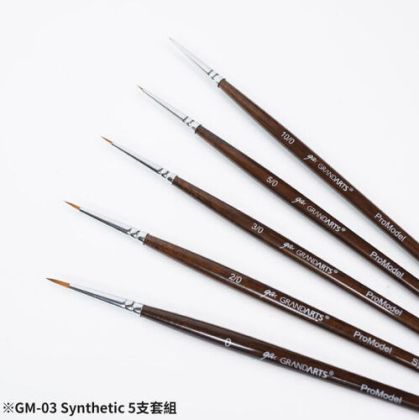
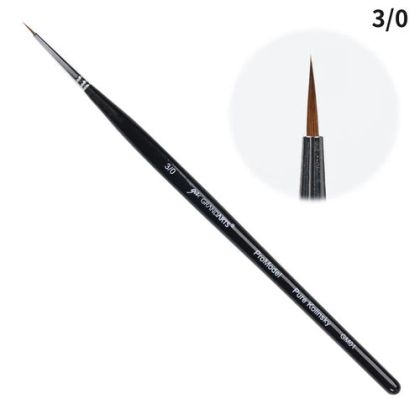
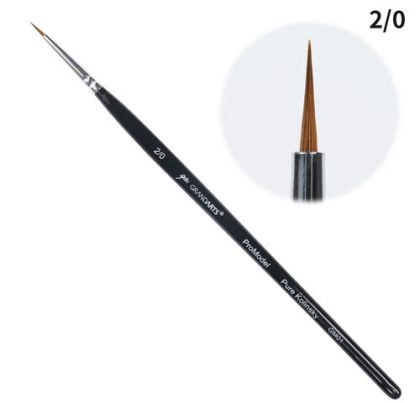
The listing covers round points from 10/0 up to size 8 along with sets of several sizes. How to recognise the different hairs, which numbers do which work and how to stop an expensive point splaying are all explained under the products.
Animal hair is scaled along its whole length, and those scales hold paint between them. The brush behaves like a small reservoir: load once and carry a camouflage band or the outline of an eye through to the end without going back to the palette. The second advantage is recovery, since the hair re-forms into a tip when lifted, so even a size 4 will draw a thin line. The counterweight is sensitivity. Harsh thinners and paint allowed to dry at the ferrule ruin a natural brush sooner than a synthetic one.
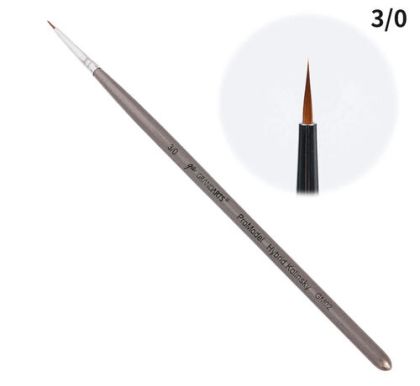
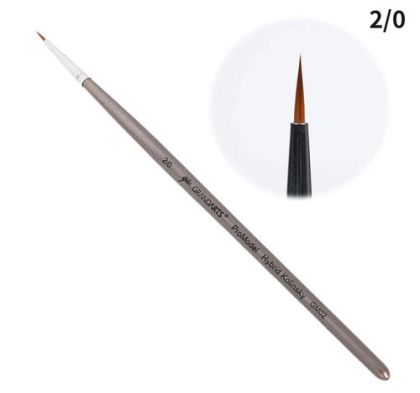
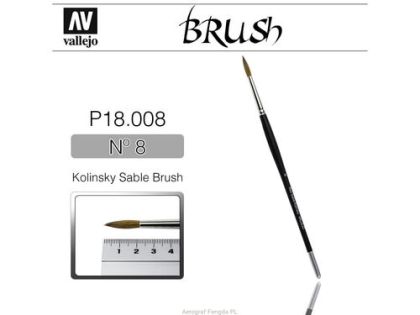
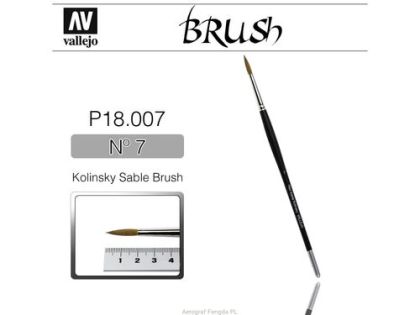
Kolinsky is the most sought after among modellers for its combination of spring and needle point, which suits figures and the finest markings. Sable is a shade softer and more forgiving of uneven pressure. Hybrids pair a natural core with a synthetic sheath and gain resistance to solvents in the process.
Numbers with noughts, 2/0 through 10/0, go to eyes, buckles and tiny insignia. Sizes 2 to 4 are the workhorses for uniforms and interiors. Sizes 7 and 8 are for base layers and glazes, where carrying plenty of paint at once is the point. A size set makes sense while you are still finding out what fits your hand.
Natural hair is at home with acrylics and oils. With aggressive synthetic paints expect faster wear and reach for a cheaper brush instead.
A natural brush lasts years if you dry it point upwards after washing and never leave it pressed sideways in a jar. Where longer service life matters more than absolute fineness, look at synthetic brushes.