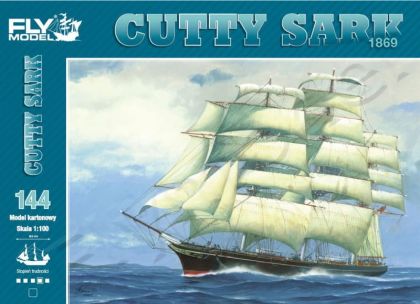
A ship is the endurance test of card modelling. The hull goes together from frames and a skin, superstructure from dozens of small parts, and on a sailing subject the standing and running rigging takes longer than everything else combined. The result has no equivalent in another material: the print carries planking and fittings that painting would take many evenings to approach.
A classic tea clipper in 1:100 measures around 85 centimetres overall with masts standing some 45 centimetres tall, which is worth working out before you decide where it will live.
For rigging, have fine thread and tweezers ready, and set the masts truly vertical — if one leans, every line above it goes crooked with it. Back the hull with heavier card, because a paper skin reacts to humidity on its own. Vessels in plastic, with the widest choice of scales and detail sets, are in plastic ship model kits; traditional plank-on-frame construction is covered by wooden ship models. The other printed sheets and editions sit in card model kits.