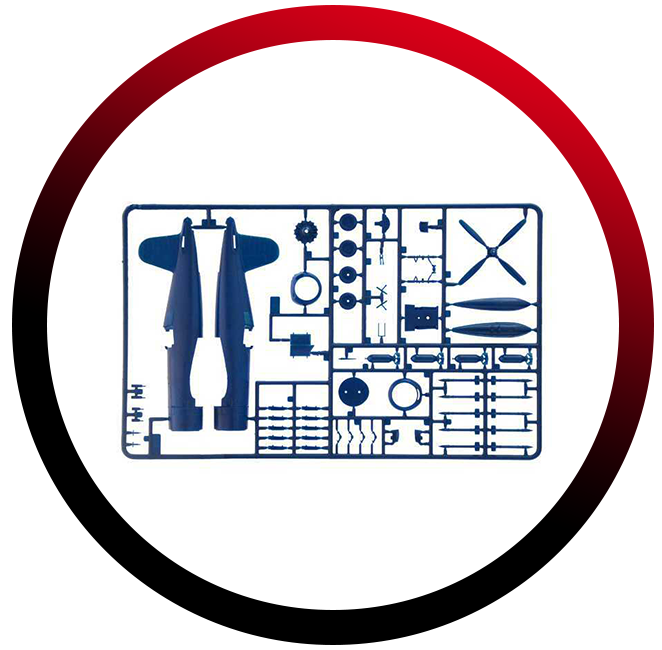
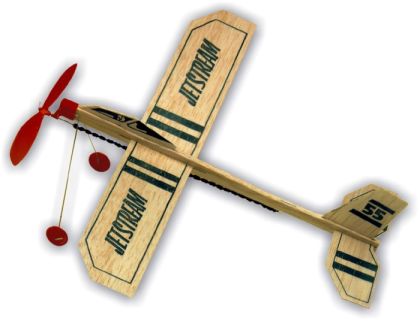
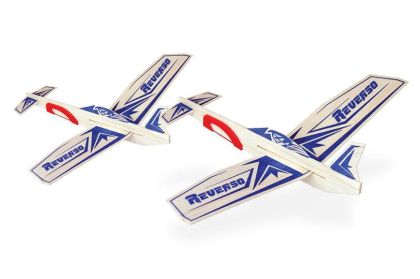
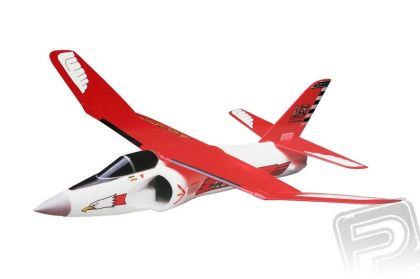
The aircraft in this part of the section are built to fly, not to stand in a cabinet, and they fly without radio gear. They are a light glider sold as a twin pack for hand launching, a rubber-powered model whose wound propeller and wire undercarriage let it take off from the ground, and a second glider kit to build and throw. Spans run between about three hundred and three hundred and forty millimetres, which means the weight of every joint counts — a few drops of surplus glue show up in the length of the glide.
Allow time for balancing before the first launch: support the model under the wing at the point the instructions give and add nose weight until the nose drops slightly. Fly from a mown meadow or a pitch with no trees, in near-still air; in stronger flow a light model is carried off before you can react. To build larger gliders and keep balsa on hand for repairs, see chuck gliders and suitable glues that neither add weight nor attack light foam. The complete survey of controlled and free-flight machines is in RC models and chuck gliders.