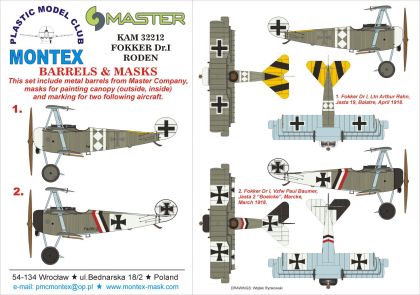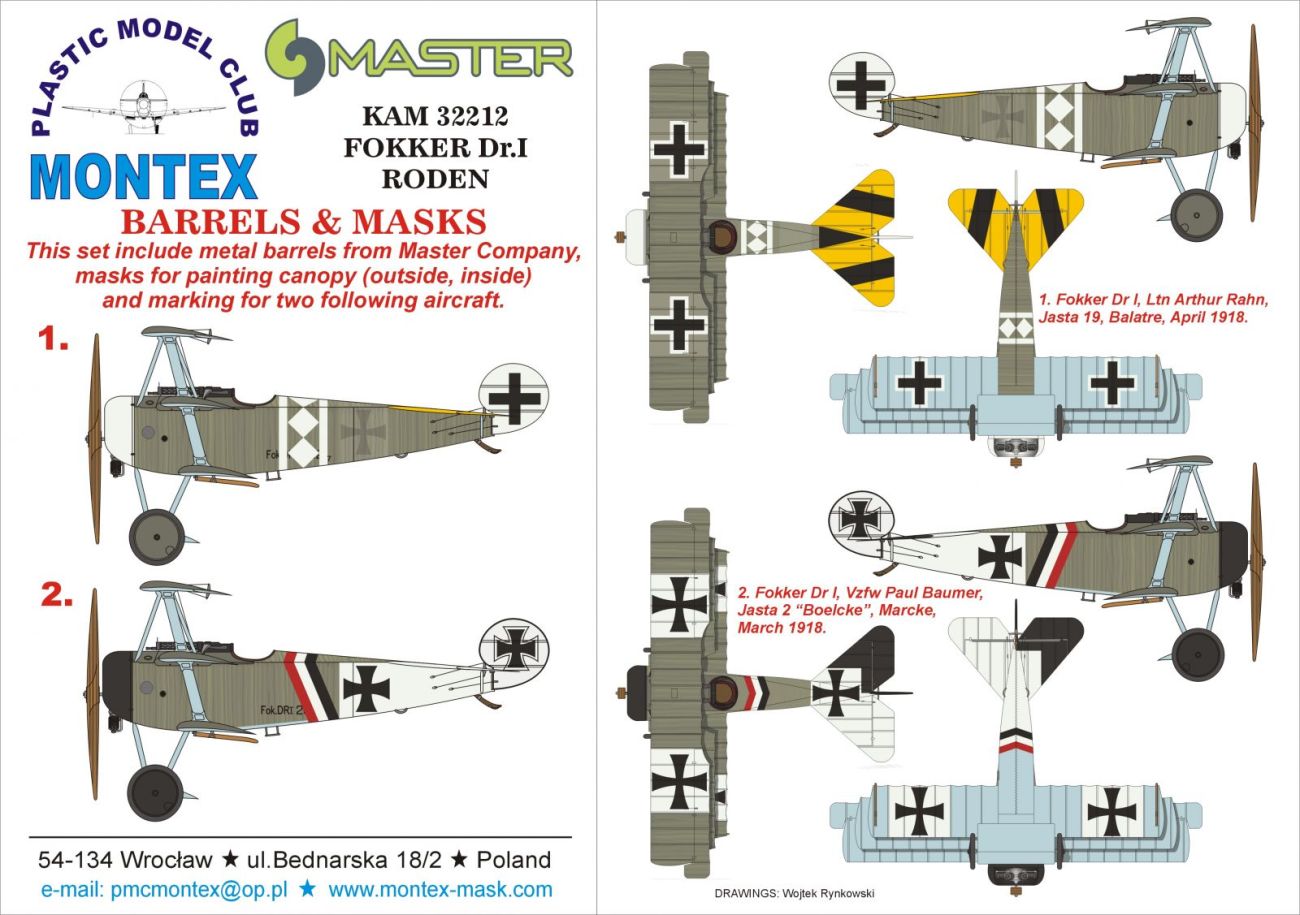
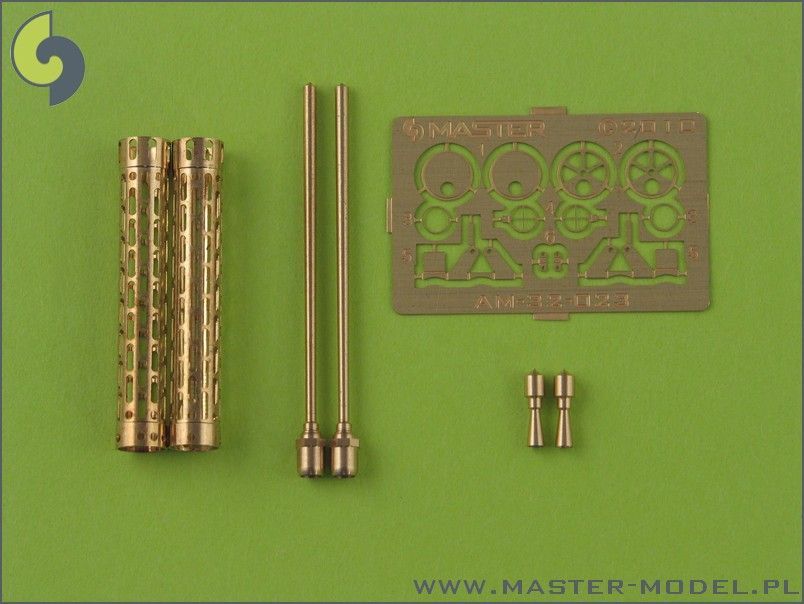
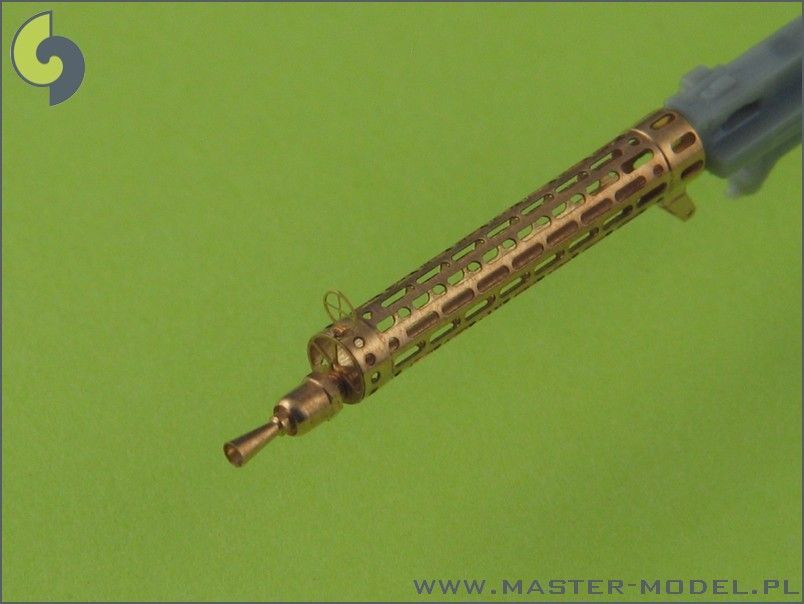
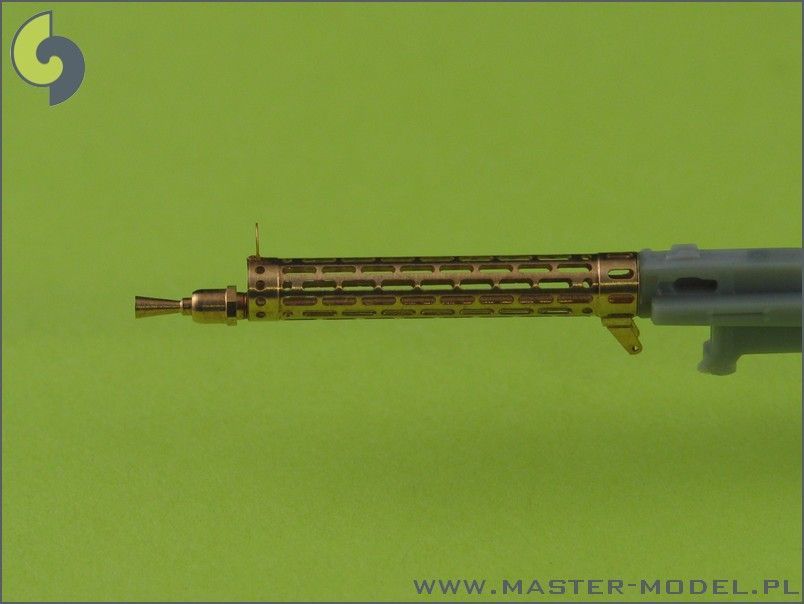
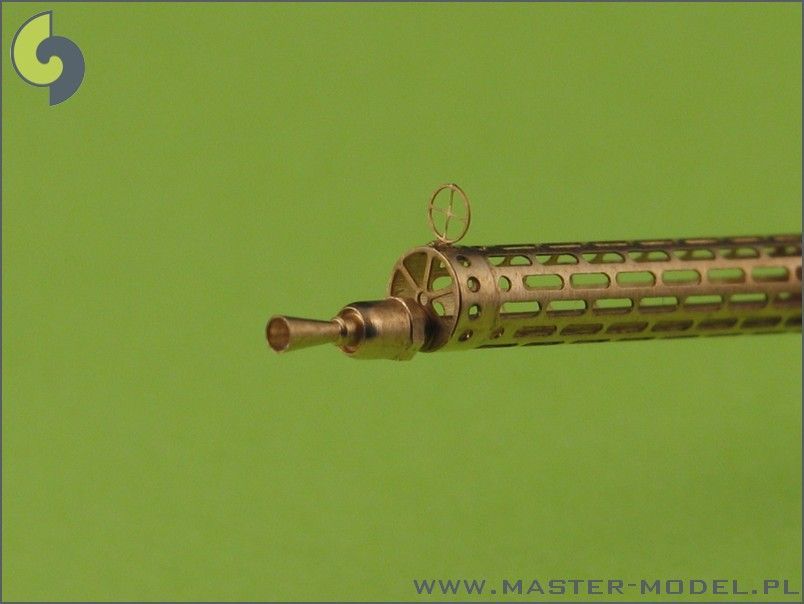
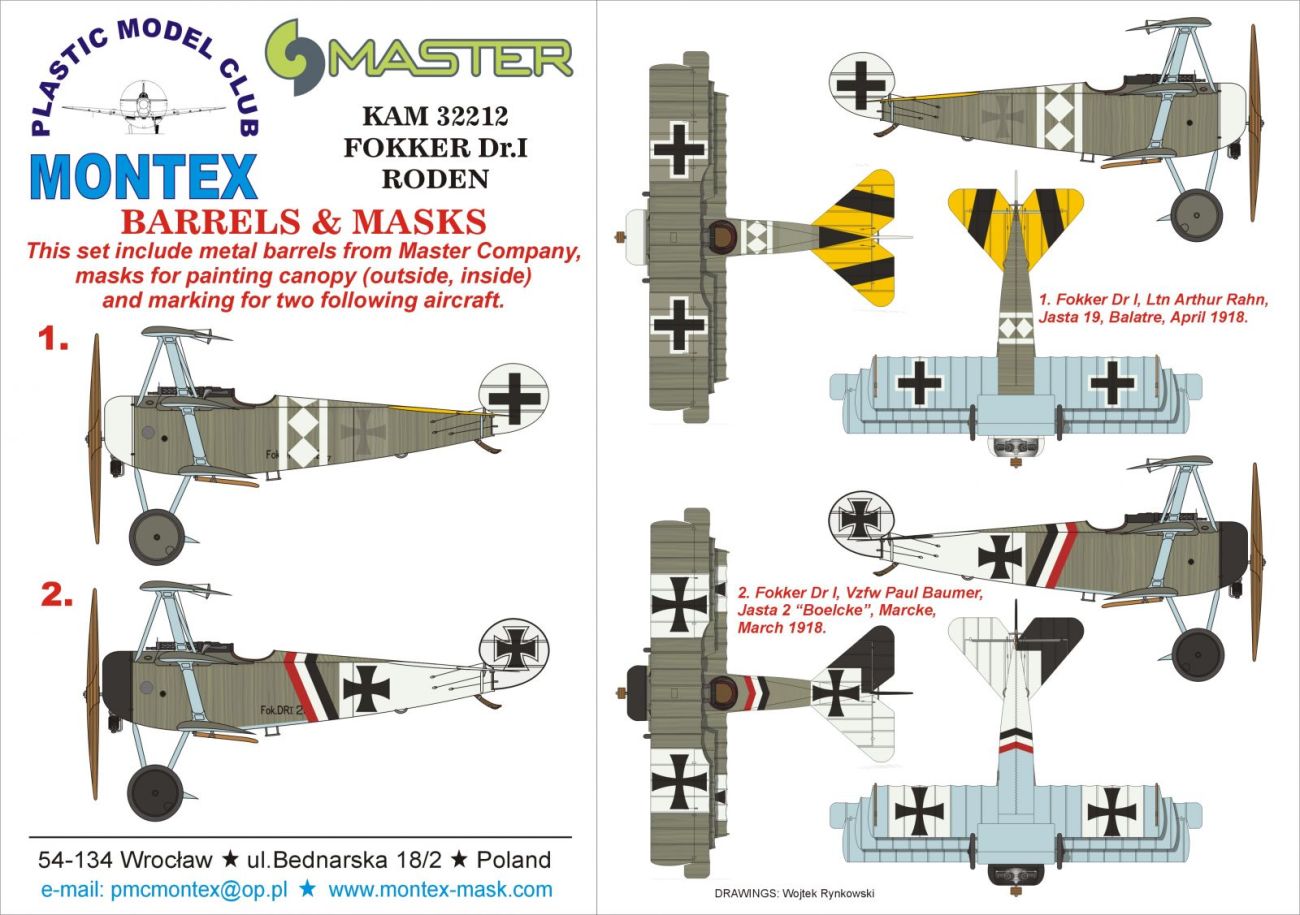
Masking set with two masks for the national insignia and with metal barrels for the Fokker triplane in 1:32. The fixed screen ahead of the cockpit neither slid nor hinged anywhere.
Responsibility details are not available.
The powerplant of the triplane was a rotary engine, on which the whole block of cylinders turned with the propeller. It was lubricated with castor oil, whose fumes went straight into the pilot's face, and its gyroscopic torque gave the machine an asymmetrical agility, markedly better to one side than to the other. That is precisely why pilots of this type turned preferentially in one direction and their opponents worked it out before they could react.
The difference between a sliding and a hinged canopy is fundamental for a modeler, because it decides how many parts are masked and at which stage of the build they are glued. On this aircraft, though, there is no movable transparent part at all. Ahead of the rim of the cockpit stood only a small fixed screen in a metal frame, and that is either set in permanently or left off the model, as many machines had it in reality too. The envelope therefore carries two masks for the national insignia.
The fabric covering of the triplane has a pronounced rib structure over which the film easily forms a channel. It helps to run a rounded toothpick along every rib over the mask before spraying and to apply the paint straight down from above, not at an angle. Leave the metal tubes in the bag until the model is otherwise finished; fitting them is the last act of the whole build and afterwards the fuselage should be handled only by the lower surfaces.
Naši poradci a znalci sortimentu jsou připraveni odpovídat na Vaše dotazy (Po–Pá, 8–18 hod).
Zeptejte se na co potřebujete, odpovíme co nejdříve.
Texts from customers in the advice section reflect solely the opinions and views of the customers. MNF trade s.r.o. does not approve or verify customer texts in advance.
There are no questions here yet. Be the first to ask!