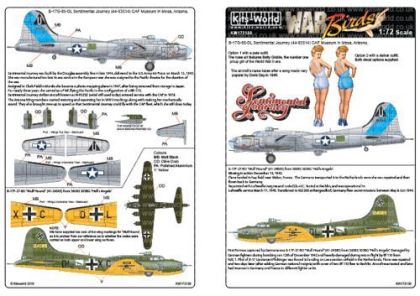
The best-known preserved Flying Fortress and the best-known captured example: 44-83514 with the painting Sentimental Journey and 41-24585 with the code PU-B, which ended up in German test establishments.
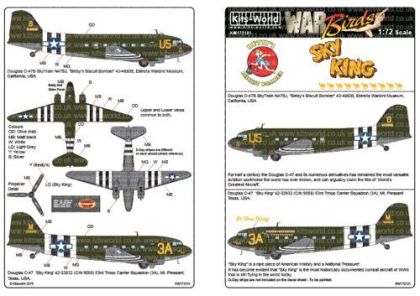
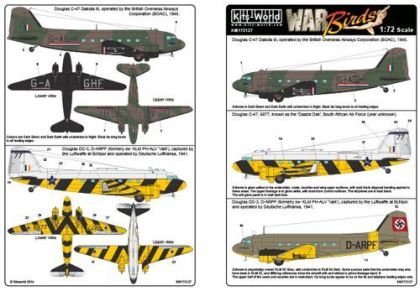
One transport type in three very different services: a British Dakota from 1945, the captured machine D-ARPF in German colors and a South African example with camouflage of the naval kind.
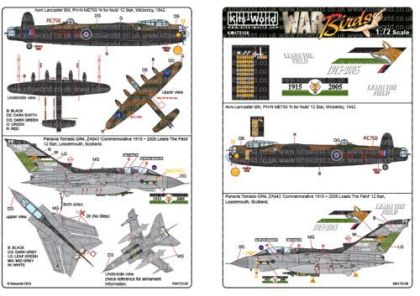
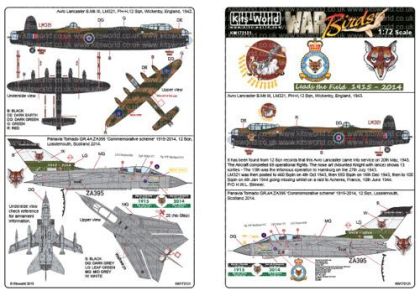
Ninety years of one squadron on two machines: a night bomber with the code PH-N and the nickname N for Nuts and the anniversary Tornado ZA543 from Lossiemouth with an inscription marking the jubilee of the unit.
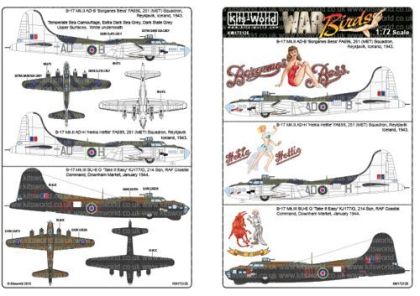
British Fortresses in two forms: a pair of Icelandic weather machines FA696 and FA699 with the codes AD-B and AD-H and the aircraft KJ177 with the code BU-E of No. 214 Squadron.
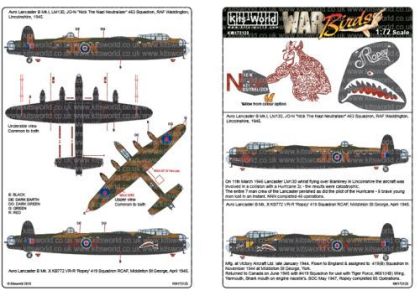
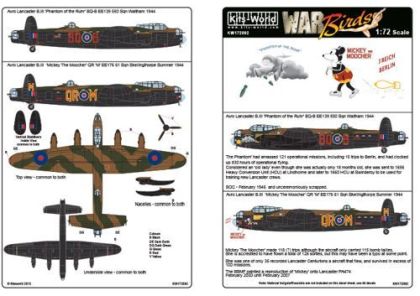
Two Lancasters from the last year of the war: the British machine LM130 with the code JO-N of No. 463 Squadron from Waddington and the Canadian-built KB772 with the code VR-R of No. 419 Squadron from Middleton St George.
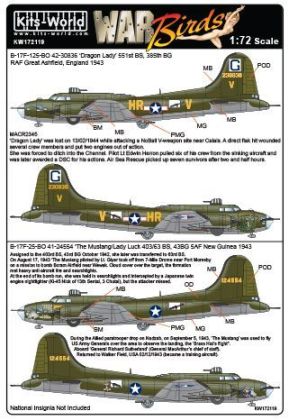
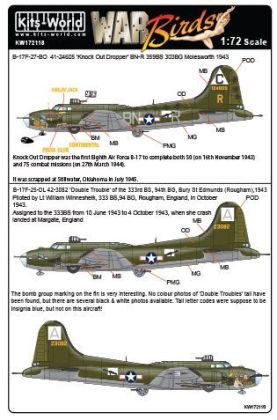
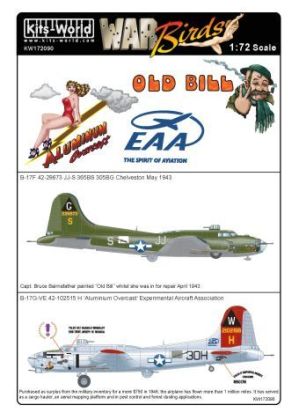
Markings in 1:72 for two Fortresses of the F version from the fighting over Europe, among them one of the best known machines of its bombardment group.
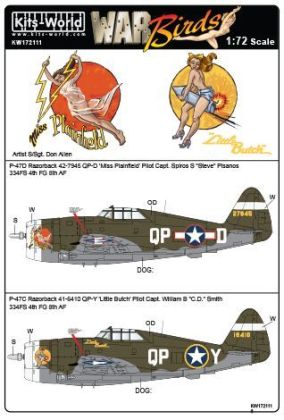
The machine of the Greek-born Spiros Pisanos with the letter D and the inscription Miss Plainfield, and with it the older C form with the letter Y and the inscription Little Butch, both from the 334th Squadron.
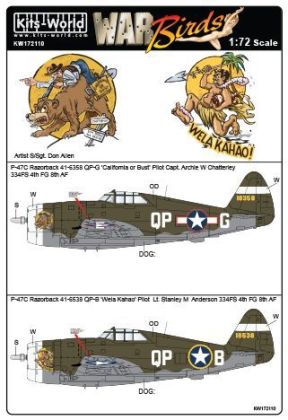
A pair of razorback Thunderbolts of the 334th Fighter Squadron, which in 1943 was re-equipping from British Spitfires: aircraft with the codes QP-G and QP-B and the names California or Bust and Wela Kahao.
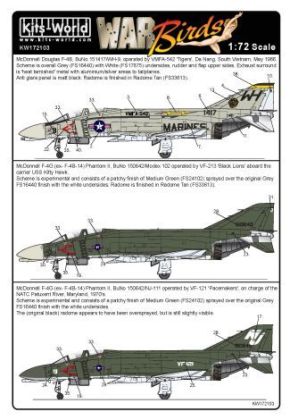
Naval and Marine Phantoms in three guises: a combat machine from Da Nang in 1966 and a pair of the rare G version, which came about by conversion in only a handful of examples.
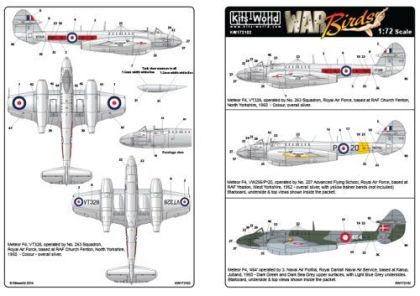
Three sets of markings for the first production jet fighter of the Royal Air Force in the F.4 form: two silver British machines from 1950 and 1952 and a camouflaged Danish naval aircraft from the Karup airfield.
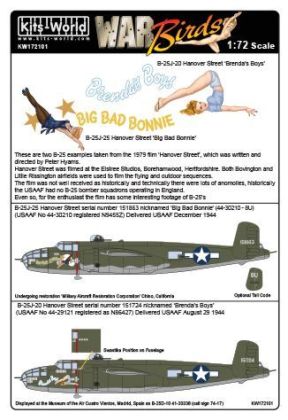
A sheet for two late Mitchells that survived the war as civil machines and in the 1970s were given a film finish: a B-25J-25 with the fuselage number 430210 and the figure eight with U, and a B-25J-20 with the American number 44-29121.
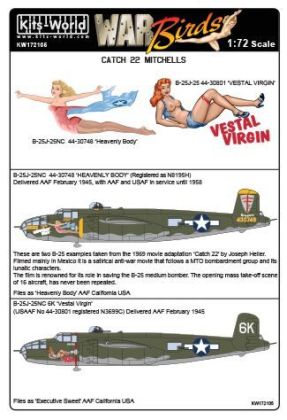
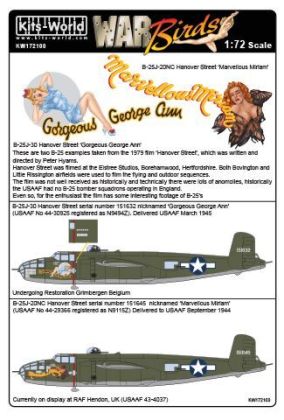
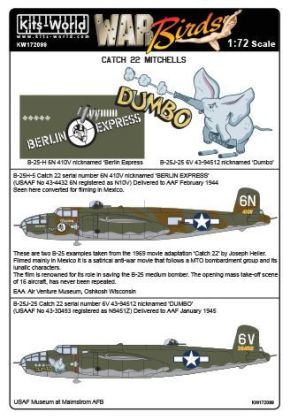
Markings in 1:72 for two Mitchells, gun nosed as well as with a glazed nose. Both machines have survived and fly under a private American registration.
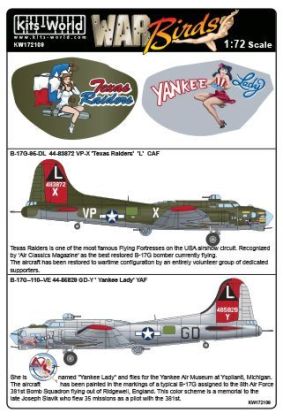
Printing in 1:72 for the Boeing B-17 Flying Fortress in the F and G versions. One subject is an airworthy veteran, the other a combat Fortress from an English station.
With your consent, we may use the information below for the following purposes or share it with selected partners. You can adjust your settings for individual purposes (types of processing) and confirm your choice with the "Save settings" button:
Always active
Necessary cookies
These are technical files that are necessary for the correct behavior of our website and all its functions. They are used, among other things, to store products in the shopping cart, display products on request, control filters, personal settings and also set consent to the use of cookies. Your consent is not required for these cookies and it is not possible to remove it.
Analytical cookies
They count website traffic and, by collecting anonymous statistics, enable the operator to better understand their visitors and thus constantly improve the site.
Marketing cookies
They collect information to better tailor advertising to your interests, both on and off this website.
To make it easier for you to browse the site, to offer you customized content or advertising, and to analyze traffic anonymously, we use cookies that we share with our partners for social media, advertising, and analytics. You can adjust their settings with the "Edit settings" link and you can change it at any time in the footer of the website. You can find more detailed information in our Policy on the protection of personal data and the use of cookies.