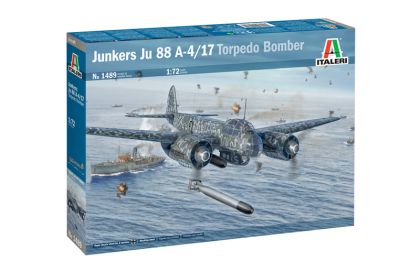
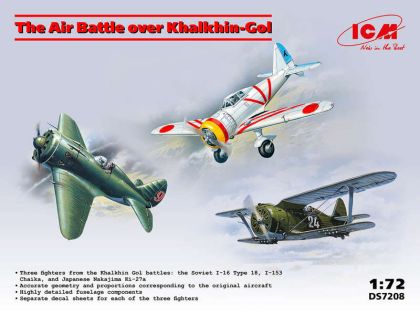
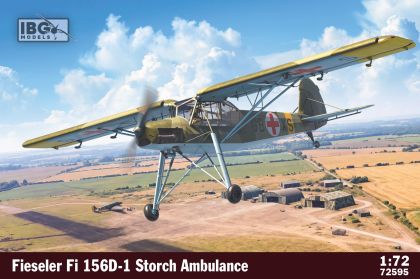
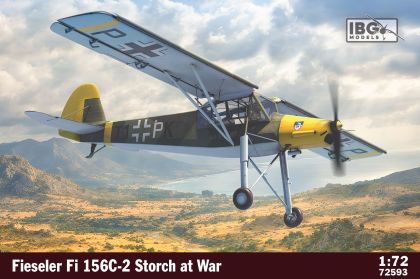
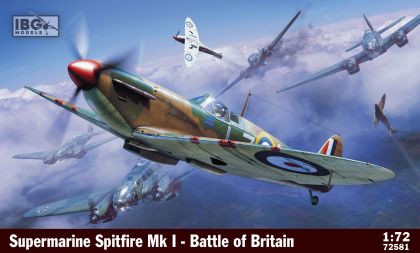
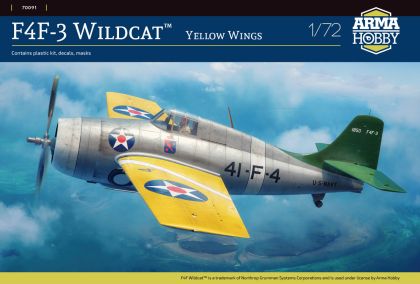
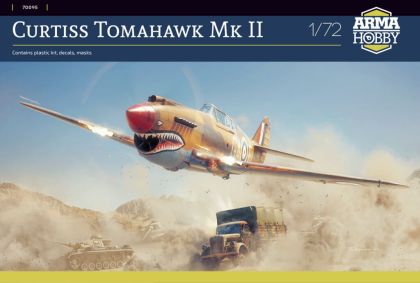
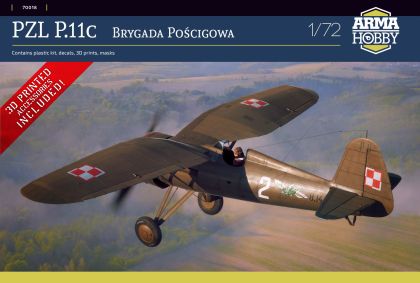
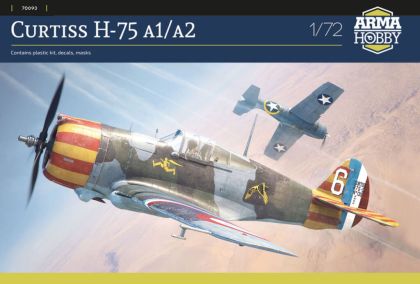
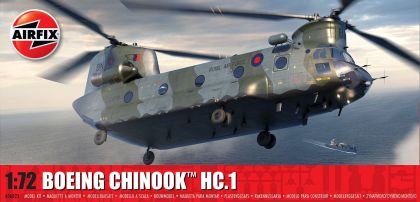
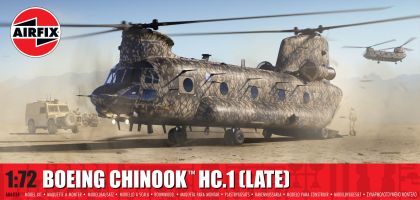
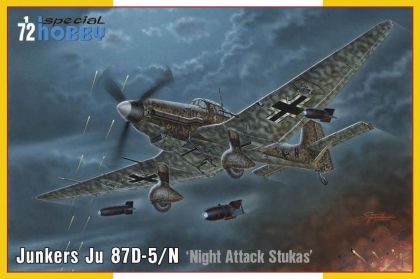
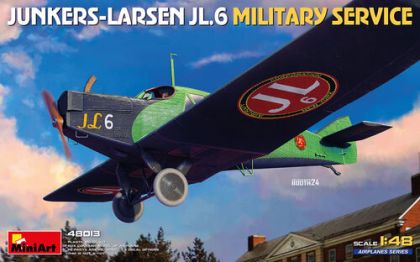
Seventy-second scale has been the default choice of plastic aircraft modellers for decades, and the reasoning is easy to follow: a fighter measures around fifteen centimetres, so a complete squadron lines up on a single shelf. The subject list is the widest in the hobby, running from fabric-covered biplanes of the First World War through piston fighters and early jets to airliners, in simple boxings and heavily equipped editions alike.
Below we set out how to tell those editions apart before ordering, and which same-scale parts take a small model considerably further than the box alone allows.
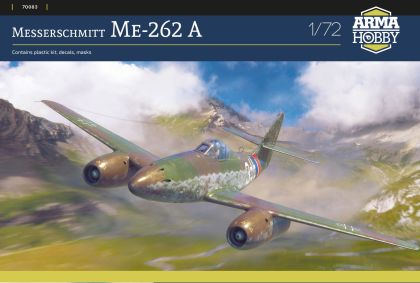
The scale began as a compromise between size and detail, and it still sees more new releases than any other. That means an enormous choice of types, from Spitfires and Bf 109s through the Me 262 to Soviet-era airliners, and a format in which comparable machines can stand side by side. The ability to assemble an entire development line of one aircraft without rearranging the furniture is what turned 1:72 into a collector's classic.
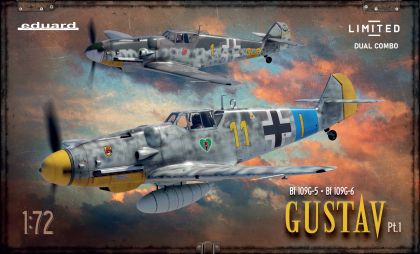
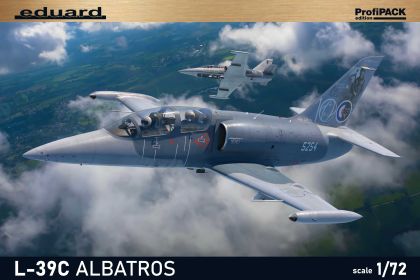
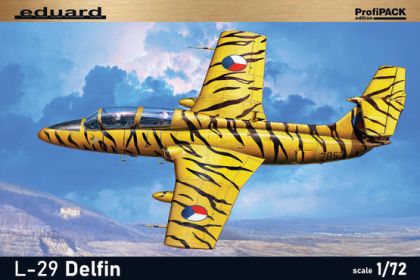
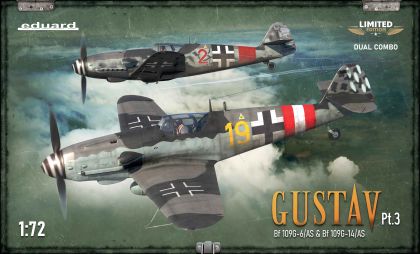
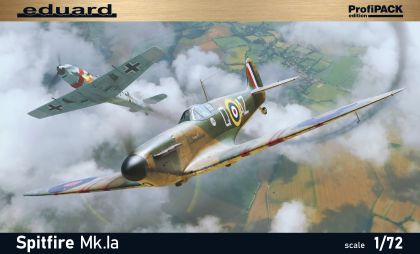
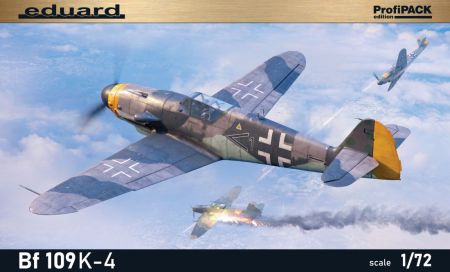
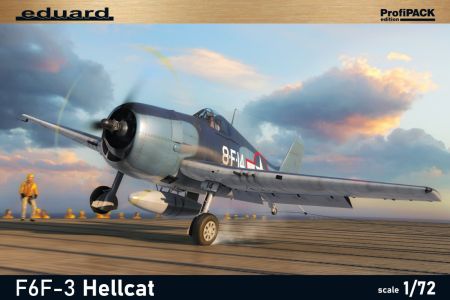
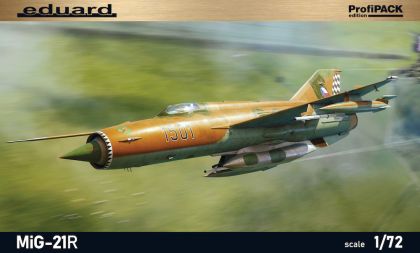
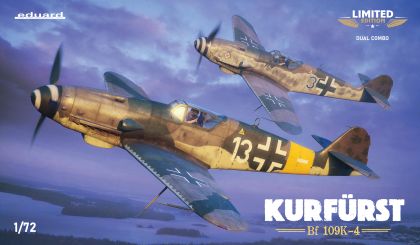
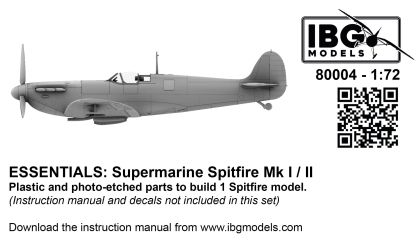
For a first build, pick a kit with a low parts count and a simple scheme. More confident modellers get better value from richer editions that already contain photo-etched parts and canopy masks, while limited twin-kit boxings supply two complete models at once for a matched pair on the shelf.
A single-engined fighter spans roughly 12 to 16 centimetres in 1:72, a twin-engined bomber around 30. Even a sizeable collection manages without a dedicated cabinet, which stops being true one scale up.
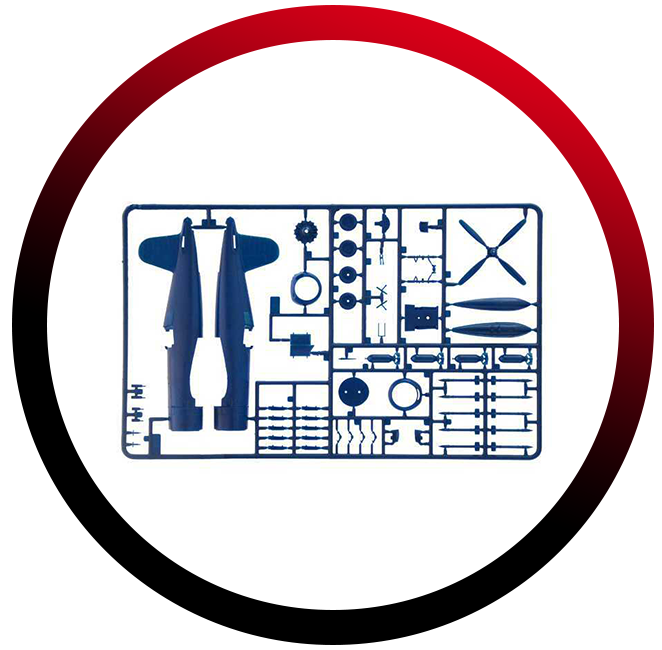
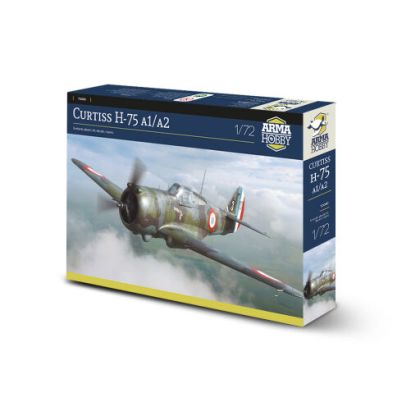
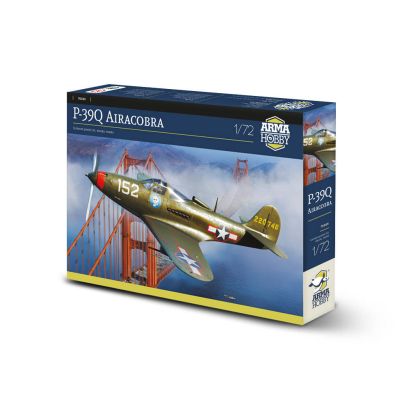
Ordinary kits contain styrene sprues, clear parts and decals; masks, etch and pilot figures are additions in the basic editions. Check the stated box contents before ordering rather than after.
Add decent modelling paints and a couple of fine brushes for cockpit work. Thinking about a larger format where the detail speaks for itself? Compare the choice with 1:48 aircraft kits, and see the whole ladder under aircraft model kits.