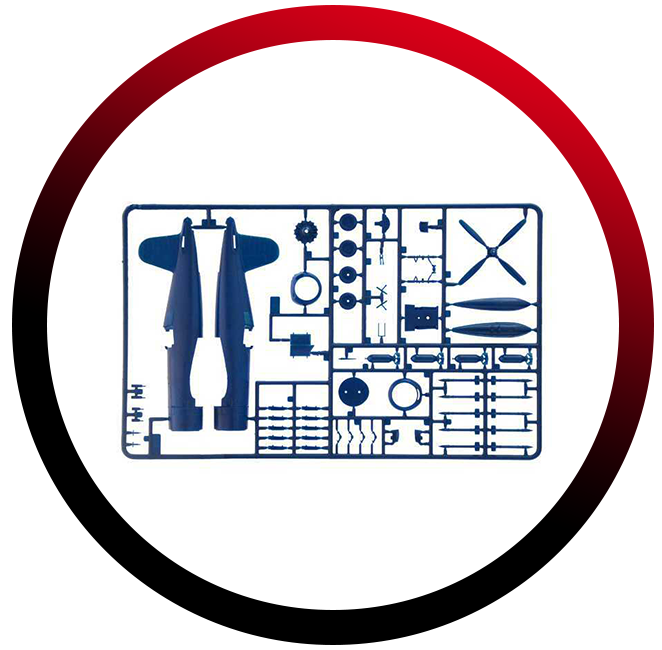
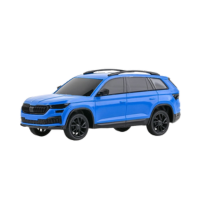
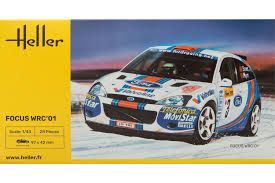
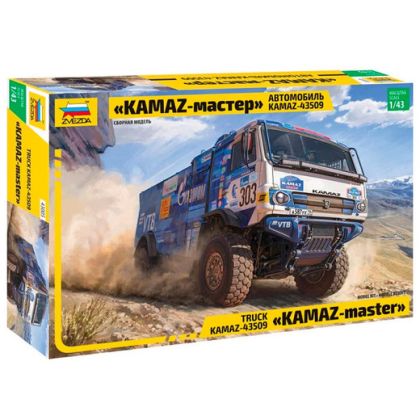
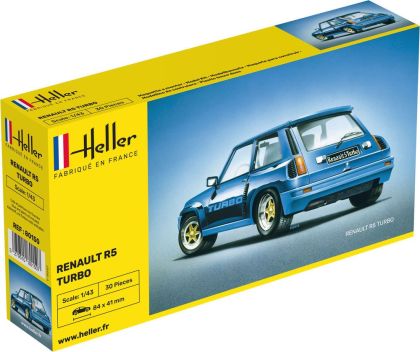
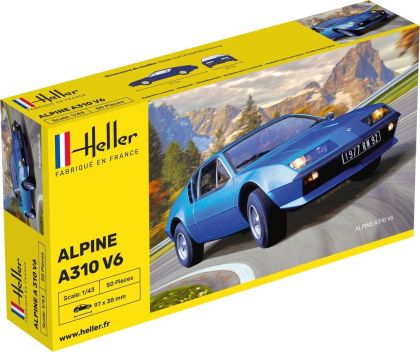
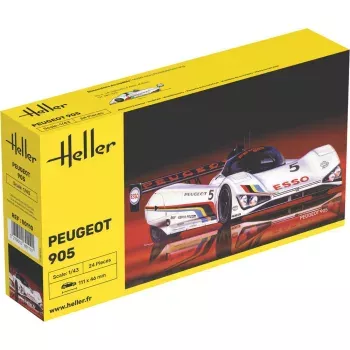
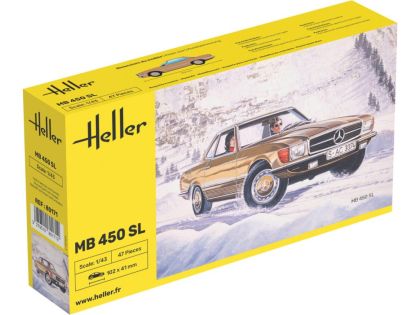
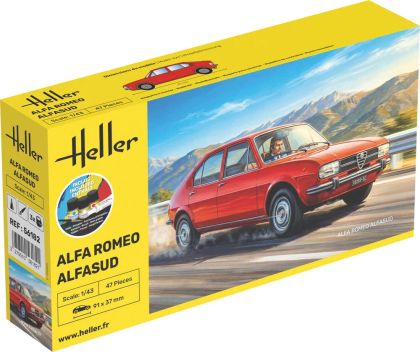
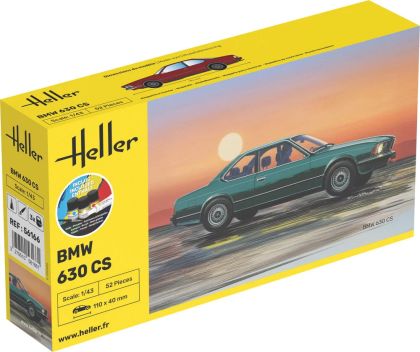
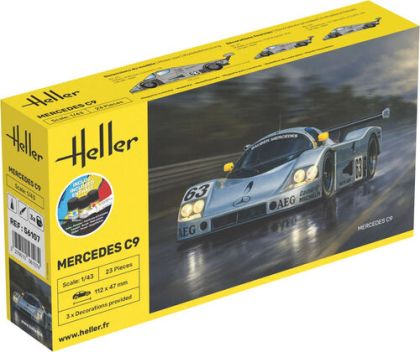
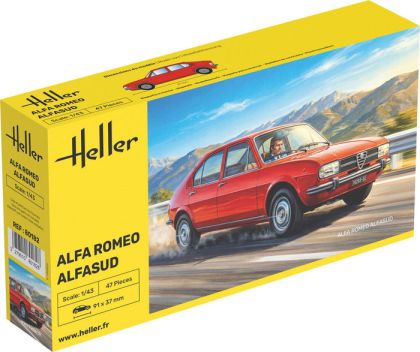
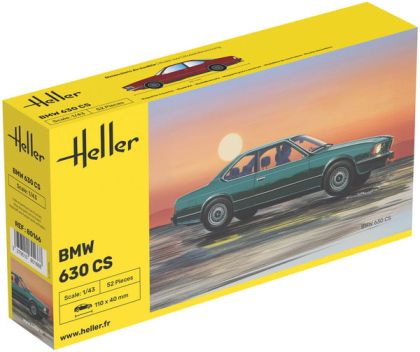
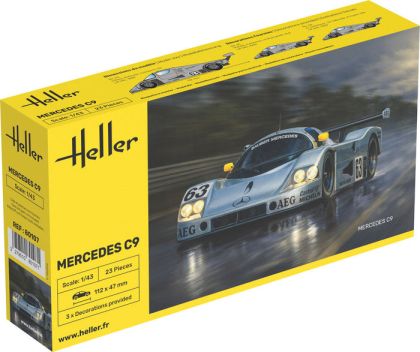
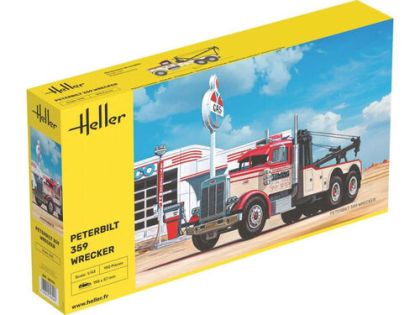
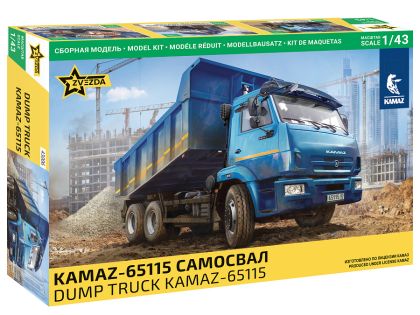
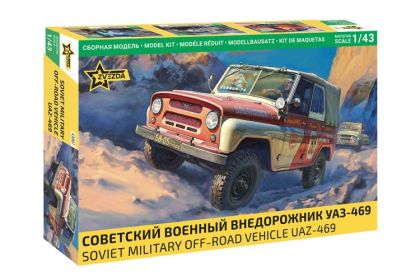
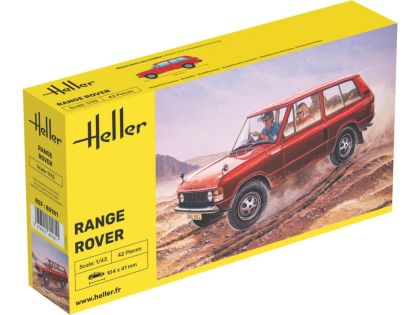
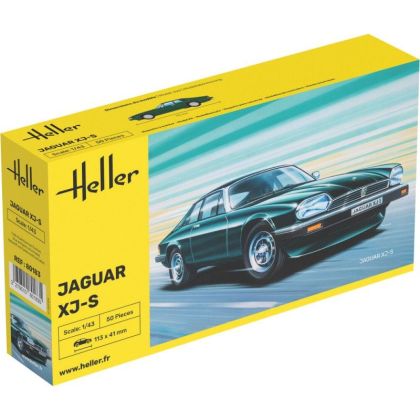
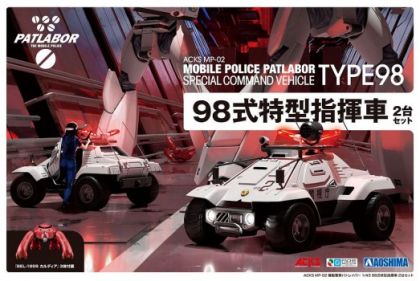
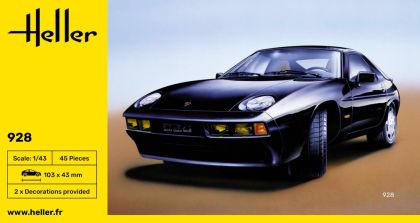
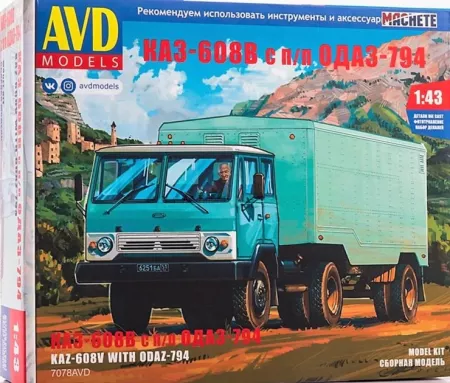
Collectors recognise 1:43 instantly, because it has been the world standard for display miniatures for decades. Build a kit in that size and it drops straight in beside the die-cast models already on the shelf. A finished car measures around 10 cm and the build is a matter of a few evenings. The selection covers Italian and German road classics and a Group C endurance prototype, with several subjects also offered as starter sets that include paint, glue and a brush in the box.
1:43 began life with model railways and went on to become the most widely collected car size in the world. Kits in it have a particular charm: unlike a finished metal miniature, the paint, the wheels and the detail are all your own work, so the result carries your signature. A low part count means a quick build, while the small dimensions demand clean workmanship – every stray drop of glue shows on a ten-centimetre car.
Starter sets with paint in the box are an excellent first contact with car modelling: low cost, short build, quick reward. Collectors tend to prefer plain kits, where they can choose their own shade and push the detail past what the instructions ask for.
Coupés and saloons are straightforward to assemble; a racing prototype adds markings and low, multi-panel bodywork. Either way the result is decided by paint laid on in thin, properly cured coats.
If your collection is already 1:43, a built kit adds welcome variety, and it stands out next to series-produced miniatures precisely because it is hand-finished. It is worth matching the plinths and labels too, so the shelf reads as one collection rather than two. Thin the paint further than you would at 1:24 and keep the glue to the smallest drop you can place: at this size, a flooded joint is impossible to hide.
If the format grows on you, curiosities in other small sizes are gathered in car model kits in other scales. Bigger projects live in 1:24 and 1:25 car model kits, and the full overview of the branch is car model kits.