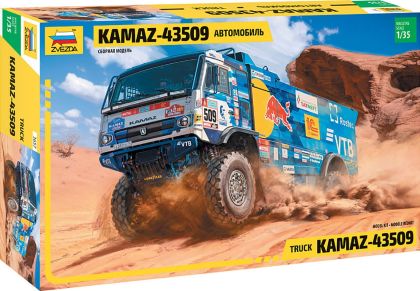
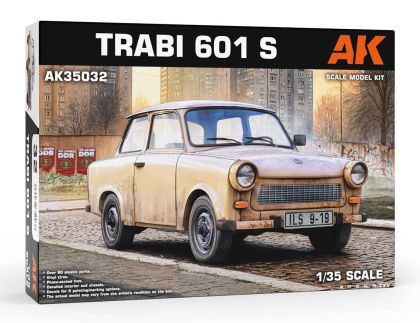
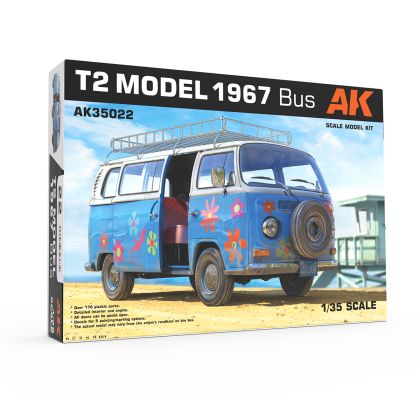
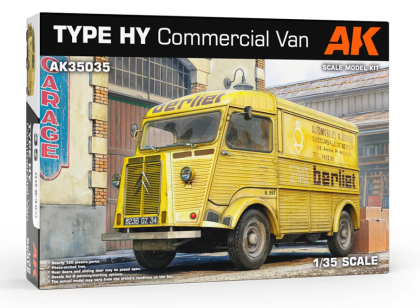
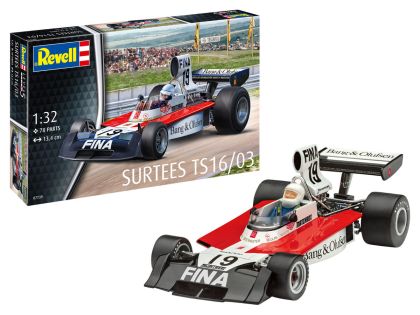
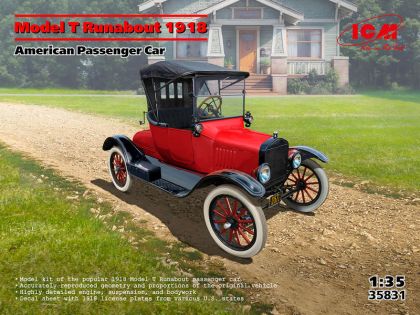
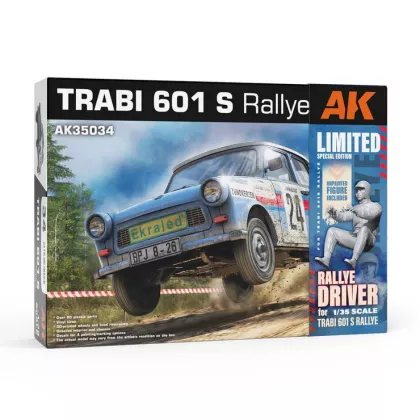
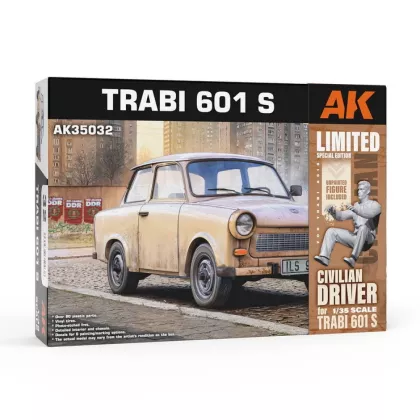
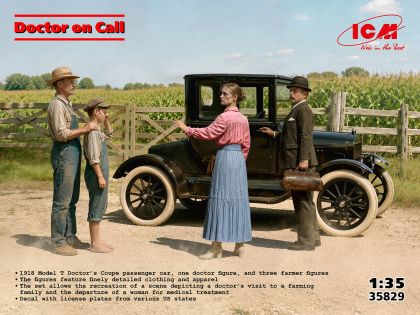
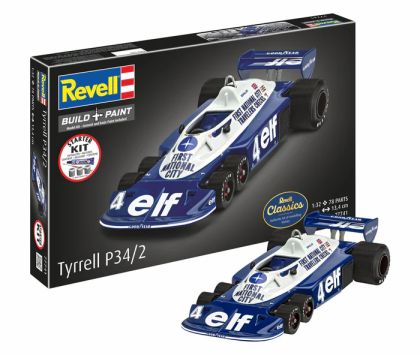
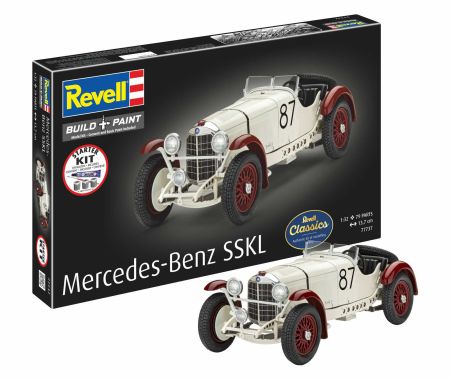
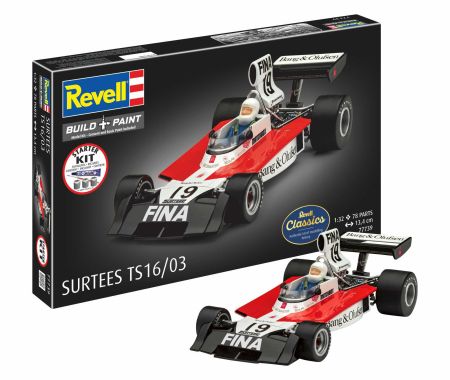
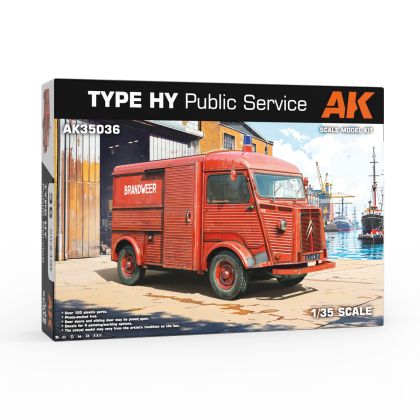
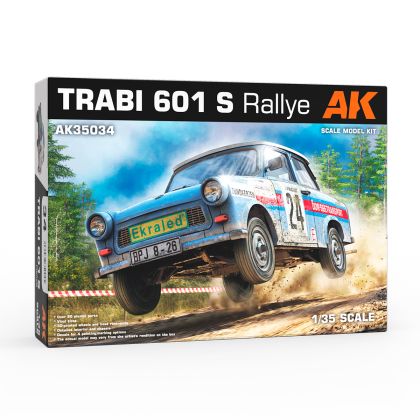
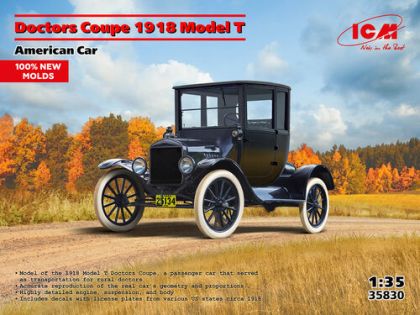
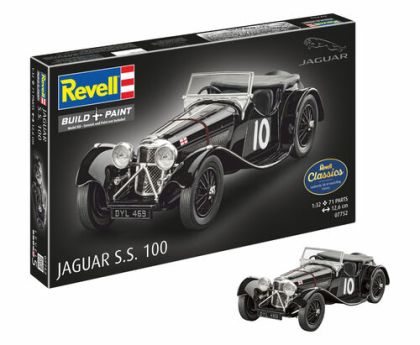
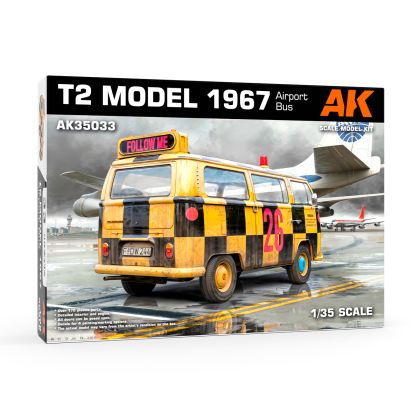
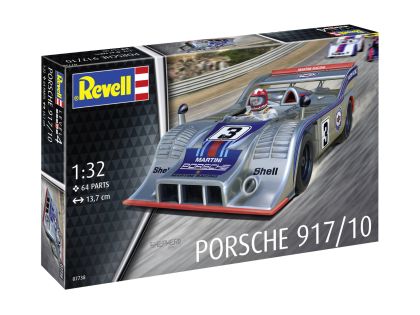
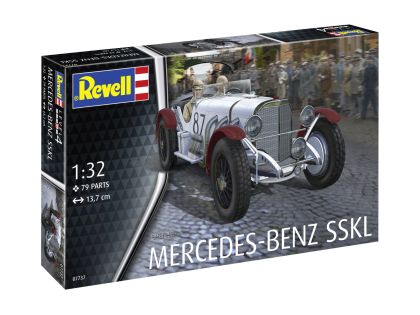
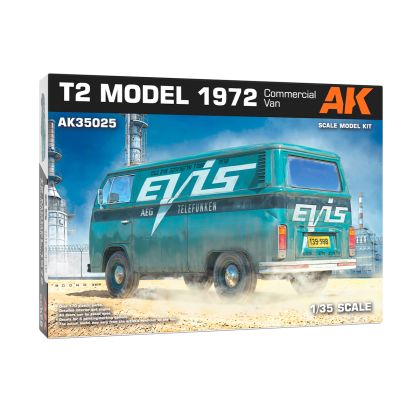
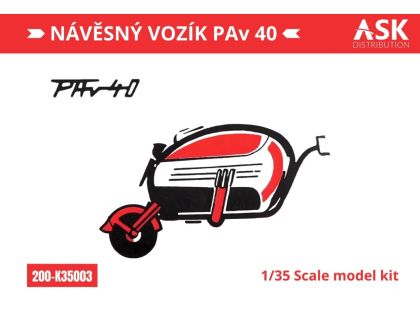
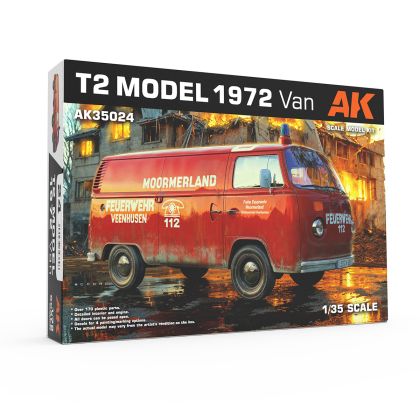
1:35 belongs to military vehicles and figures, which gives a civilian car built at this size a very particular job: it is a ticket into the world of dioramas. An Eastern Bloc people's car parked outside a tower block, a period van in a side street, a pre-war saloon on a country lane – each one turns a vehicle group into a scene with a time and a place. Alongside that, this section holds 1:32 starter sets of racing classics, with paint and glue supplied in the box for an undemanding build.
Most cars are built at 1:24, but 1:35 rules military modelling, so civilian cars in this size usually exist for the sake of a scene: an interwar saloon, a corrugated-sided van, a humble two-stroke family car, an airfield bus. Several kits include a driver figure, so the scene comes alive without further shopping. 1:32, meanwhile, is mostly the home of starter sets built around vintage racers, with paint and glue included.
If the car is going into a case on its own, choose a subject you enjoy and give it a careful finish. If a diorama is the plan, choose a vehicle that suits the setting and the period: an Eastern Bloc saloon for a housing estate, a fire or utility vehicle for a city corner.
Cars at 1:35 are dimensionally compatible with the enormous selection of model figures. A driver behind the wheel, or somebody leaning on a wing, gives the scene a narrative in a way the vehicle alone never does.
Unlike the mirror gloss of a 1:24 coupé, these subjects suit a used look. Light dust, faded paint and chipped edges read as far more convincing on an everyday vehicle than a flawless finish. Start subtle: a thin wash into the shut lines and a dusting along the sills is usually enough to place a car in the real world.
Shelf neighbours are easy to find here: military vehicle model kits share 1:35, working machines live in 1:35 civilian vehicle model kits, and haulage sits in 1:32 truck model kits. The whole vehicle branch is listed under car model kits.