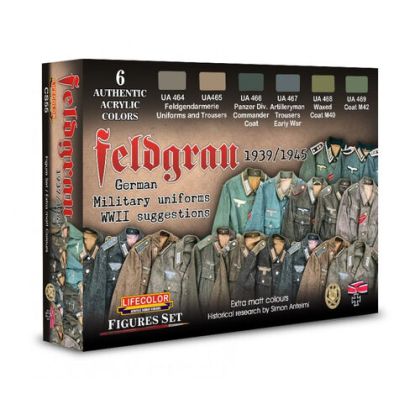
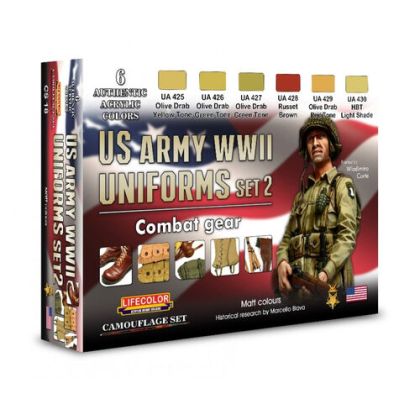
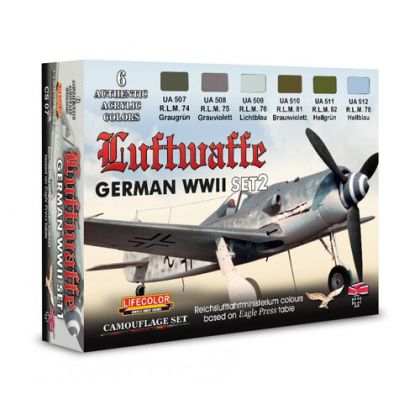
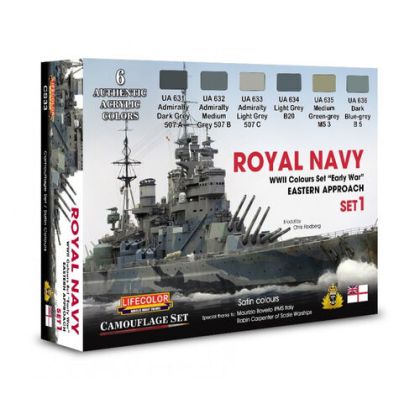
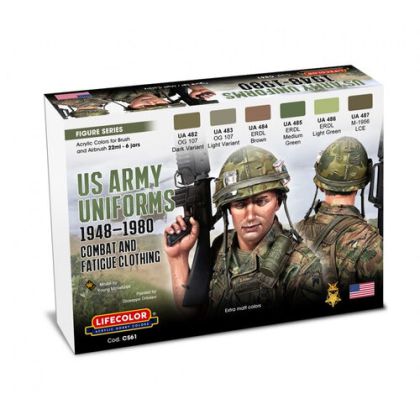
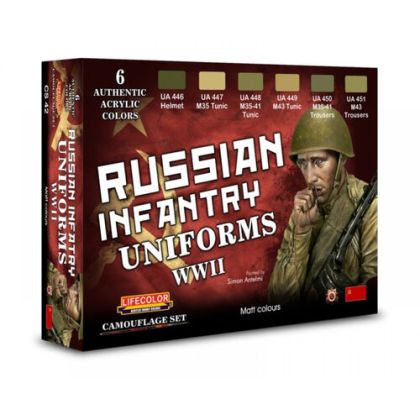
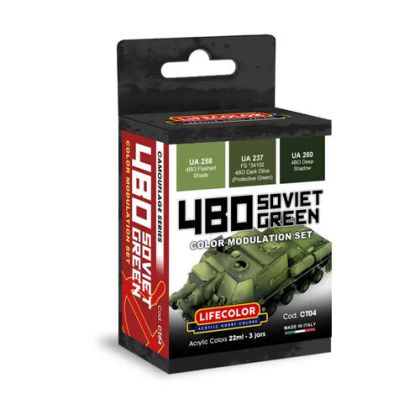
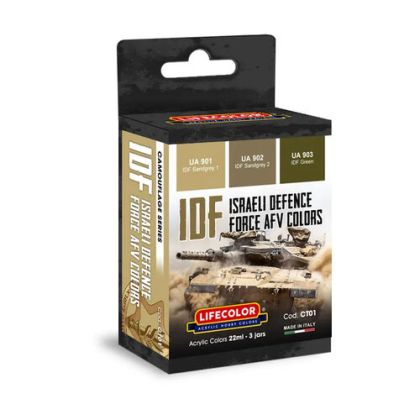
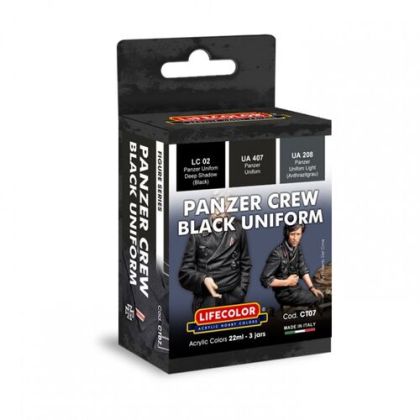
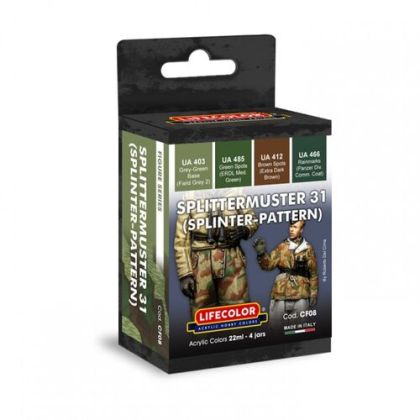
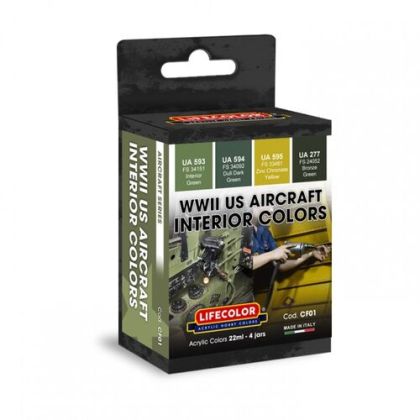
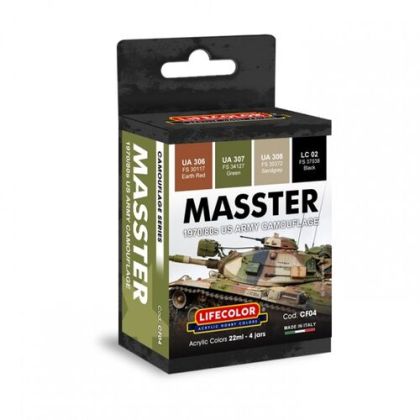
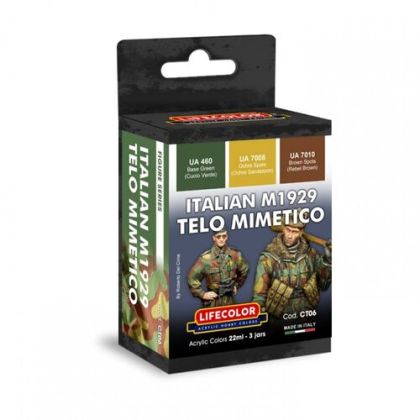
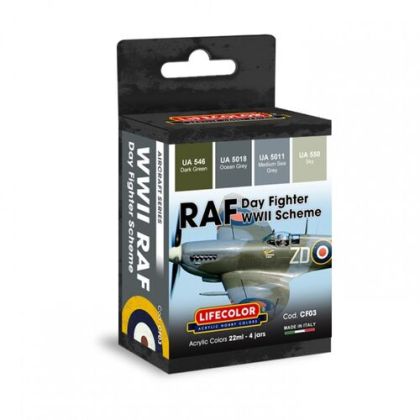
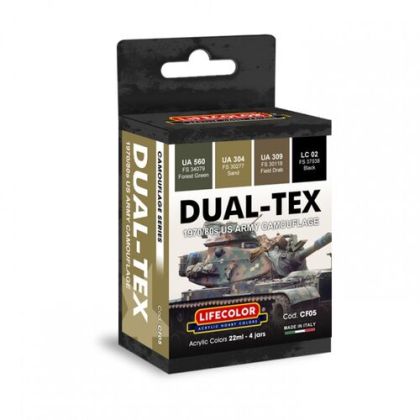
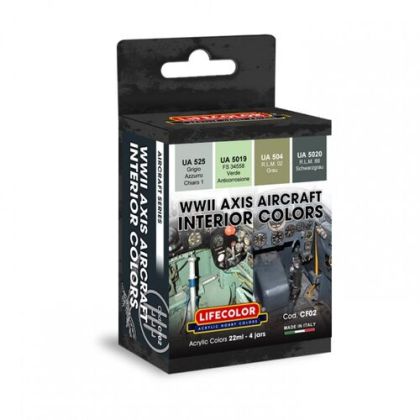
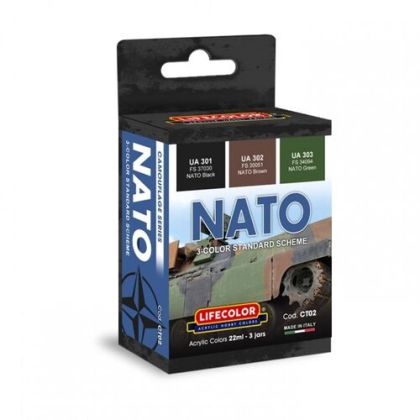
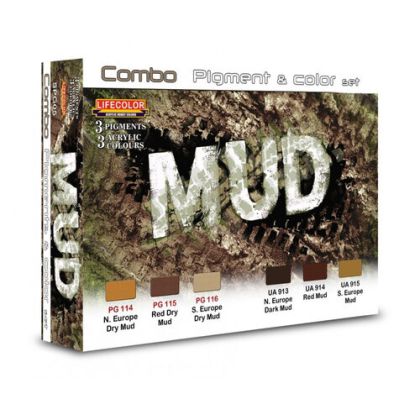
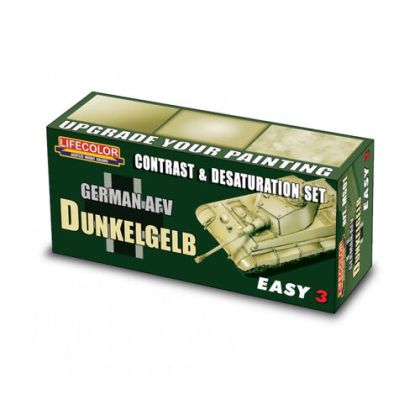
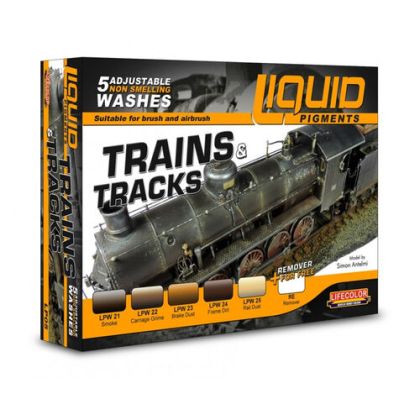
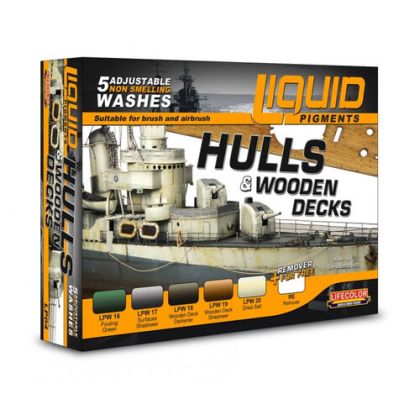
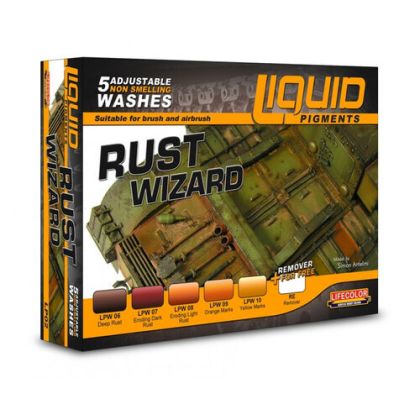
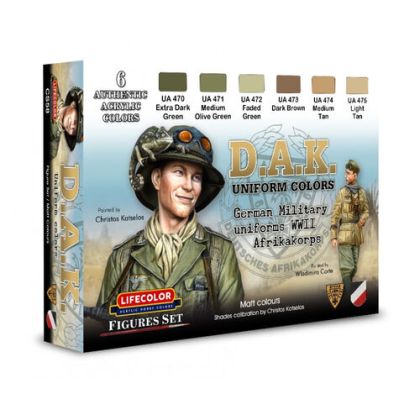
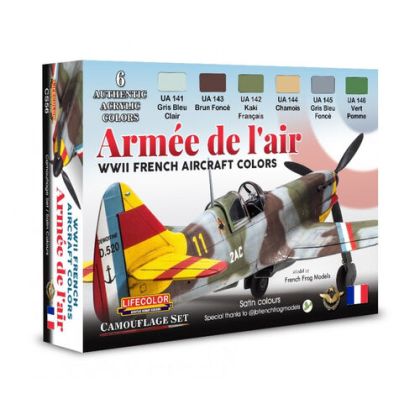
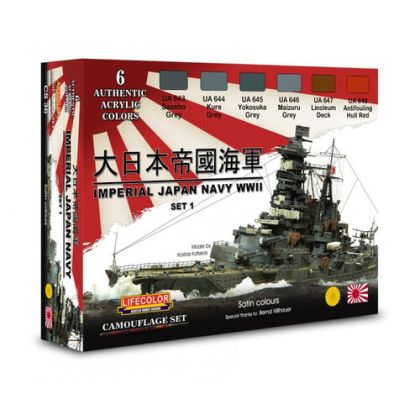
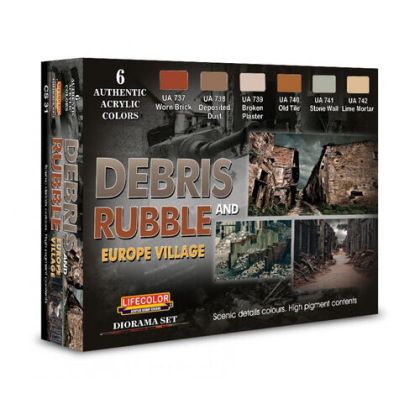
Lifecolor sets are assembled around techniques and camouflage schemes rather than individual machines. The range holds sets for multi-colour camouflage on ground vehicles and aircraft, cockpit interior tones, groups for modulating one base shade into several steps, mud sets backed by pigments, and colours for railway subjects and track.
How to choose a set according to what you actually want to do on the model is examined below. The paragraphs below also cover where in the sequence each type of set belongs, from base camouflage through modulation to mud.
Camouflage sets hold every shade of one scheme, so there is no deciding which tones belong together. They are most useful on complex multi-colour patterns, where the relative lightness of the fields is hard to judge.
Modulation sets take a different route: the box holds shades derived from one base tone in steps from dark to light, creating an impression of volume and falling light across a surface. Surface effect sets, mud above all, combine paint with pigments, so one box produces both dried and fresh grime. What all three share is that each solves one working process from beginning to end, instead of merely grouping colours of similar hue.
If you struggle to mix the steps of one shade, reach for a modulation set. If the obstacle is finding the right combination of camouflage fields, the camouflage set earns its keep. Both problems can be solved by hand, but it costs time and experience. For early attempts a set is also a good school: you see for yourself how large the gap between steps should actually be.
Sets with pigments are used on a finished and clear-coated model. They lead straight into the whole weathering category, where dust, oils and running water traces are waiting.
Shades for rolling stock derive from standardised liveries and are combined with heavy weathering. The subjects they aim at are in the railway kits category.
Themed sets from other makers are in the model paint sets category.