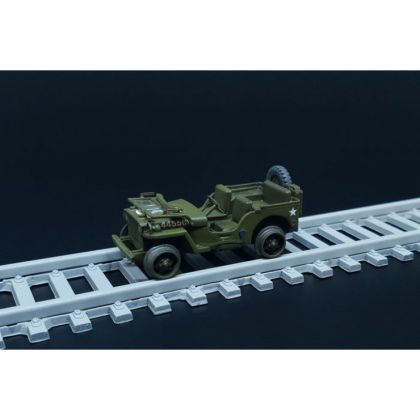
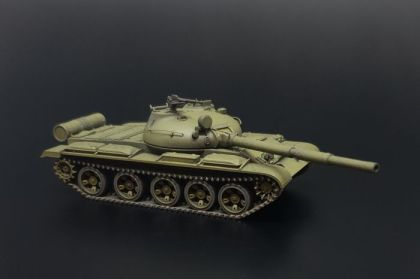
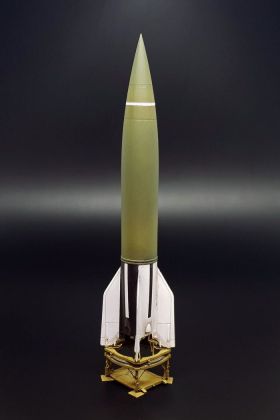
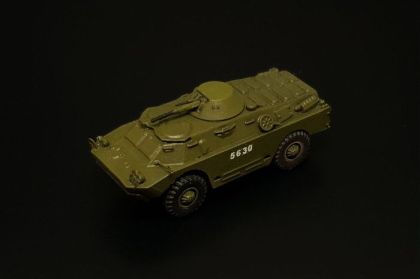
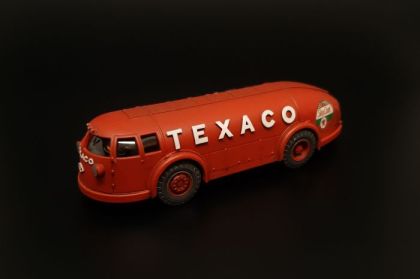
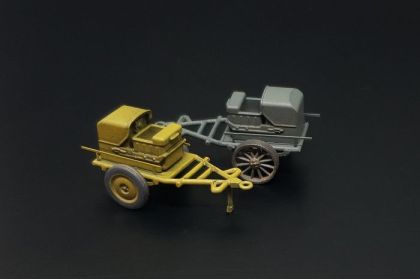
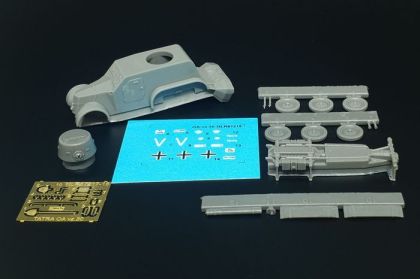
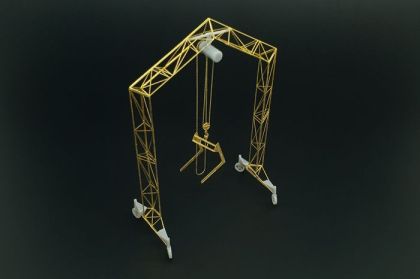
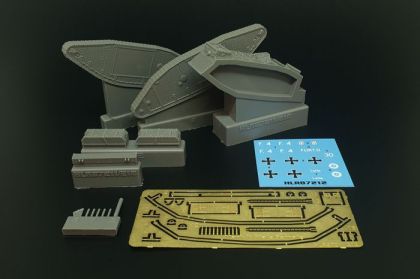
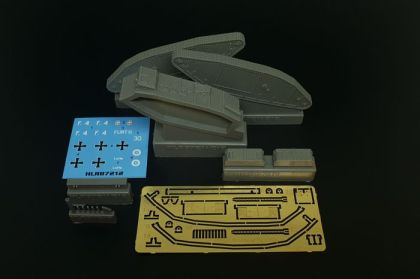
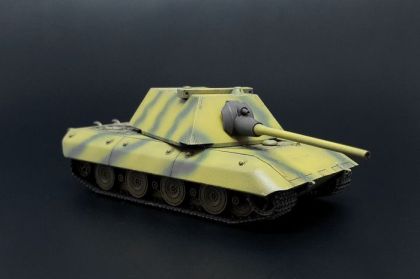
HO is railway territory, yet 1:87 military vehicle kits can turn a layout into a story: a military transport chained down on flat wagons, an armoured car waiting at a level crossing, a crane on the goods platform. The listing covers tanks, armoured cars, a V-2 rocket and small airfield service equipment, much of it short-run casting with a surprising amount of detail for the size. Below: how to choose for a layout or for a cabinet, and how to get these subjects to earn their place.
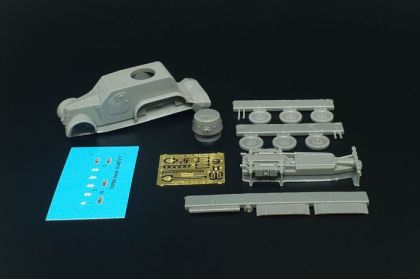
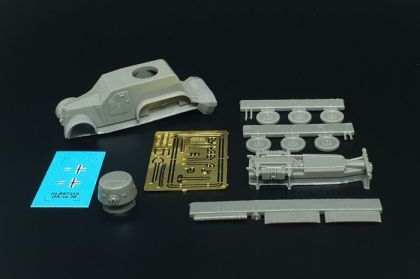
1:87 is HO, the most widely used model railway standard, which gives these vehicles two audiences at once. Railway modellers use them to populate a layout, while military modellers find subjects here that are simply not available anywhere else, from First World War Mark IV tanks through Czechoslovak armoured cars to postwar main battle tanks. Short-run resin kits with etched detail parts are common.
For a layout, match the vehicle to the operating era: a wartime military transport calls for different equipment from a scene set in the 1980s. For a cabinet, go the other way and chase the rarities larger scales never covered. Railway model kits — inspection trolleys and rail vehicles — are what finally make a transport scene work.
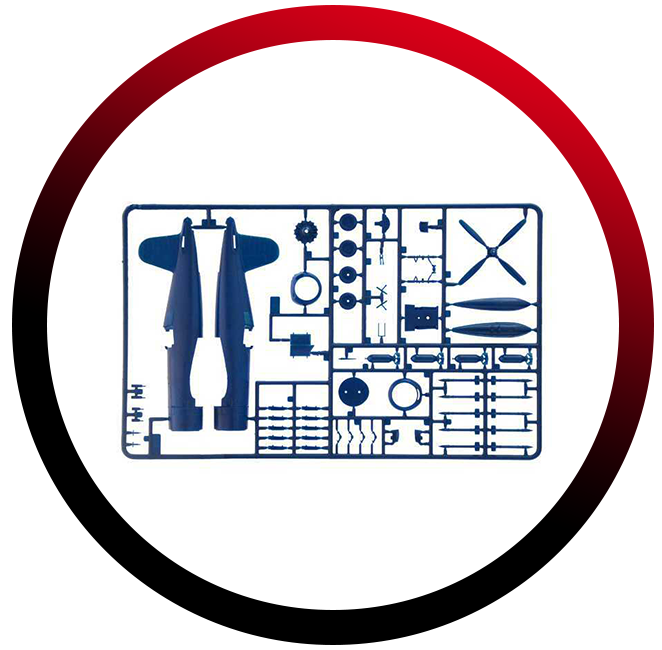
Besides styrene you will meet resin here: glue it with cyanoacrylate and wash it free of release agent before painting. Small parts want tweezers, and the reward is detail that mass-produced plastic does not reach. Fine fittings come from 1:72 and 1:87 armour photo-etch.
If HO feels too small to work on, step up to 1:72 military model kits; on a standalone diorama nobody will spot the difference, but on a layout stay with 1:87 throughout.
Every armour size is set out clearly under military model kits.