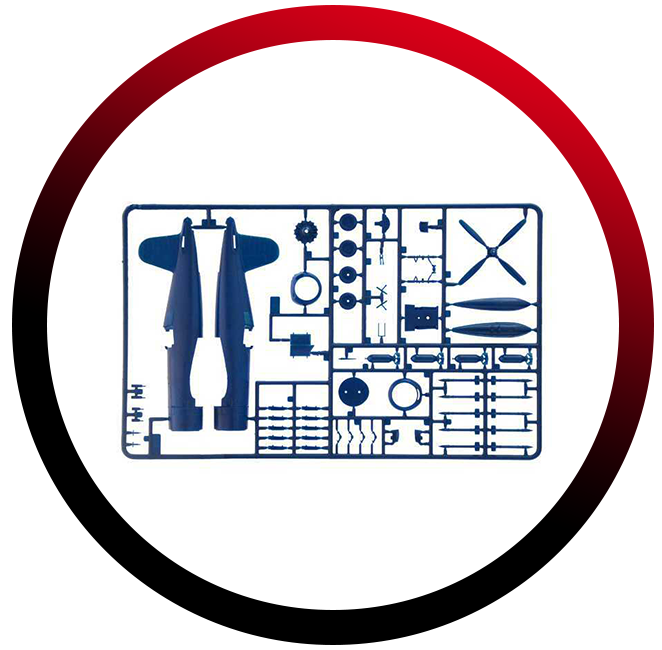
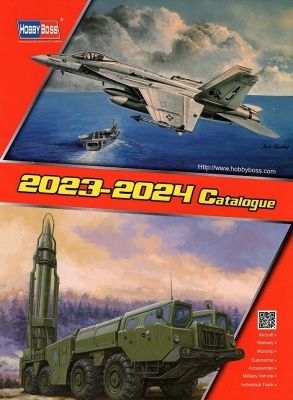
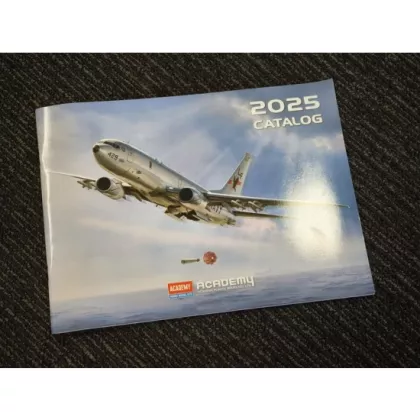
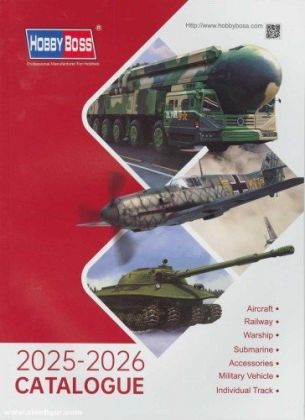
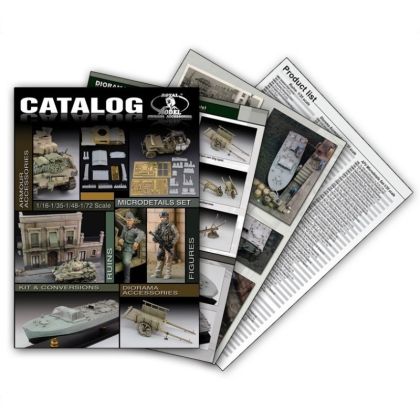
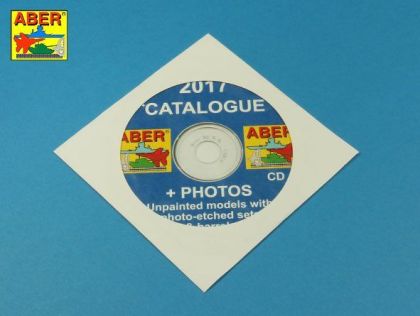
A catalogue answers a question no monograph can: what can I actually build this subject from? Unlike a web listing, it puts the range in context, so scales, editions and companion detail sets sit side by side and comparison takes seconds. This section gathers catalogues of kits, detail sets, paints and bench chemicals, in printed form and on CD, including editions from earlier years that document items no longer in production. Below we explain when a catalogue earns its place on the shelf and how to get value from one.
A typical catalogue is a complete listing of one producer's range, sorted by subject type and scale, usually with box illustrations and catalogue numbers. Those numbers are the most useful part in practice, because they are the most reliable way to trace a kit or a detail set later.
A printed catalogue browses better and turns up things you would never have searched for. A CD edition wins on sheer coverage and on text search, which matters when you need to pin down one item inside a large range. For planning a year of builds, paper tends to work better; for chasing a number, the digital version does.
Producers differ in what they make: kits, upgrade sets, paints or chemicals. If your question is how to replace plastic tracks or how to fill out a cockpit, choose a catalogue by who makes that kind of thing rather than by the subject of your model.
A catalogue from previous years documents items no longer in production but still circulating second-hand. For anyone hunting an older boxing or a long-discontinued detail set, it is often the only way to establish what existed and under which number.
Once you know what exists, the next question is what the real machine looked like: that is the job of reference books on real machines, with the whole modelling literature section one level up.