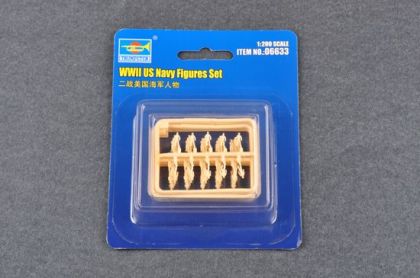
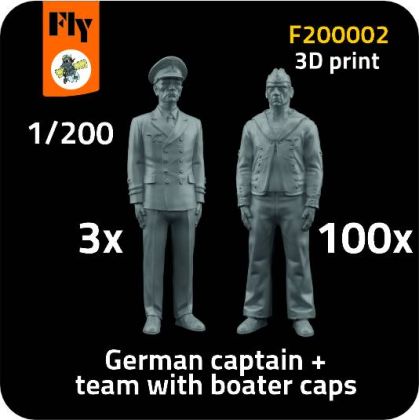
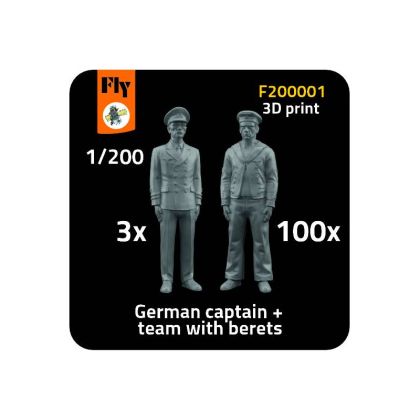
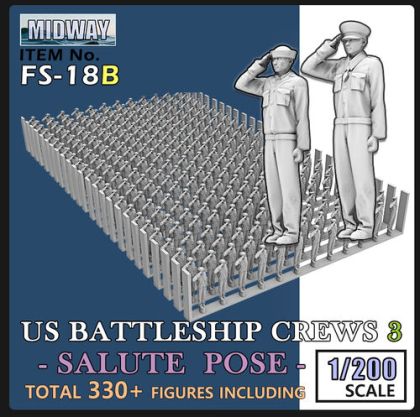
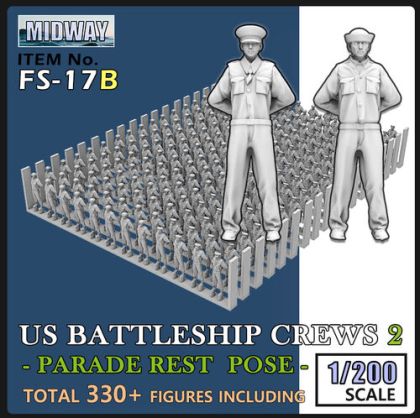
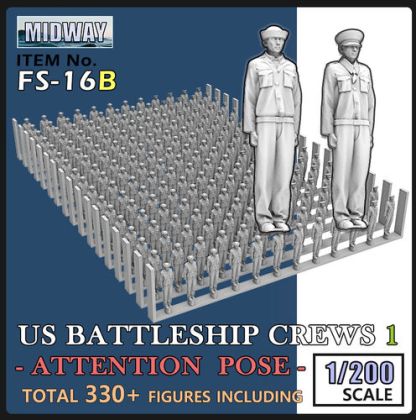
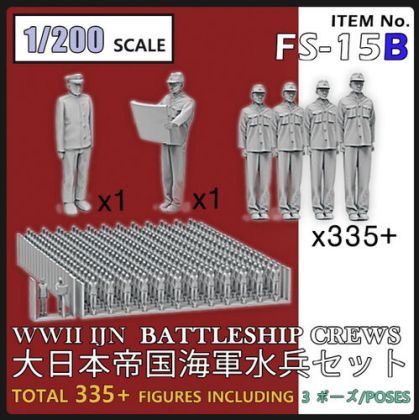
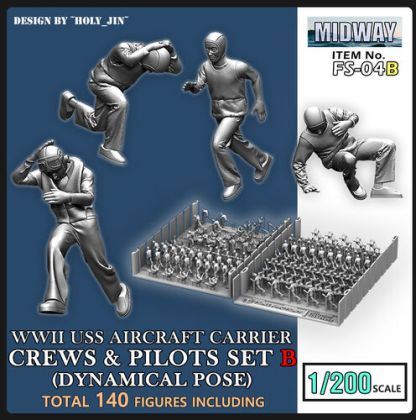
Large ship kits are impressive until you notice there is nobody aboard. 1:200 model figures fix that on an industrial scale: sets in this size hold anything from a hundred sailors with their captains to more than three hundred and thirty bodies, enough to line the whole length of a battleship.
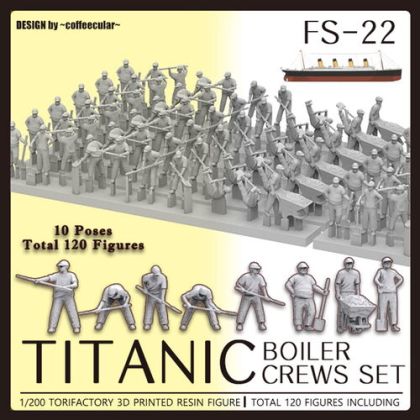
The listing covers American and Imperial Japanese battleship complements at attention, parade rest and salute, aircraft carrier crews and pilots in dynamic poses, engine-room crews for ocean liners, a formal surrender ceremony and general naval figure sets. A body stands around nine millimetres tall and is produced by etching or by fine printing. The guide below explains how to paint and place them in quantity.
1:200 belongs to the largest and most famous vessels, from battleships to transatlantic liners, and the figure sets are designed to follow them directly: entire complements in one uniform stance for a ceremonial muster, working parties for engine rooms, flight deck personnel and historic set-piece scenes. It is the people who finally give a hull of 1.2 metres or more its true measure, and a single consistent pose across a whole deck is the kind of effect that stops visitors at an exhibition. The difference between an empty hull and a crewed one is not detail but scale: the eye has nothing to measure a grey deck against until a human shape appears on it.
A warship wants ratings in the uniform of its navy and period; a liner wants passengers and engineers. Uniform-stance sets suit ceremonies, mixed-pose sets suit everyday routine. Hulls are listed in 1:200 ship model kits, with 1:200 submarine model kits alongside them.
Carrier scenes need aircraft as well as handlers, and 1:200 aircraft model kits cover that side. Deck crews in colour-coded jerseys then make the different roles legible at a glance, which is most of what a carrier diorama is trying to show.
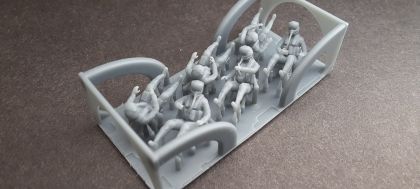
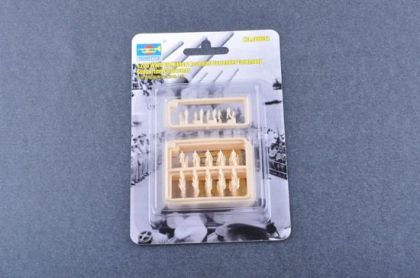
With hundreds of bodies, work in stages rather than figure by figure: primer, uniform, a dot of flesh, then a wash. Paint etched crews while they are still on the fret and printed ones on their support raft, and transfer only finished figures to the deck with tweezers.
Other figure sizes are gathered in the overview at model figures.