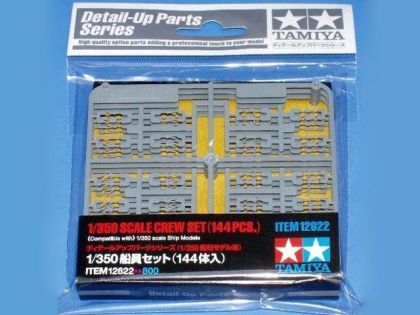
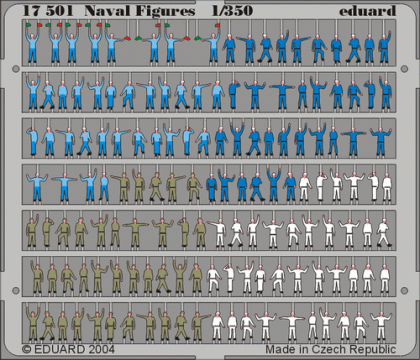
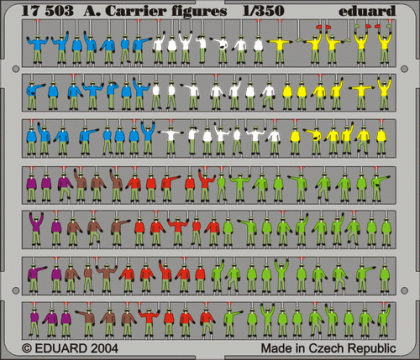
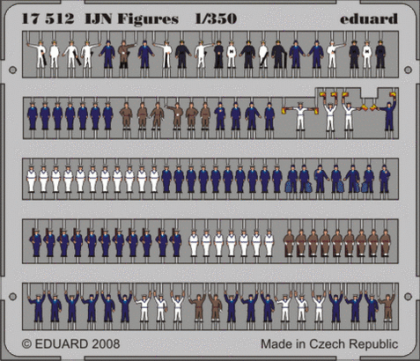
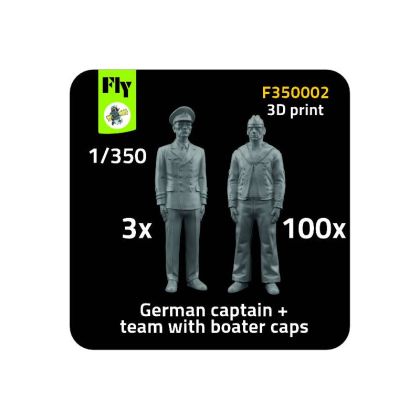
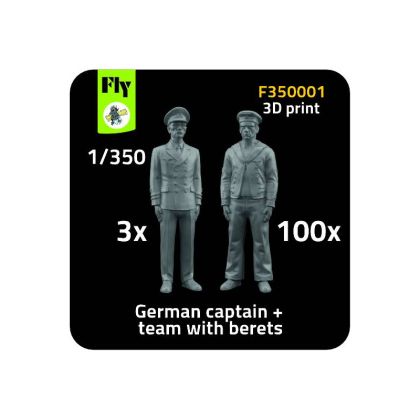
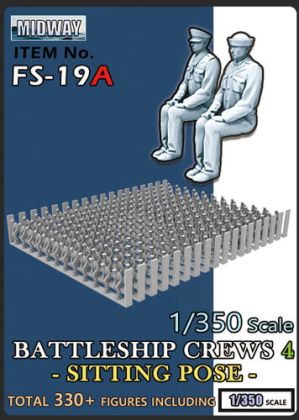
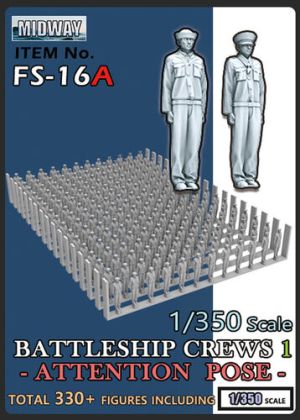
Put a hundred five-millimetre sailors on a warship deck and the hull finally tells the truth about its size. That is the whole purpose of 1:350 model figures, and it explains why they are sold by the crowd rather than the piece: sets here run from a hundred sailors with their captains to complete battleship complements of more than three hundred bodies in parade stance.
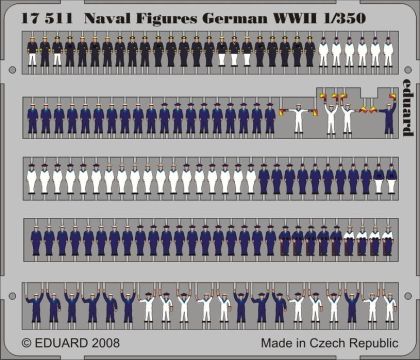
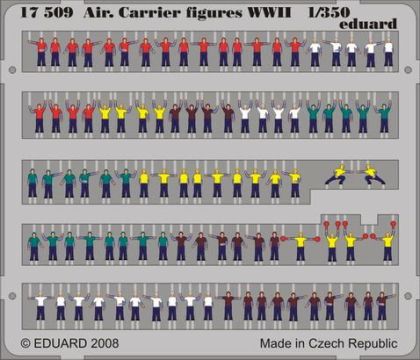
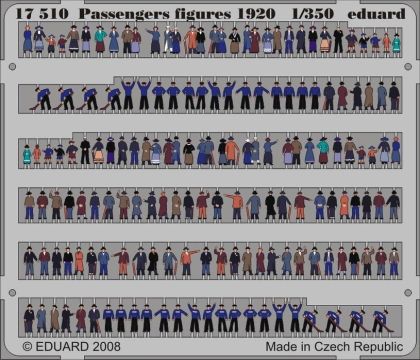
The listing covers crews in boater caps and in berets, Imperial Japanese and German naval figures, aircraft carrier personnel of the Second World War and of the present day, and passengers dressed for the 1920s. Both etched brass and fine printing are used, and the guide below explains how to paint and place figures at this size.
1:350 is the most widely produced size of warship kit, so the figures that serve it are conceived as mass sets rather than individual castings. A body stands around five millimetres tall, which is too small for facial detail and exactly right for the job it actually does: giving the ship a measure and telling the viewer that people lived aboard it. Think of a crew set as a material rather than as a group of individuals, bought by the hundred and used by the handful wherever the deck looks empty.
Uniforms differ by navy and by decade, so a set chosen for a Second World War battleship will not read correctly on a present-day carrier, and a liner of the 1920s needs passengers rather than ratings. Pick against a specific hull: vessels are listed in 1:350 ship model kits and 1:350 submarine model kits.
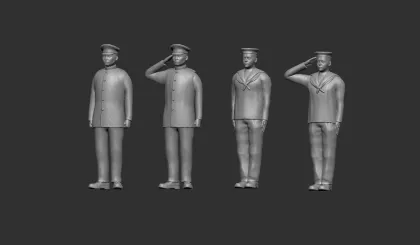
Sets offer figures at attention, walking and seated. A crew drawn up on deck looks ceremonial; working poses suggest maintenance and routine. Place figures in small groups with an evident purpose, because one lone sailor in the middle of an empty deck simply looks lost. Two or three clusters along a long hull do more than an even scatter of fifty.
Etched crews are flat, come in very high counts and are entirely convincing from normal viewing distance. Printed figures have full volume and survive close inspection. Both are fixed with the smallest possible drop of cyanoacrylate, and both are easiest to paint while still attached to their fret or support raft.
Figures in every other size are listed under model figures.