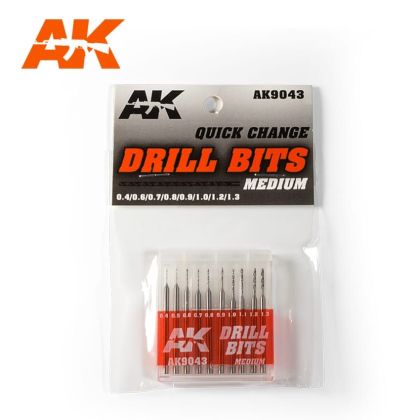
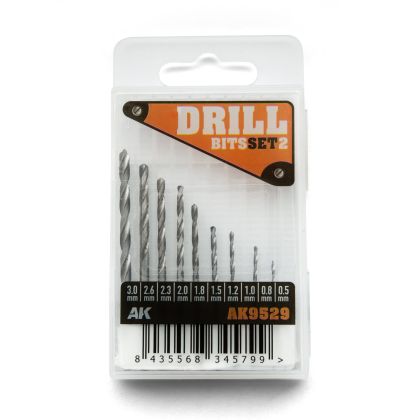
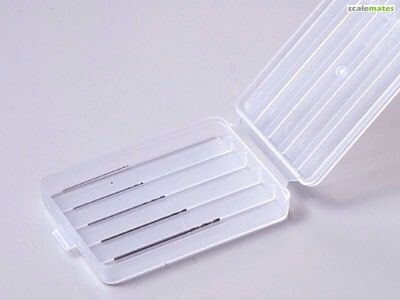
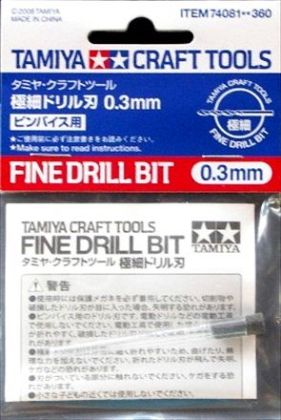
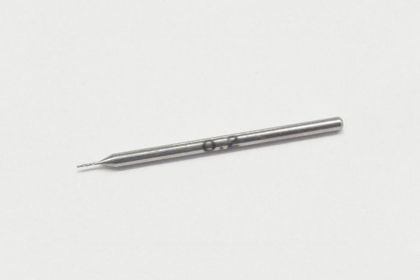
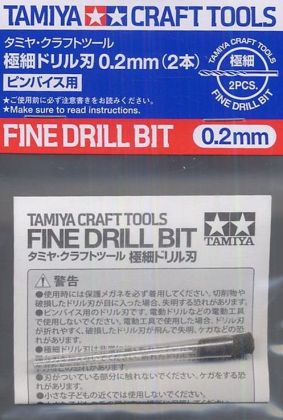
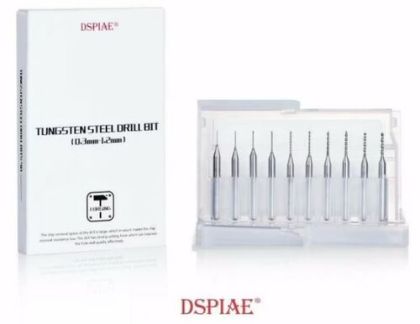
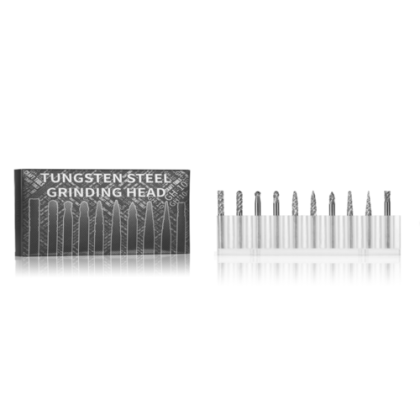
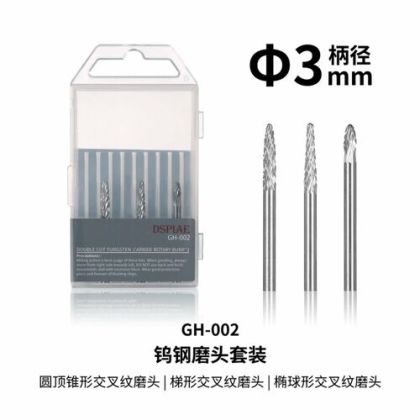
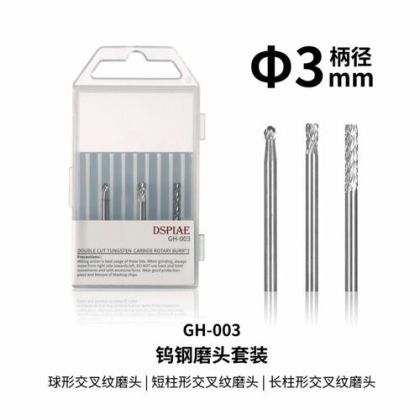
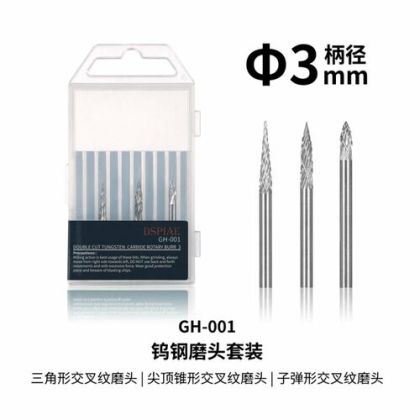
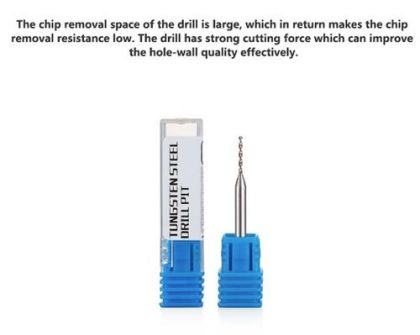
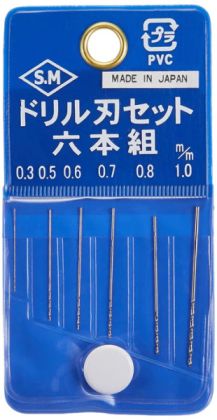
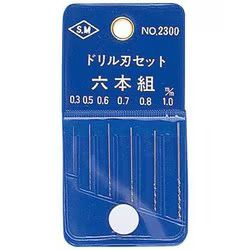
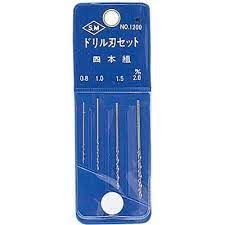
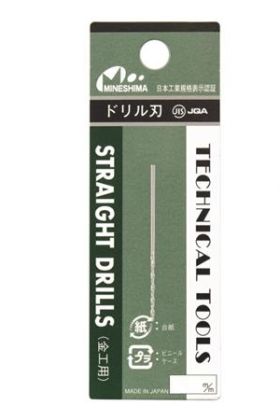
Modelling drill bits are very slender tools where the diameter is counted in tenths of a millimetre. That is exactly the range a model works in most often: a hole for a wire aerial, a seat for a tube, an opened nozzle, a hole for a locating pin. The category offers single diameters and graduated sets, bits in high-speed steel and in carbide, plus tapered countersinks and grinding heads for reshaping a hole that has already been drilled. Bits are consumable at these diameters, so buying the fine sizes in multiples is less painful than it sounds.
By what is going into the hole. If you are gluing in wire or tube, measure it and pick a bit of the same diameter or a few hundredths larger — a tight seat holds better than adhesive flooded into an oversized hole. For a through hole that will be seen, follow the scale: what looks natural at 1:32 reads as a crater at 1:72.
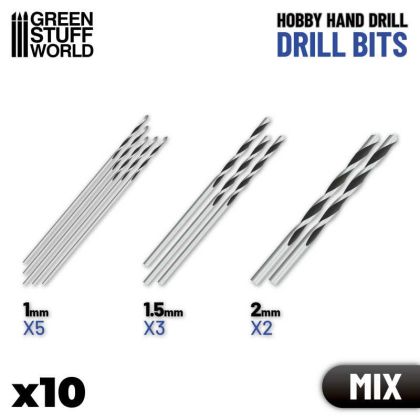
The standard for styrene and soft materials. They have more spring, so they snap less readily, but they dull faster on hard material. For ordinary building they are the sensible choice.
Harder and sharper, they hold an edge far longer and handle resin, cured filler and metal. They are also more brittle — they do not forgive a sideways bend and break without warning. Work square and never lever with them.
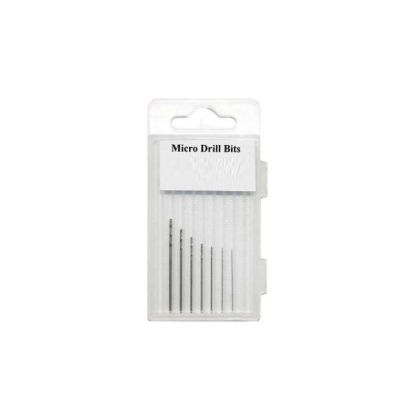
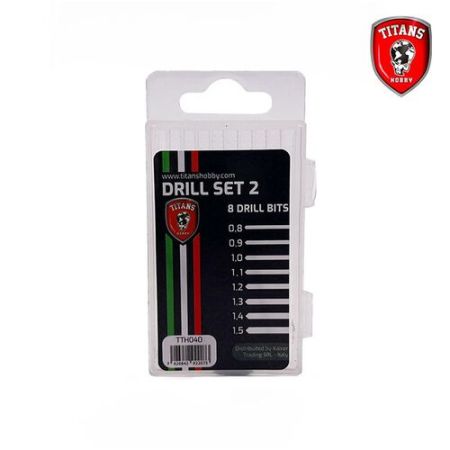
The most practical way to buy. You have the whole ladder to hand and are not ordering single sizes halfway through a build. The fine diameters get used most, so it pays to top those up individually as well.
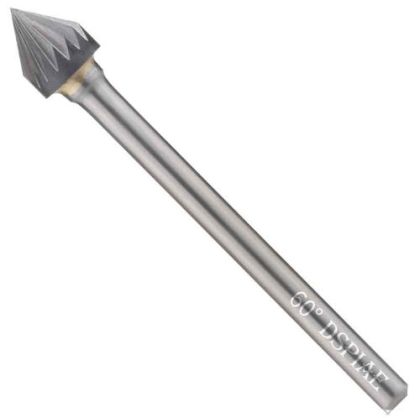
A tapered tool breaks the edge of a hole and creates a recess — typically at the mouth of a nozzle or exhaust, where the rim should look thin. Grinding heads open a hole into a shape a round bit cannot produce.
Three rules. Always mark the spot with a dimple, or the tool skates across a smooth surface. Clamp the bit with the shortest free length into a pin vice. And do not push — a fine diameter cuts by itself and pressure only jams it. For powered drilling keep the speed low, because softened styrene welds to the flutes and locks the bit solid.
For larger diameters in thin material, a tool from punch and die sets is usually faster.