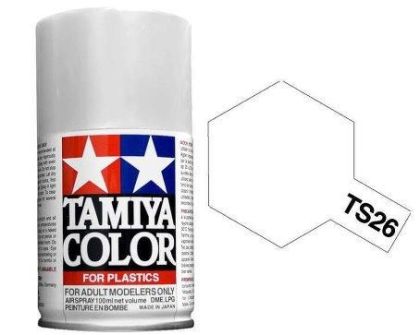
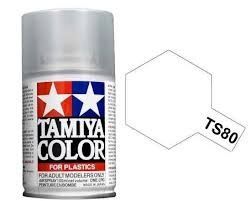
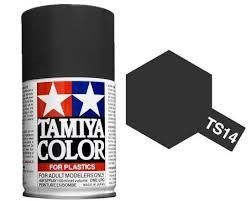
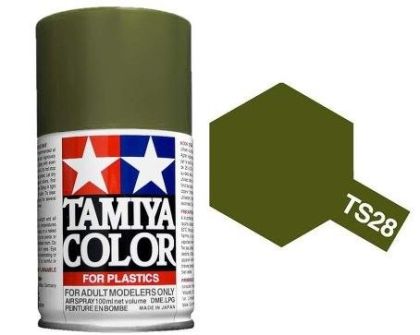
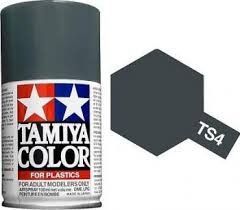
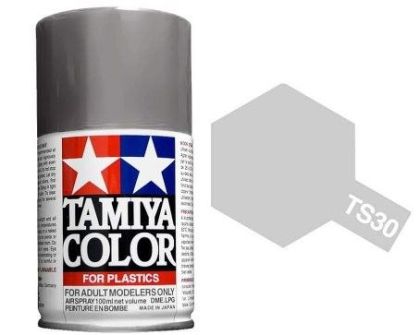
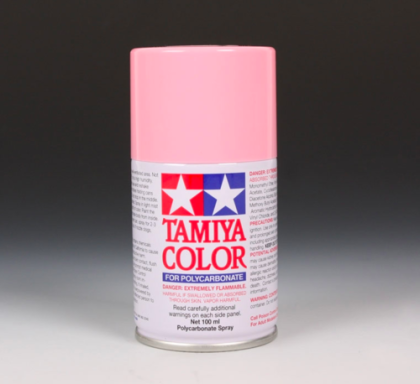
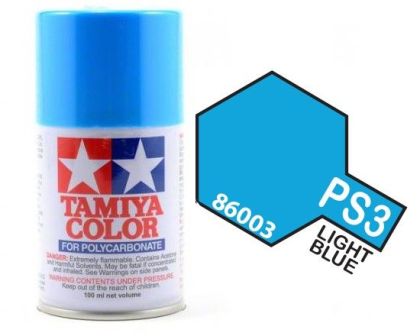
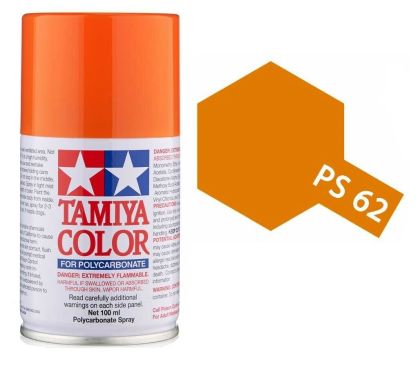
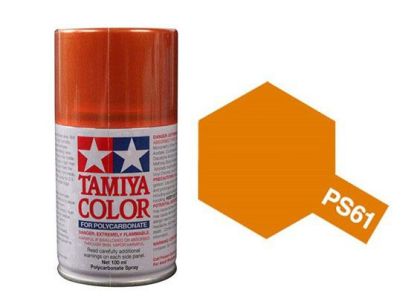
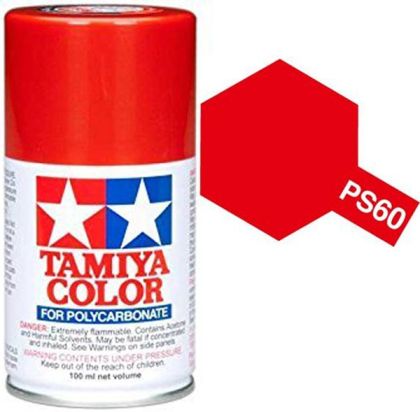
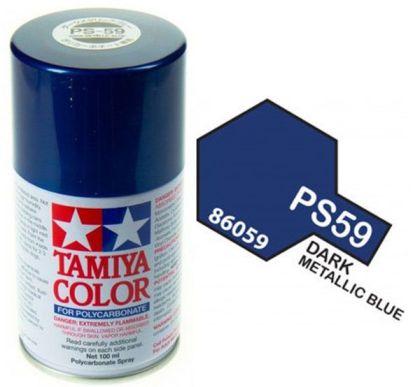
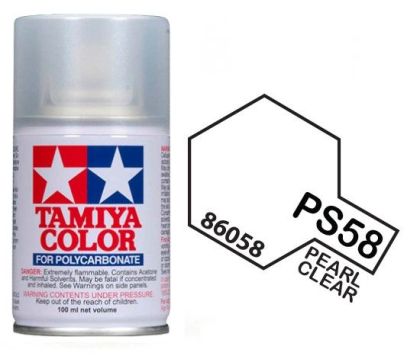
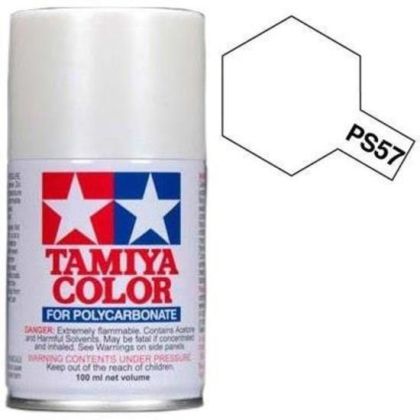
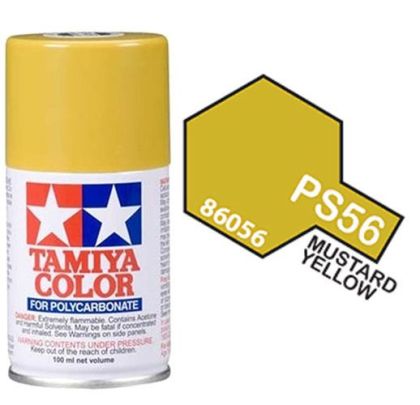
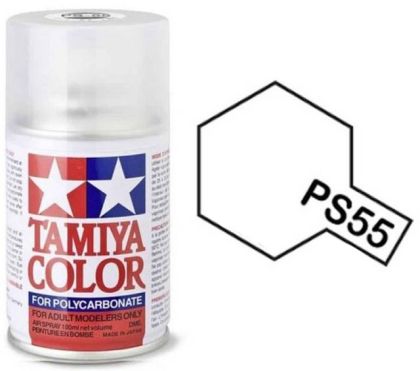
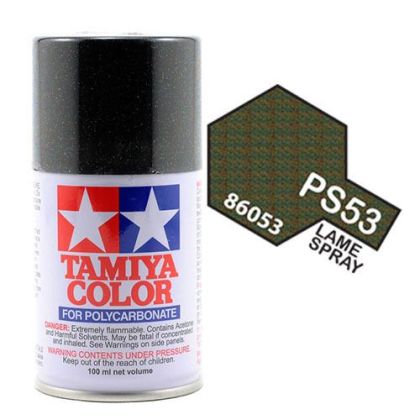
The 100 ml Tamiya cans split into three lettered series and each one has a different job. TS is a lacquer for hard plastics and car bodies, AS covers aircraft shades including camouflage greys, and PS is made for flexible shells where a standard lacquer would crack. Choosing the right series therefore matters more than choosing the shade, because the wrong pick only shows itself once the paint is on the model. What each series can do is explained below.
The TS lacquers leave a hard film that can be cut back and polished to a high gloss once fully cured, which is exactly what a car body wants. The AS aircraft shades are flatter and mixed to historical schemes, so an airframe can be covered without mixing anything on a palette. The PS paints are sprayed on the inside of a translucent shell and stay flexible, so they do not flake when the body deforms.
Lacquer series carry a stronger solvent. On softer plastic or over paint that has not fully cured they can bite in, so test on a piece of sprue first or protect the surface with a coat from surfacers and primers.
Only after full curing, which is days rather than hours, can the surface be rubbed back with very fine abrasive and polished. That is the step that creates depth. Clear topcoats for it are in model varnishes.
Between two sprayed shades you need a precise boundary. Materials for it are in masking tapes, including narrow flexible types that follow a curve.
Work out which series a shade belongs to before ordering, because the letters matter more than the colour name. A TS lacquer sprayed on a flexible shell will craze at the first flex, and a PS paint sprayed on the outside of a hard body never develops the gloss it was never meant to have.
Other aerosol ranges and smaller cans are in the parent category model spray paints, which also sets out the general spraying method.