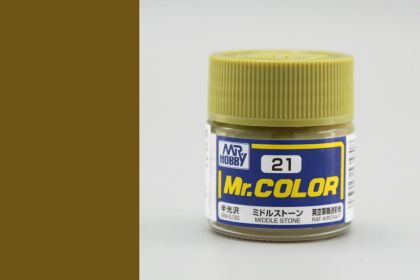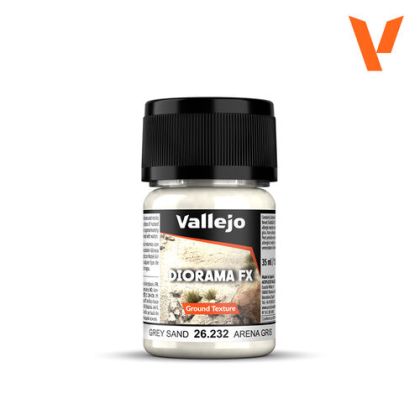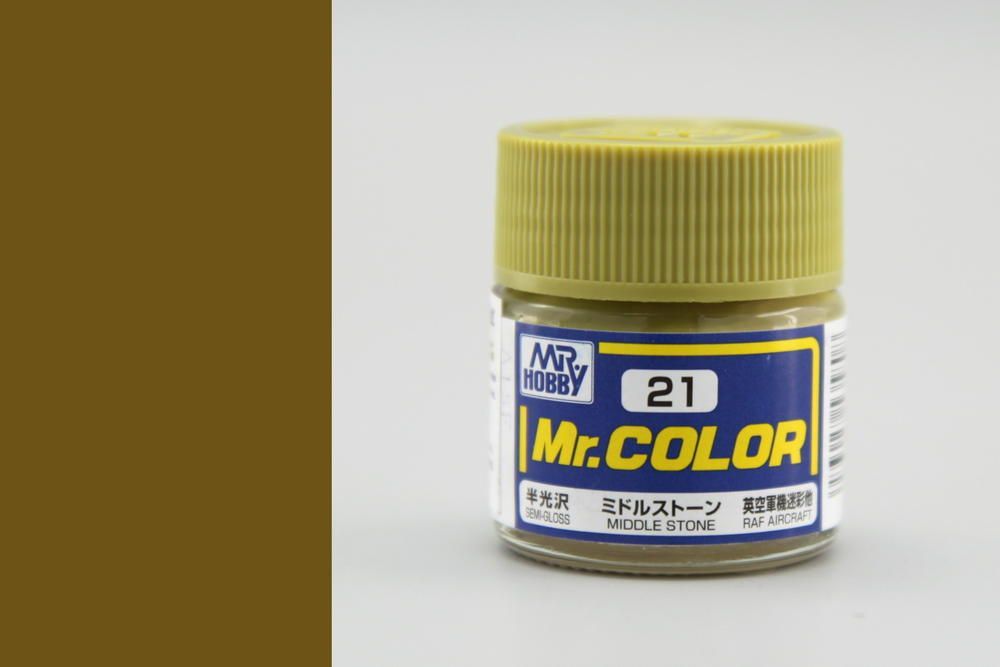

A lacquer shade from British Second World War desert camouflage, a warm stone-sand tone for upper surfaces. A 10 ml bottle, designed mainly for an airbrush.
Responsibility details are not available.
Between 1941 and 1943, the Royal Air Force covered aircraft fighting in the desert with a pair of earthy tones, a warm stone-sand and a dark brown. The undersides received a light blue so the aircraft would blend with the sky when viewed from below. Hurricanes, Kittyhawks, tropical Spitfire versions, and twin-engine bombers all flew in this scheme, with the lighter of the two earthy tones covering a substantial part of the upper surfaces.
The paint comes from the Mr. Color lacquer line. The solvent is organic, not water, which shows in the hardness of the dried film: the coat withstands sanding, polishing, and later decal application well. The manufacturer recommends it mainly for an airbrush; it is difficult to brush, as it sets quickly.
Desert aircraft tended to be dusty and sun-bleached, so it is worth lightening the base coat with a touch of a light shade and spraying it into the middle of the panels. The shade holds better on a unified base; on varied plastic with filled seams, blotches otherwise show through. Anyone building an aircraft with a sharp division between the two earthy tones will appreciate a mask raised slightly above the surface, which softens the edge.
Gray shades with a hint of blue look cooler on a model than pure gray, which suits winter and Nordic subjects. For a warmer rendition, just mix in a drop of ocher.
Naši poradci a znalci sortimentu jsou připraveni odpovídat na Vaše dotazy (Po–Pá, 8–18 hod).
Zeptejte se na co potřebujete, odpovíme co nejdříve.
Texts from customers in the advice section reflect solely the opinions and views of the customers. MNF trade s.r.o. does not approve or verify customer texts in advance.
There are no questions here yet. Be the first to ask!