For a tank modeller these monographs settle three things at once: which version to build, how it was marked and how worn it should look. The Kagero armour line covers German assault guns and tank destroyers of the Second World War, Hungarian and Romanian vehicles, Soviet self-propelled guns and post-war types from the French AMX-30 through to the modern Leopard. Alongside single-vehicle monographs sit volumes on specific operations and armoured units. How to choose between them is set out below.
 The Leopard 1 And Leopard 2 From Cold War To Modern Day
10.36 €
The Leopard 1 And Leopard 2 From Cold War To Modern Day
10.36 €
 History of the 40/43M Zrínyi Assault Howitzer
15.96 €
History of the 40/43M Zrínyi Assault Howitzer
15.96 €
 39/40M. Csaba armoured cars in World War 2
15.96 €
39/40M. Csaba armoured cars in World War 2
15.96 €
 45 - The Su-57 self-propelled gun
3.56 €
45 - The Su-57 self-propelled gun
3.56 €
 History of the Turán medium and heavy tanks in World War II
15.96 €
History of the Turán medium and heavy tanks in World War II
15.96 €
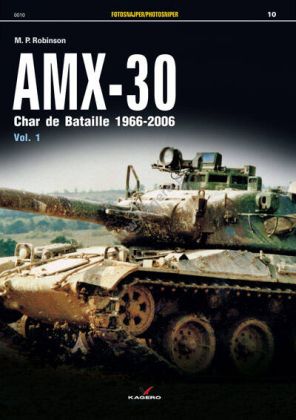
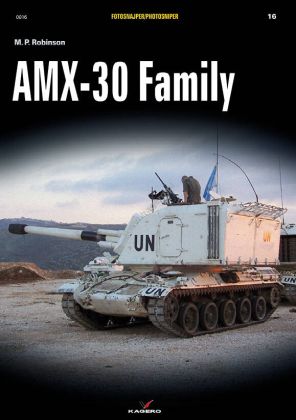 AMX - 30 Family
17.16 €
AMX - 30 Family
17.16 €
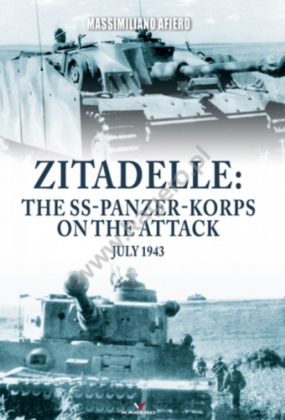
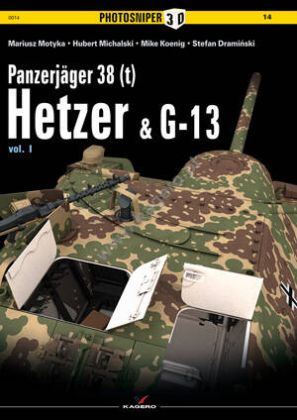
Some titles are classic type monographs - Sturmgeschutz IV, Sturmpanzer IV Brummbar, Panzerjager 38(t) Hetzer, the AMX-30 family, the Leopard. A second group covers units and theatres, such as the employment of an armoured corps during Operation Citadel in 1943 or the operational history of Hungarian armoured troops. A third group takes on less usual subjects: the Hungarian Turan and Zrinyi, Csaba armoured cars, Romanian armour, and Western tank development between 1945 and 1959.
A type monograph answers questions about the vehicle itself: which production batches differed, what equipment it carried, how the superstructure and stowage bins were arranged. A book about an operation or a unit supplies context instead - markings, terrain, season and how battered the vehicles were. For a diorama the second group is often the more useful.
Photographic documentation pays off most in the larger armour scale, where details such as tool mountings and track structure are visible. In smaller scales use the books mainly for the version, the markings and the overall finish.
Hungarian, Romanian and early post-war vehicles are poorly covered elsewhere, so here a single volume may be the only coherent source you will find. Build from the photographs rather than from an impression of the type.
For magazine coverage of armour building see Tanker Magazine, and the other series one level up in Kagero books.