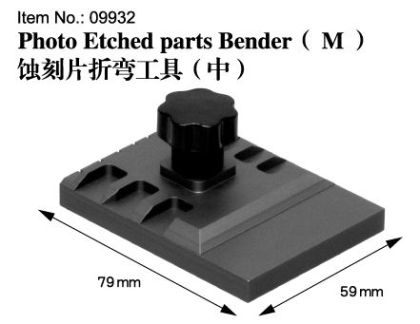
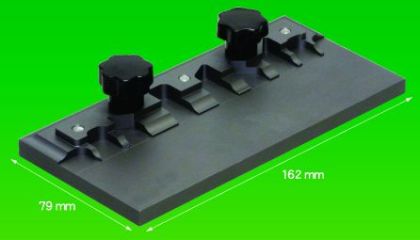
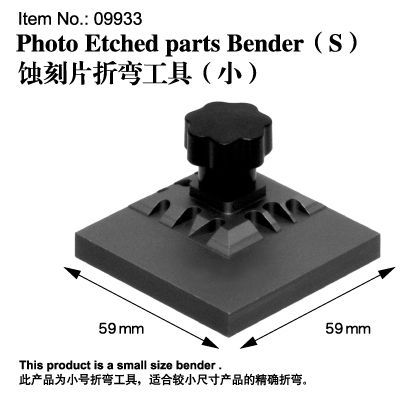
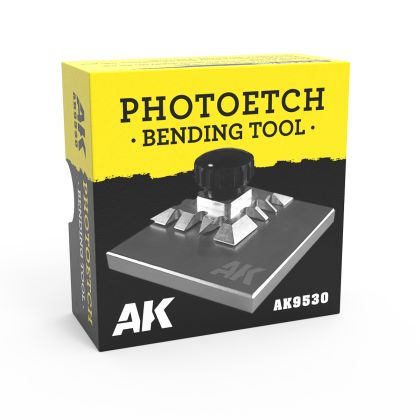
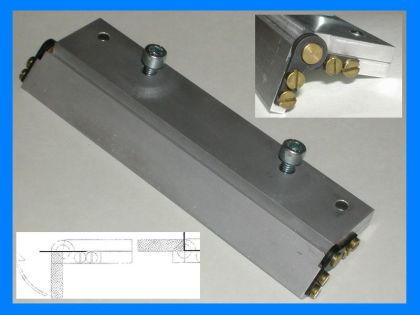
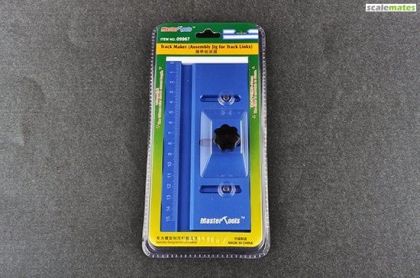
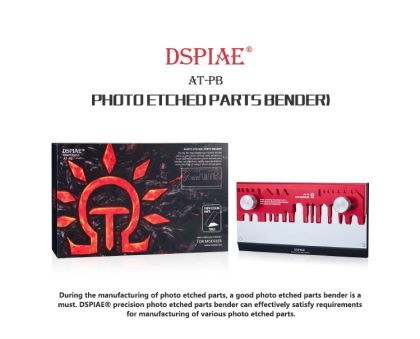
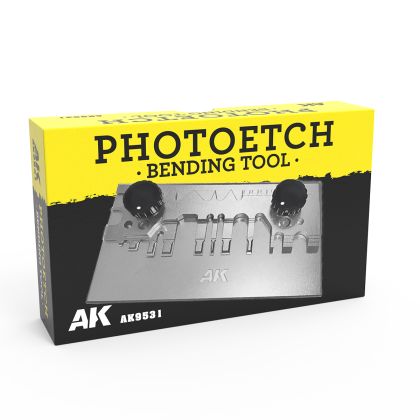
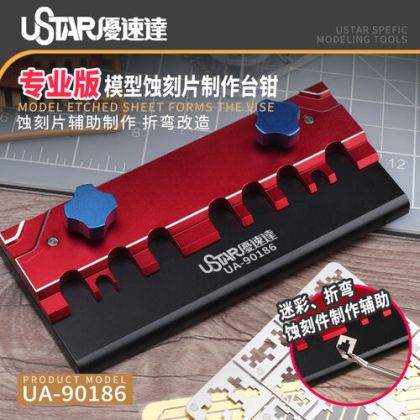
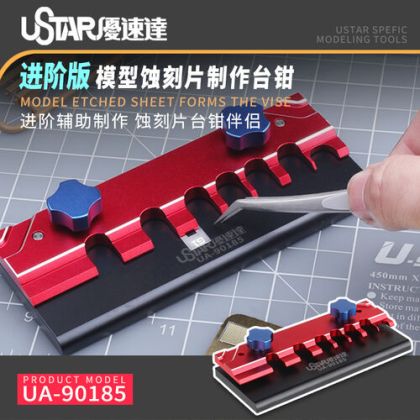
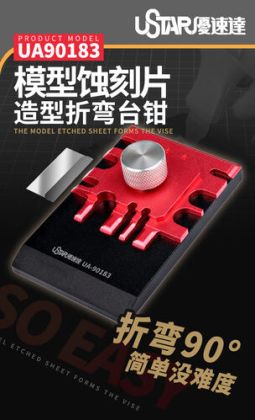
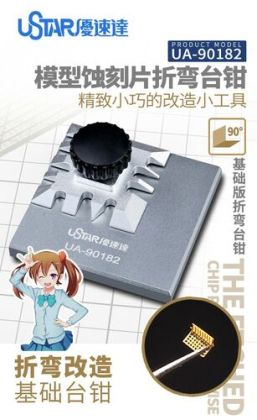
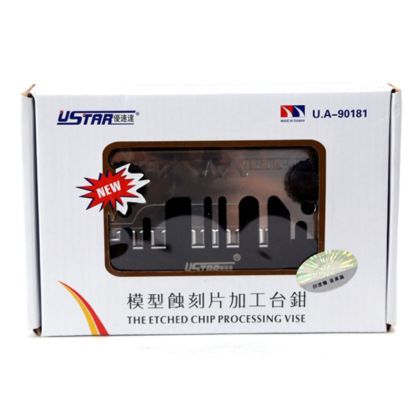
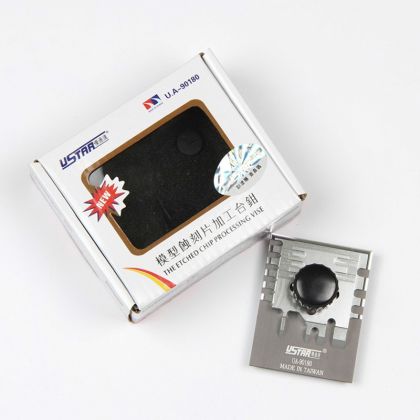
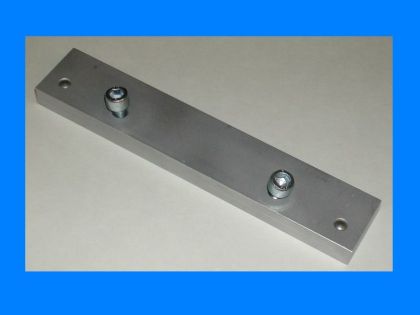
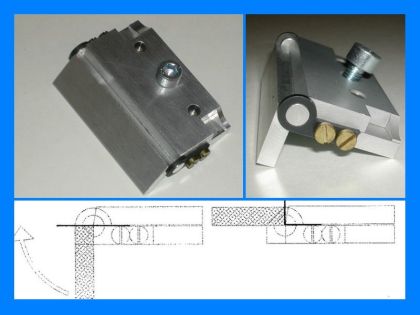
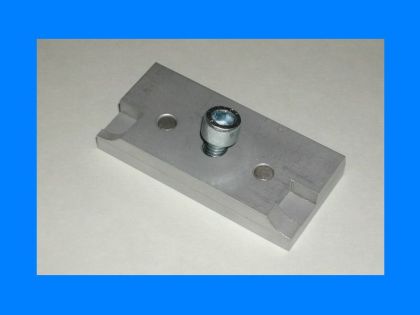
A photo-etch bender is a jig with two faces and a clamping bar that grips the fret right at the fold line. The free part is then lifted with a blunt arm or blade and a straight edge forms along the full length of the component. They are offered in several working lengths, from short bodies for small parts to long versions for strips and trims, with or without a folding arm, and with one or two clamping thumbscrews. Which one you want is decided by the length of the longest edge you expect to fold, not by the size of the parts themselves.
The principle is simple and that is exactly why it is reliable. The lower plate provides the support, the upper bar presses the fret down and leaves free only the part that is to move. Because the material is clamped precisely on the line, it folds there and nowhere else, and the rest stays flat. The more closely the two faces meet, the sharper the resulting edge.
Short benders suit small parts and can be held in the hand. Longer versions handle strips, mudguard trims and long grilles that would never come out straight if folded in sections. Building ships or vehicles with long stowage baskets, the longer tool repays itself.
The version with a bending arm lifts the free part for you and holds a constant angle along the whole length. Without an arm you make the fold by hand with a blunt blade — cheaper and perfectly adequate on short parts, though on long edges the arm makes a visible difference.
One screw is enough for small parts; two spread the clamping force along the bar so the fret cannot creep under it. On long parts even clamping is the whole game, otherwise the edge comes out wavy.
The accessory that holds an etched part while it is filed, rolled or glued. The working face is usually flat and hard, so it doubles as a backing plate.
Lay the fret with the etched score upwards — the fold always goes towards the side where the material is thinned. Align the line exactly with the edge of the bar, tighten, and fold in one smooth movement. Do not work the fold back and forth: metal hardens as it is formed and after a few bends it cracks. For exact positioning use tweezers and work under a magnifier.
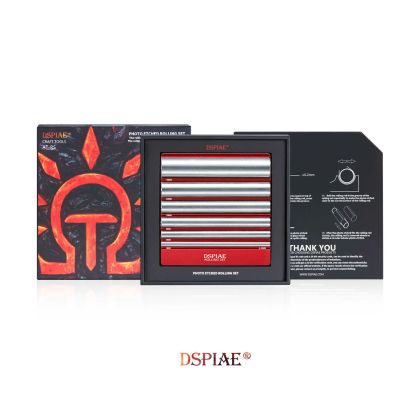
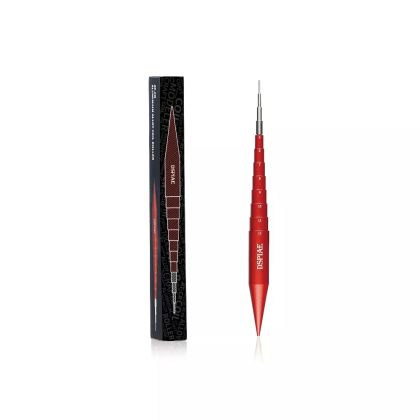
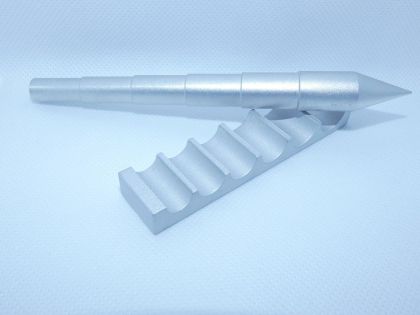
To turn a fret into a cylinder or a smooth arc, a bender gives way to a tool from bending tools and jigs.