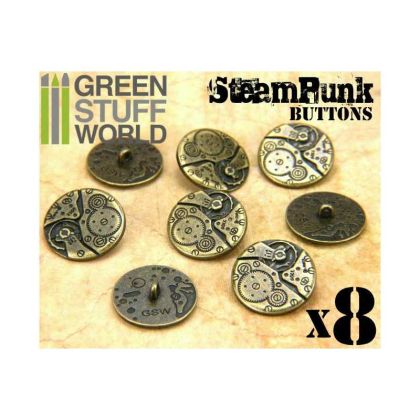
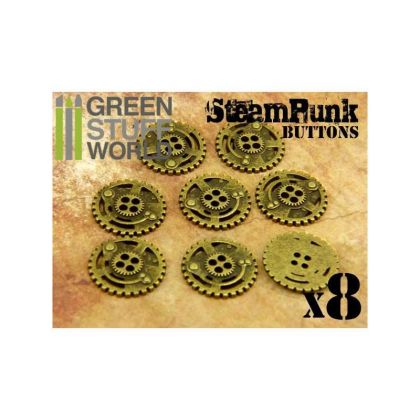
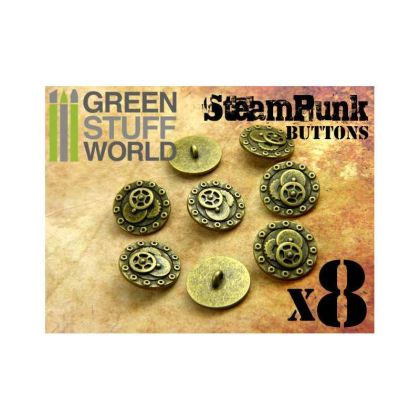
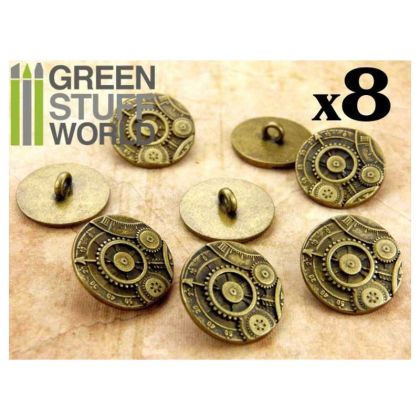
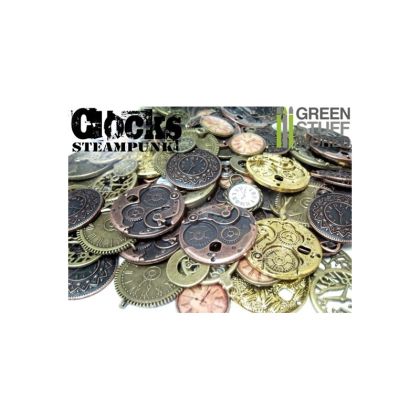
The steampunk range consists of small metal and wooden components used as ornament: watch movements, gears and cogs, buttons, rivets, wings and compass roses. Modellers put them on conversions, dioramas and figures wherever irregular mechanical detail is wanted, and they are equally at home in jewellery and decorative work. The section holds mixed packs of beads and components sold by weight, MDF cut-outs and extras such as velvet drawstring pouches.
Below: what these parts actually do on a model, how to match them to a scale, and how to glue and age them.
The whole aesthetic rests on the mechanism being visible. Watch wheels, gears and rivets are therefore not only decoration — they are ready-made detail you would otherwise have to fabricate. Glued onto a hull, a machine, a figure base or a piece of diorama furniture, a flat surface immediately gains structure the eye reads as working equipment.
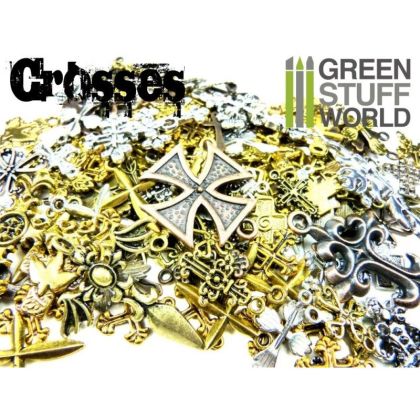
Metal components come in bronze, silver and antique gold finishes and are supplied in mixed packs by weight, so one bag holds a spread of sizes. MDF cut-outs, such as clock hands and large wheels, suit larger surfaces and are easy to modify.
Watch the size against the scale you work in: a wheel from a wristwatch is one thing on a 54 mm figure and quite another on a 1:35 diorama.
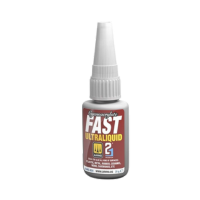
On metal, cyanoacrylate performs best; over larger or uneven contact areas, epoxy fills the gap and the joint holds. Degrease the surface first. With parts this small, grease from fingers is the commonest reason a detail falls off a few days later.
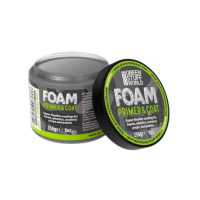
Bare metal takes paint far better after a thin primer coat. For age, washes pull into the recesses and lift the relief, and pigments add dust and deposits. On some metals, chemical blackening agents darken the surface with no paint at all.
Small components are best bought in mixed packs, because you never know in advance which size will suit the model in front of you. More unconventional items are in other modelling products.