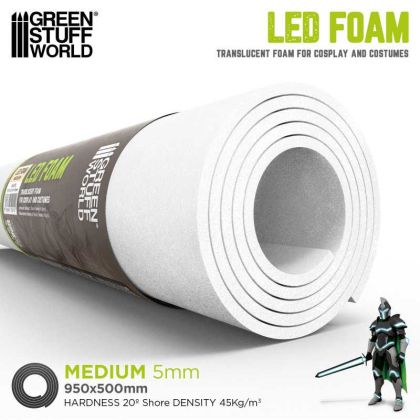
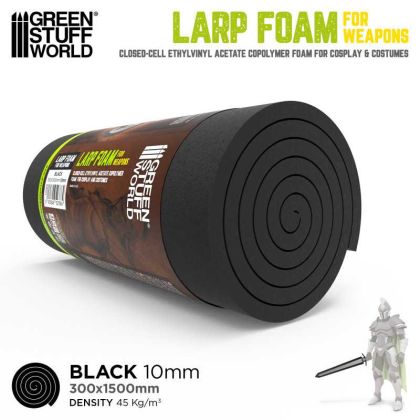
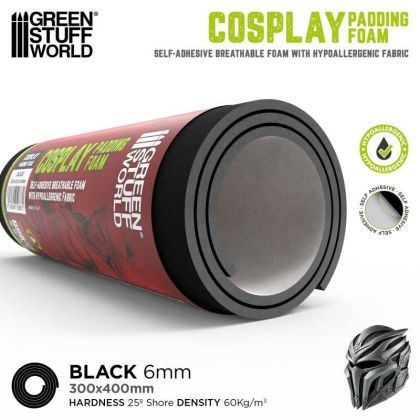
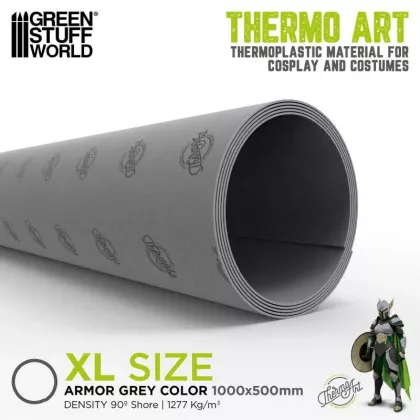
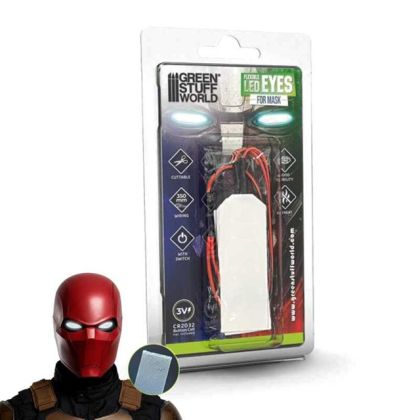
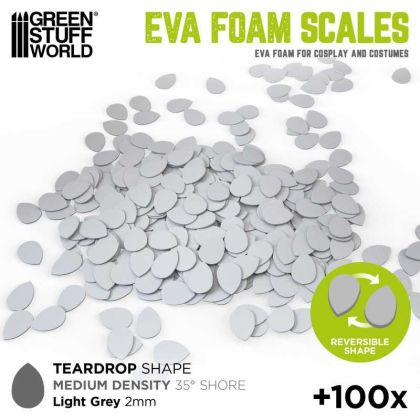
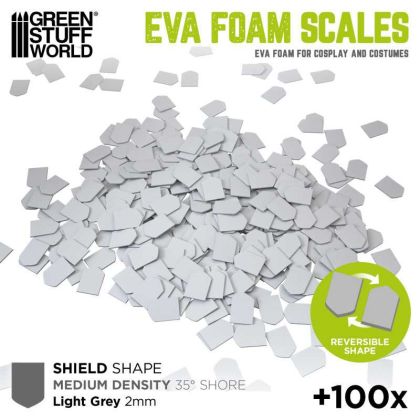
Building a costume has more in common with modelling than it first appears — the same logic, a different scale and materials you can wear. This section holds cosplay materials: EVA foam in several densities and thicknesses, thermoplastic sheet formed with heat, foams for LARP weapons, fabric-faced padding, ready-made scales, plus jump rings, D-rings and hook-and-loop tape.
Below we explain which material belongs on which part of a costume, what actually bonds it, and how to paint something that has to flex.
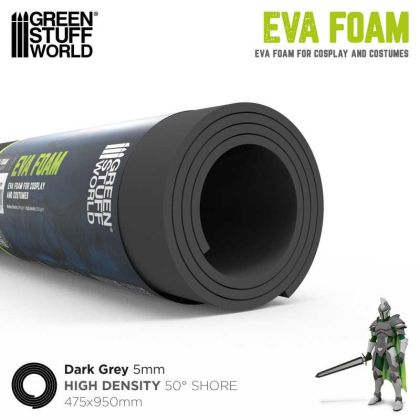
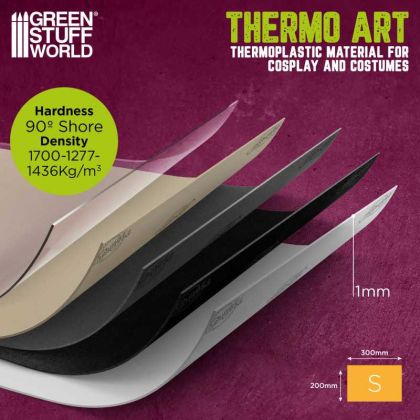
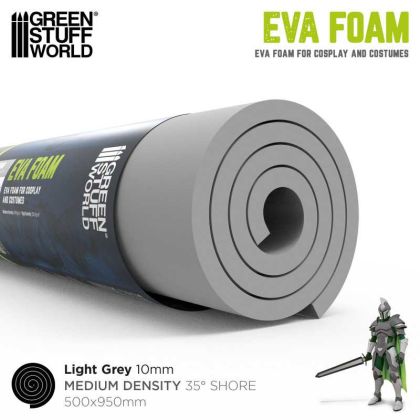
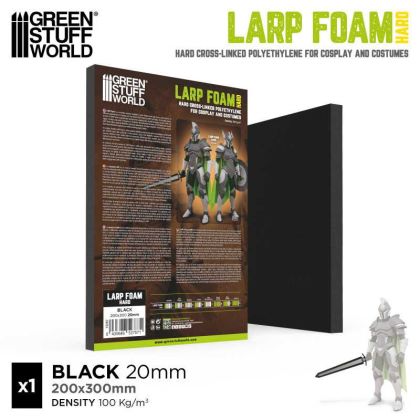
EVA foam is the usual base: light, easy to cut and willing to hold a shape once heated. For parts that must be rigid and dimensionally stable, thermoplastic sheet is used — warmed, pulled over a form, and hard again once cool. LARP foams serve a different purpose entirely, being soft and intended for weapons used in contact play.
Higher-density foam holds an edge and sands better, which suits armour and any part where you want a crisp profile. Lower density forms more readily and suits rounded surfaces. Thickness follows the part: thin sheet for overlays and detail, thicker for structural sections and edges. Fabric-faced padding goes wherever the costume bears on the body.
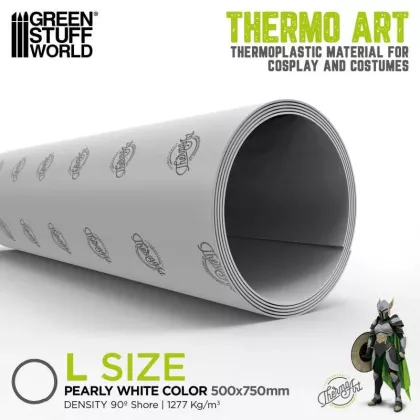
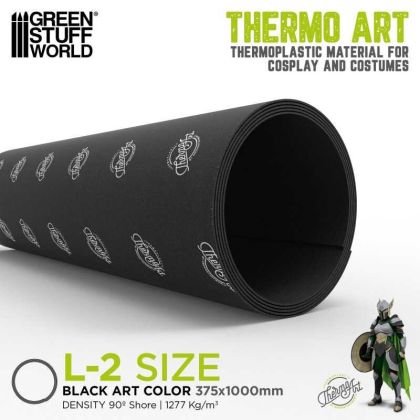
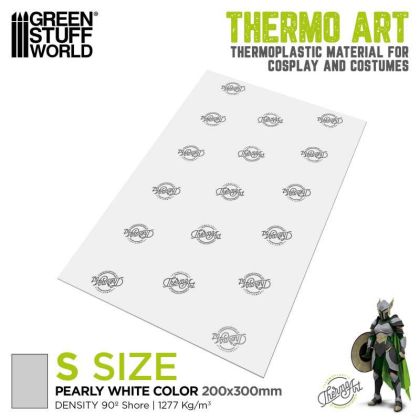
A thermoplastic sheet is heated, pulled over a form or straight over the shape itself, and stays put as it cools. The result is a hard part with no further reinforcement. It is made in several formats and surface finishes, so it can also serve as the final layer with nothing applied over it.
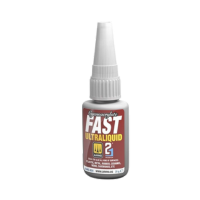
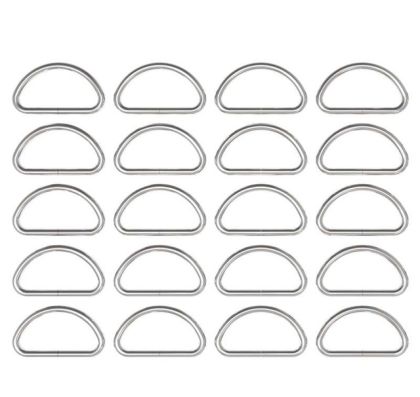
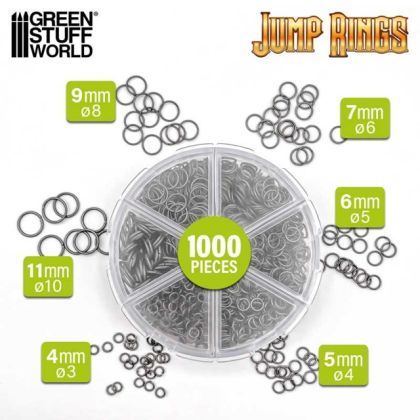
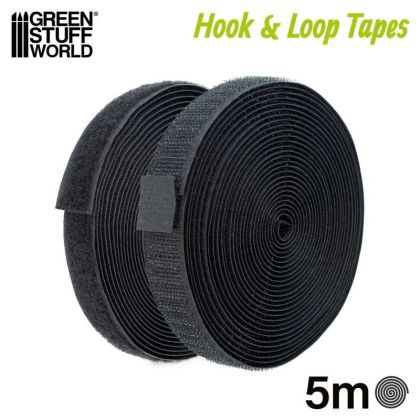
D-rings and jump rings take the straps; hook-and-loop tape handles joints that need to come apart. This is where costumes are most often underestimated, because a part held by adhesive alone will let go while being worn. For permanent joints, use epoxy or adhesives for other materials, since polystyrene cement does nothing on foam.
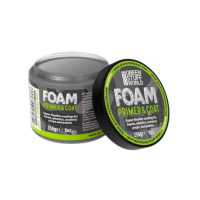
Foam absorbs, so it is sealed with a base coat before colour. On flexible sections choose paints that do not crack once dry; an ordinary hard lacquer flakes off as soon as the part moves. For surface effects, patina and grime, the model techniques transfer directly — see weathering and pigments.
With a costume, what decides everything is whether you can move in it, so choose materials with weight and articulation in mind. More unconventional items are in other modelling products.