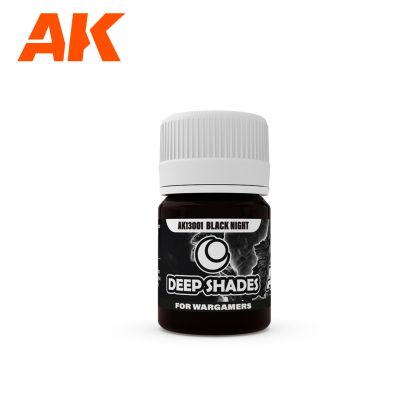
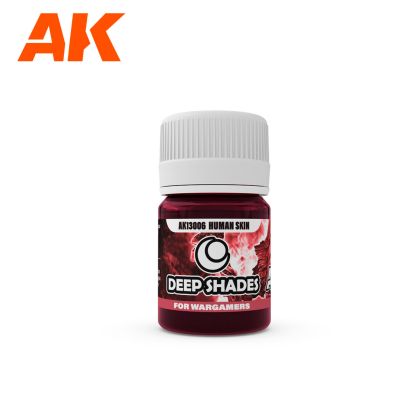
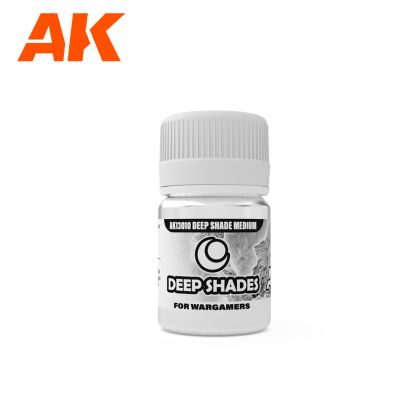
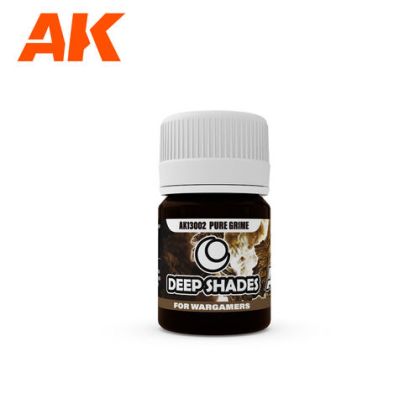
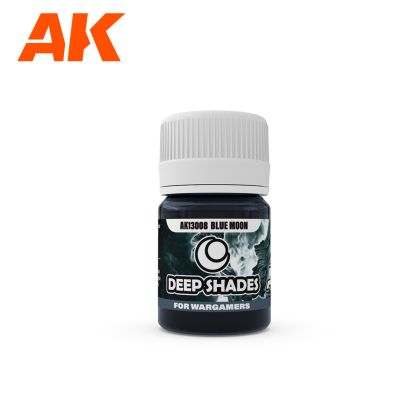
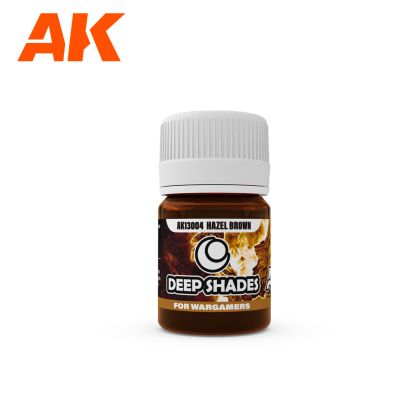
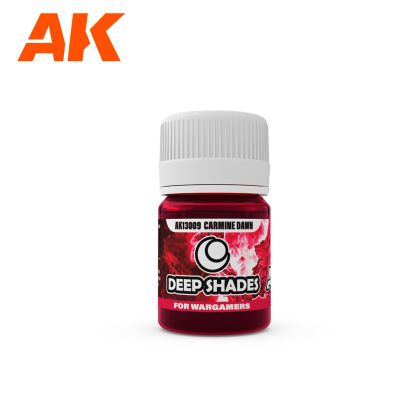
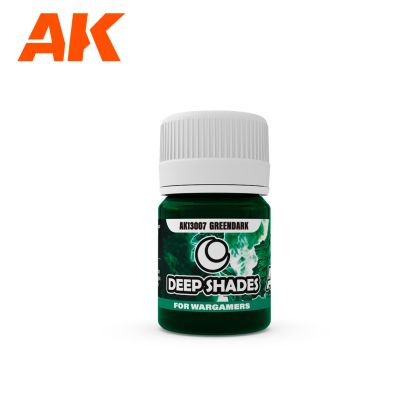
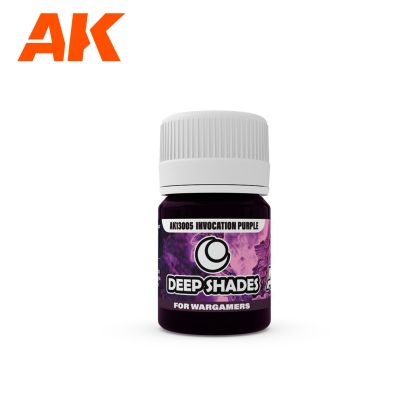
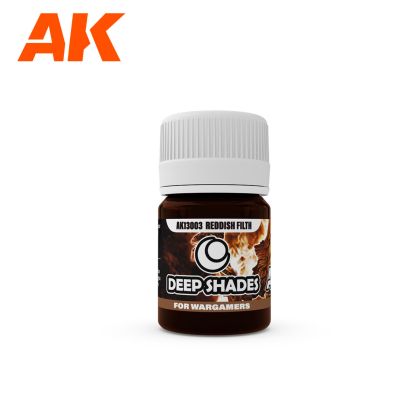
Deep Shade is a range of transparent shading paints meant to create depth on a figure by themselves. Flood them over a finished base coat and they run into folds and engraved lines, staying darker there than on the raised surfaces once dry. Alongside strong colour tones — crimson, blue, green, purple — the range holds a flesh shade, several dirty browns and a medium for thinning.
Thirty-millilitre bottles reflect how the paint is used: the surface is flooded rather than painted, so it goes further per session than an opaque colour would. The method, and the two mistakes that ruin it, are below.
Opaque acrylic hides what is under it. A shading paint carries deliberately little pigment and a lot of binder, so the base shade stays visible and only its value changes. The resulting shadow respects the original colour instead of greying it out. Compared with a conventional wash these are more saturated, so they add a colour cast as well as depth: a blue shadow on white armour, crimson on cloth, green on organic forms.
Shading goes over completed paintwork. On an absorbent matt surface the paint bleeds into blotches wherever the brush touches, so seal the area with a thin satin or gloss coat first; suitable products are in varnishes.
Load a generous amount and let it flow into the relief. Whatever sits on the high points, lift off with a damp brush while the film is still wet. Dragging the paint back and forth achieves nothing — gravity and surface tension are doing the work.
The medium from the same line lightens the shade without losing transparency and turns it into a glaze for a whole surface. Plain water weakens the binder instead, leaving an uneven sheen. One drop of medium to five of paint softens a shadow; for an all-over glaze go towards one to one.
The maker's other lines, from opaque acrylics to metallics, are under AK Interactive model paints.