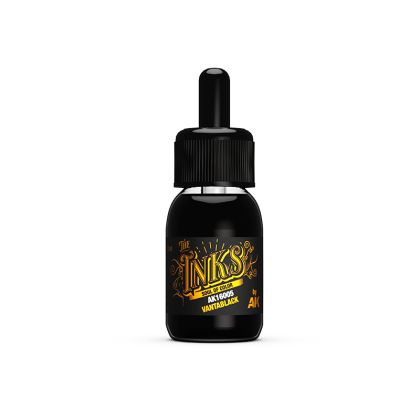
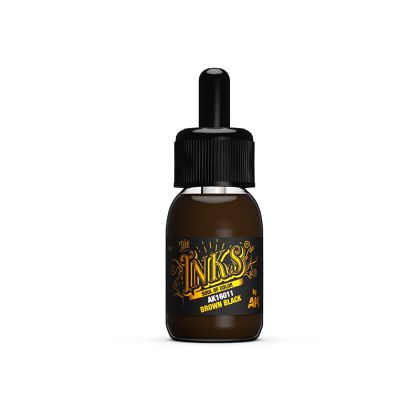
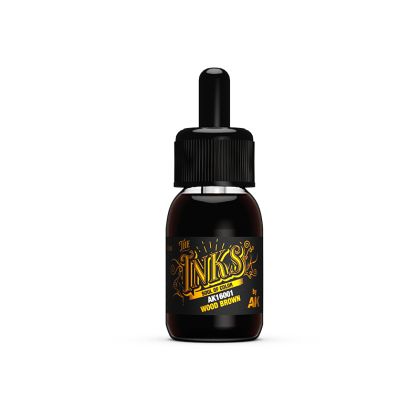
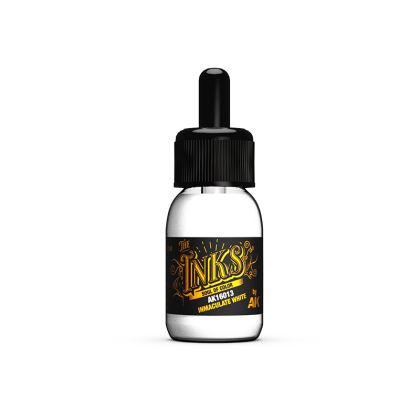
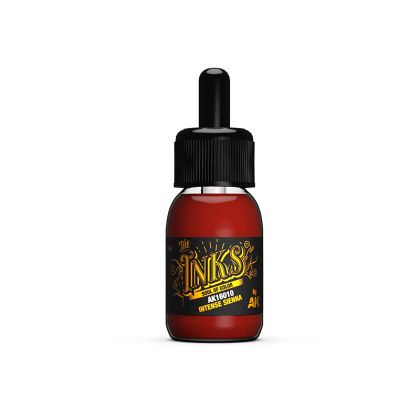
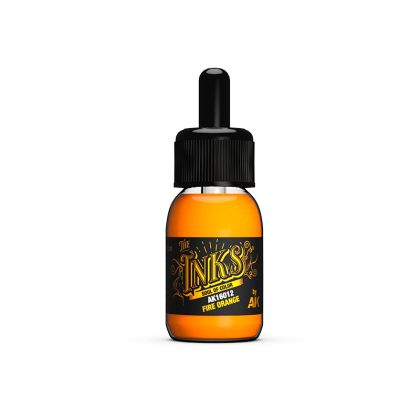
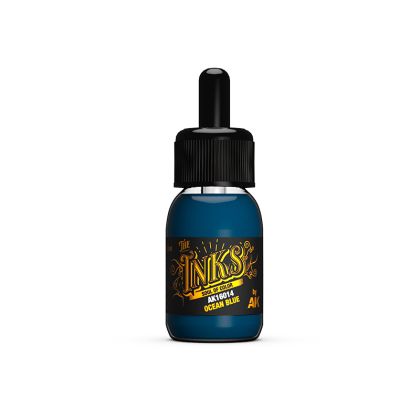
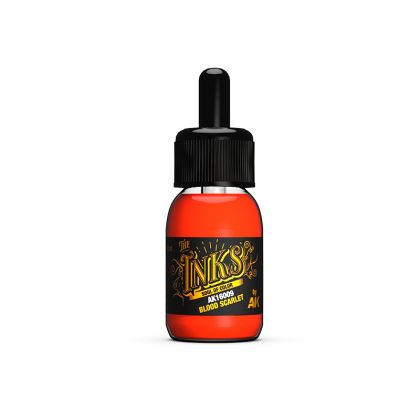
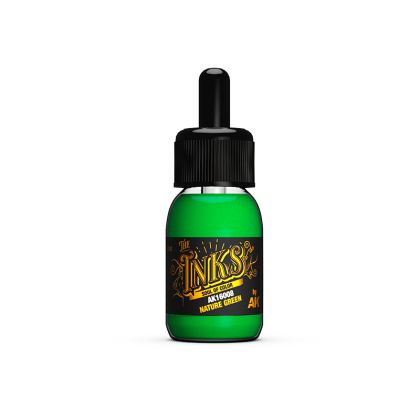
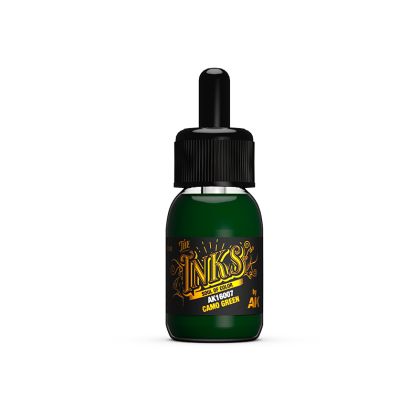
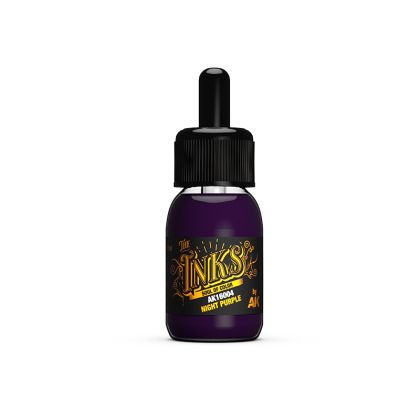
The Inks are transparent pigmented inks for tinting paintwork that is already finished. Applied as very thin glazes they change the colour of a surface without covering it, so a patchy camouflage can be pulled together, a shadow deepened or an entire model shifted into different light. The category holds natural tones — sienna, wood brown and two greens — alongside an extreme white and a very deep black.
Because the ink stays transparent, nothing you have already done is lost. That is precisely why these are reached for at the stage where an opaque colour would undo an evening's work. Technique, sealing and the two outlying shades are covered below.
An ink carries a very fine pigment in a thin binder. On the model it does not form a layer but a colour filter: the base shade stays legible and only shifts towards the tone of the ink. Camouflage patches that look unrelated can be unified, warmth added to an interior, the lower fuselage darkened or an edge lightened with white.
The two greens cover both natural vegetation and a camouflage tone; sienna and wood brown serve timber, leather and straps. A blood red has two uses: wounds on figures, and an underlayer for rust on vehicles.
Apply the ink diluted and in several passes. One weak glaze does little; five weak glazes build a depth a single heavy coat cannot reach, because a heavy coat settles unevenly and leaves a tideline.
On a matt surface the ink soaks straight in wherever the brush touched. Before tinting, spray a thin satin coat from varnishes so the pigment can still move across the surface.
The extreme shades work differently from the colours. White ink breathes a faded, sun-bleached cast into a surface. The deep black pushes a tone towards absolute shadow, so it belongs in deep openings, exhausts and the shadows of running gear.
If you are after luminous, highly saturated inks for fantasy and gaming models, continue to the INK range.