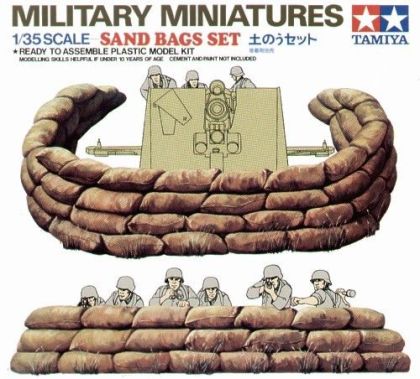
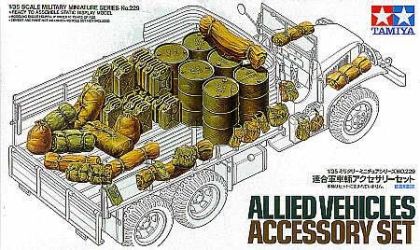
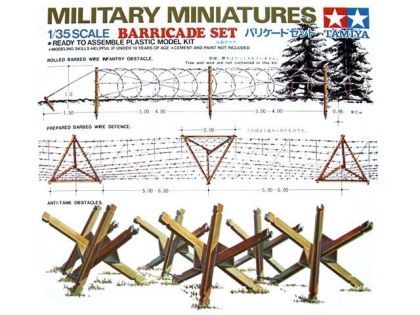
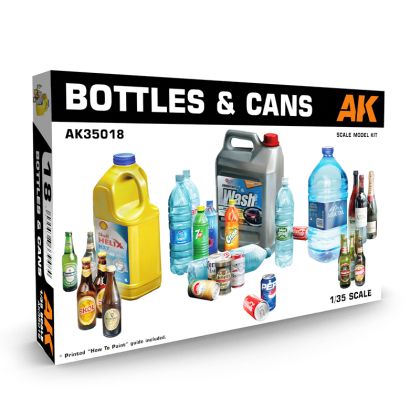
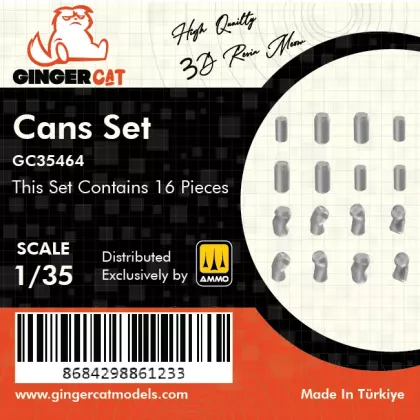
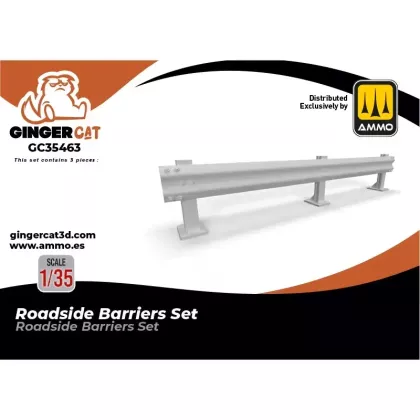
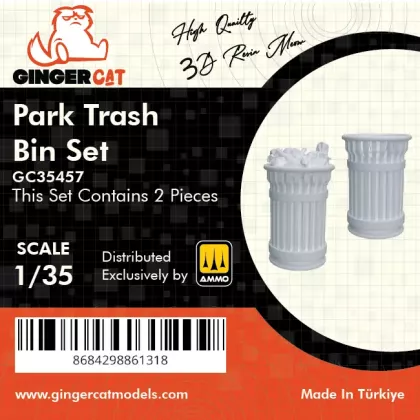
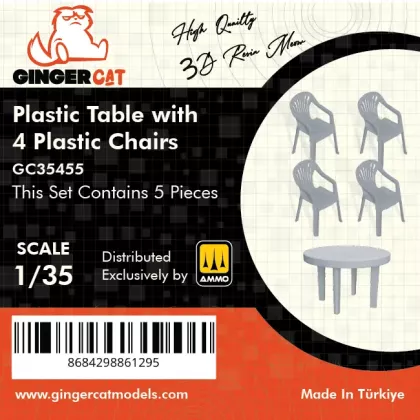
The deepest part of the diorama range sits in 1:35, because this is the scale most figure and vehicle scenes are built in. There are track sections in European and Soviet gauge, kits for workshops and checkpoints, packing cases and food containers, modern and period luggage, television aerials, perforated steel plank matting and a long list of stencils for spraying tyre tracks, cracks and wood grain.
How to work with them, and which parts to buy before the small stuff, is described further down the page.
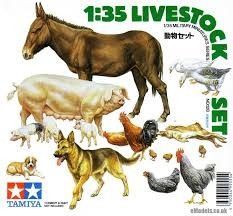
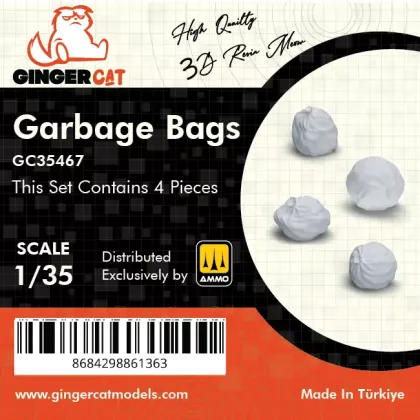
One thirty-fifth is the compromise that won. A figure measures around five centimetres, so an expression and a worn uniform both read, and yet a whole scene with a vehicle fits a base the size of a book. The choice of parts is therefore deepest here, from complete building kits down to a single ration tin. Practically anything you might want on a scene is made by somebody as a finished part.
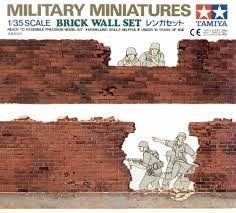
The large elements - a section of track, a corner workshop, a checkpoint, a wall with an archway - decide where the model stands and where the scene is viewed from. Buy those before the small items, because small items can be added at any point, while changing the composition after everything is glued down means a new base.
Spray stencils are thin self-adhesive or cling films with motifs cut through them: cracks, splashes, wood grain, boot prints, even dog paws. Lay one on the surface, pass over it with an airbrush and you get the soft transition that is very hard to paint by hand. One rule applies throughout - thinner coats, more passes.
Crates and drums in resin and 3D print have crisper edges than moulded plastic, but they are brittle and want cyanoacrylate. Paper and film prints - documents, posters and signs - are laid with diluted PVA instead and knocked back to matt at the end so they do not glare on the scene.
For a first 1:35 diorama, try to keep the scene within the span of your hand: one vehicle, two figures, a piece of wall. Nothing else is going anywhere, and diorama supplies can be added as the scene grows.