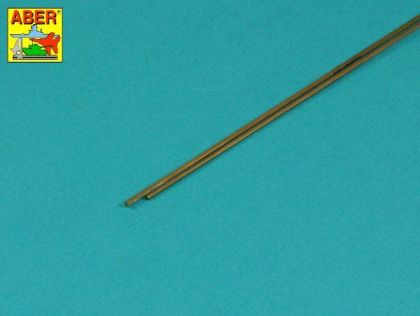
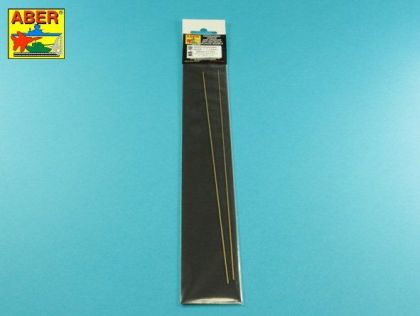
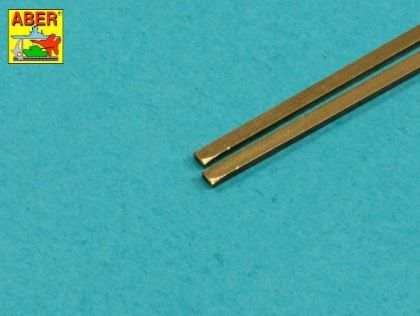
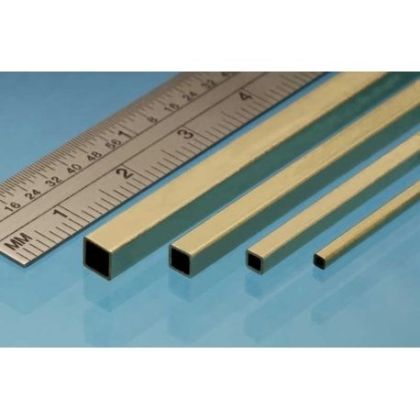
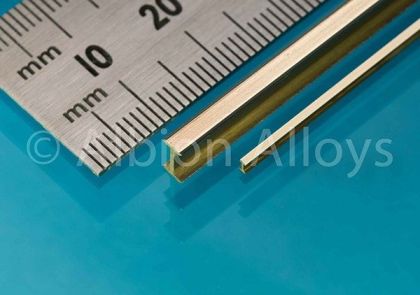
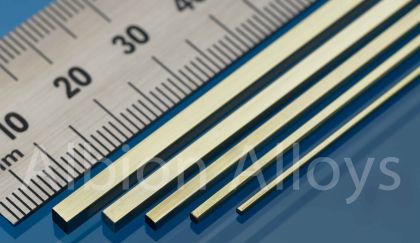
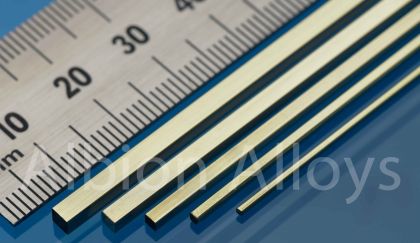
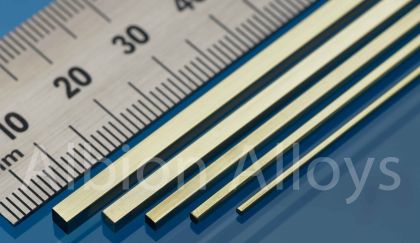
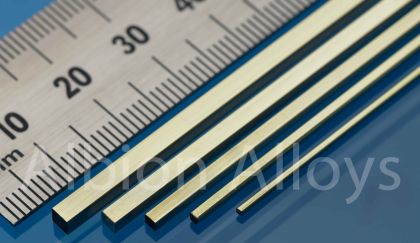
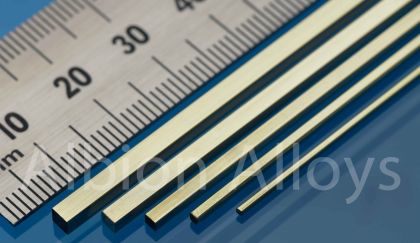
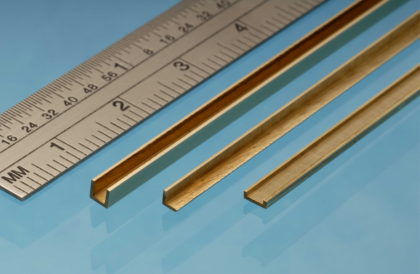
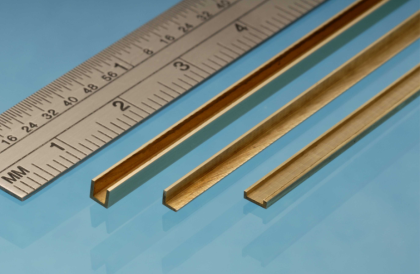
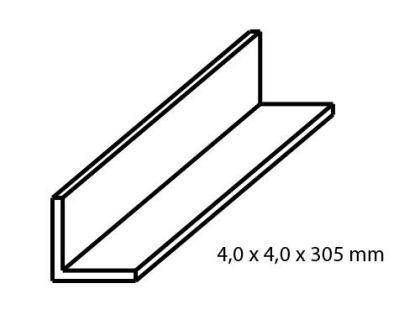
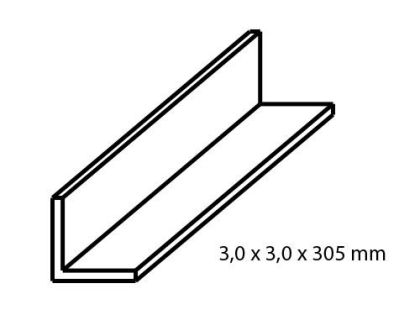
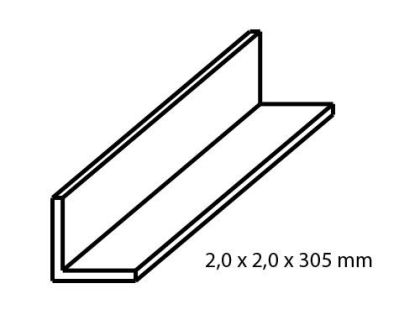
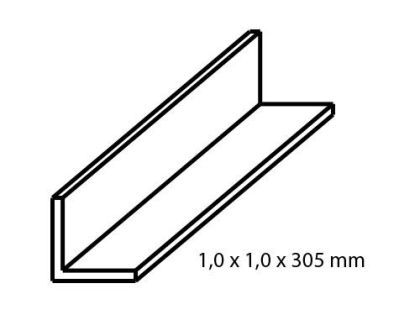
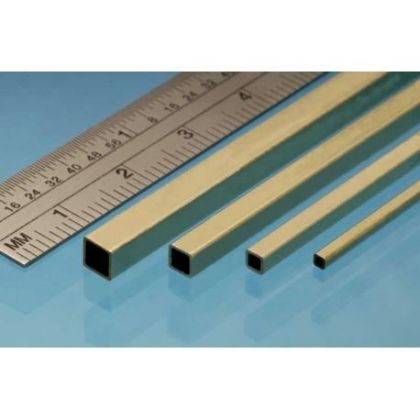
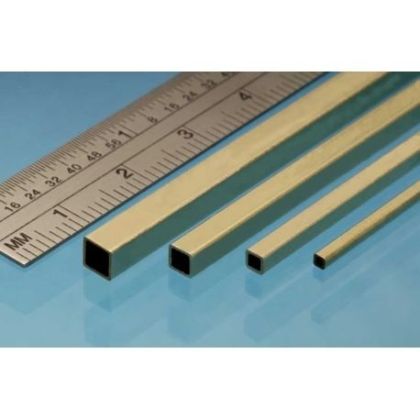
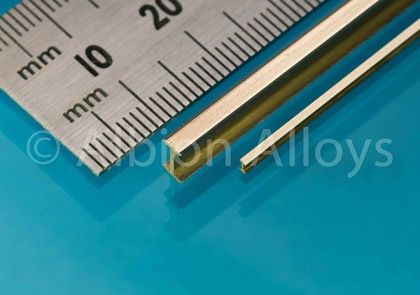
Brass profiles are for the places where styrene gives up. Stocked here are solid square rods from 1 to 3 mm, hexagonal rods in 1 and 1.5 mm, L angles from one to six millimetres, hollow square tubes of 1.6 to 3.2 mm, and structural beams, in 245 and 305 mm lengths.
Brass holds a bend, can be soldered, carries a load and has a far thinner wall than any moulded plastic equivalent. That combination is why it ends up as masts, axles, railings and the load-bearing parts of a model — everything that is either touched, leaned on or expected to stay straight for years in a case.
Three situations keep coming back. First, when the part has to carry weight or will be handled: a wheel axle, a mast, a load-bearing strut. Second, when the wall has to be thinner than plastic can manage — a brass angle with a half-millimetre wall looks convincing in small scales, where the styrene equivalent reads as coarse at a glance. Third, when the part will be bent: brass keeps the bend, styrene whitens and cracks after a few movements.
Solid square and hexagonal rods suit axles, pins, bolt heads and spigots; the individual sizes are listed under brass square and hex rod. Angles build frames and edge trims, and those live under the brass L profile. Hollow squares allow one size to telescope inside the next and are grouped as hollow brass box section. For round hollow parts, carry on to brass tube.
Brass cannot be bonded with solvent cement, because there is nothing for the solvent to soften. Either solder it, which gives the strongest joint and survives real mechanical load, or use cyanoacrylate or two-part epoxy. In both cases key and degrease the surface first, or the joint will crack once it has cured.
Brass files and drills well, but bend it over an edge or in a jig rather than in your fingers, so the bend has no oval in it. Priming is not optional before painting, since acrylic will not key to bare polished brass on its own — primers sit with the modelling paints.
Load-bearing metalwork earns its keep most on larger subjects and on rigged ships, so the kits that use it are in ship model kits.