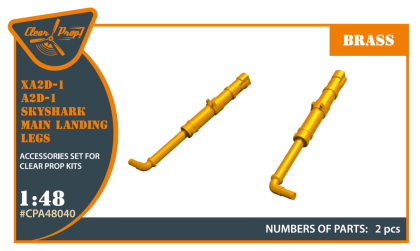
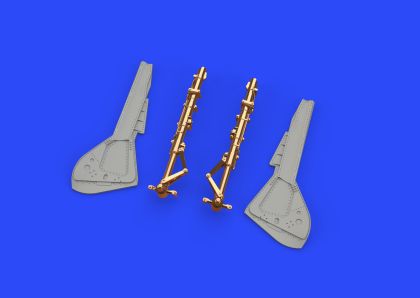
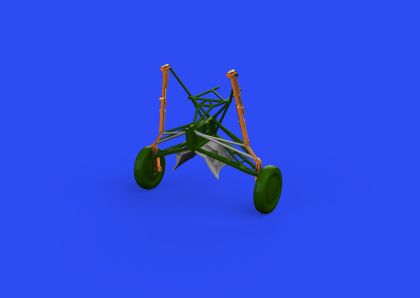
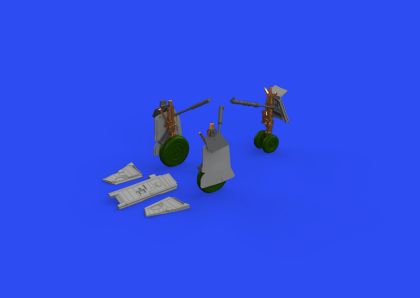
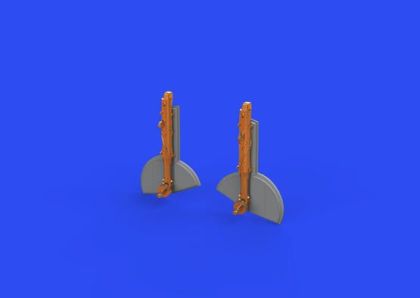
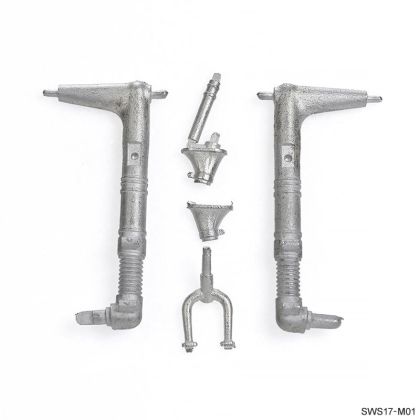
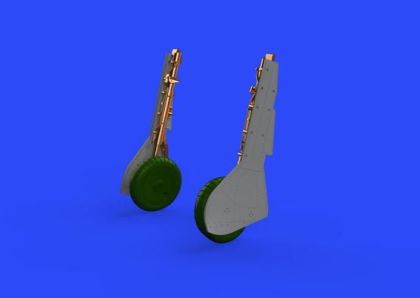
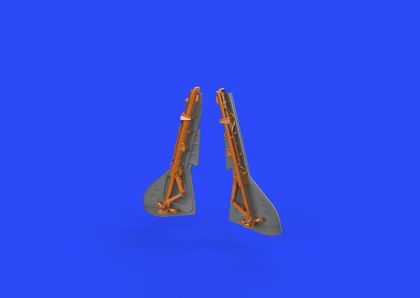
Metal undercarriage solves a problem every long-standing modeller recognises: a plastic leg carries the entire weight of the aircraft, and over months it slowly bends until the model settles onto its belly in the cabinet. A bronze or steel leg takes that load permanently, keeps the geometry it was fitted at and survives being carried to a competition. The range covers cast bronze legs and steel struts, each designed for a particular aircraft and kit.
Below we explain why metal behaves differently from styrene, how to pick the right set and how to anchor it properly.
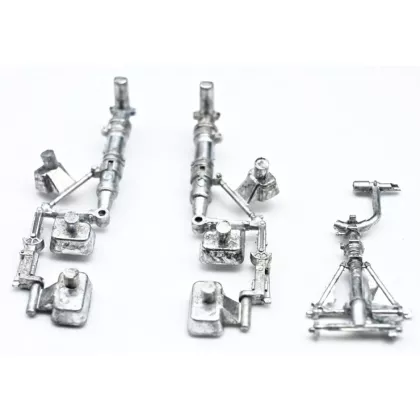 1:32 Douglas A-20 Havoc Metal Landing Gear for HK-01E039
3.96 €
1:32 Douglas A-20 Havoc Metal Landing Gear for HK-01E039
3.96 €
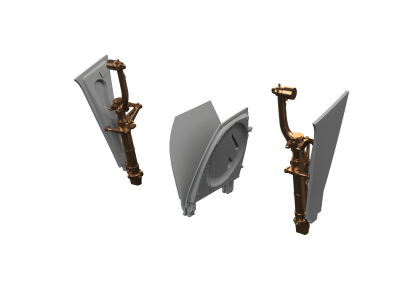 1:48 P-51B/C undercarriage legs BRONZE
19.80 €
1:48 P-51B/C undercarriage legs BRONZE
19.80 €
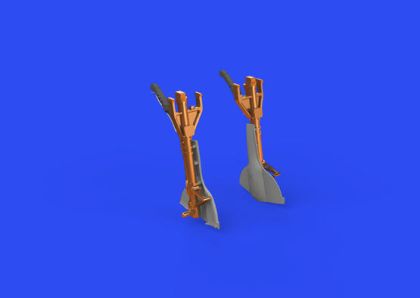 1:48 F6F undercarriage legs BRONZE
19.80 €
1:48 F6F undercarriage legs BRONZE
19.80 €
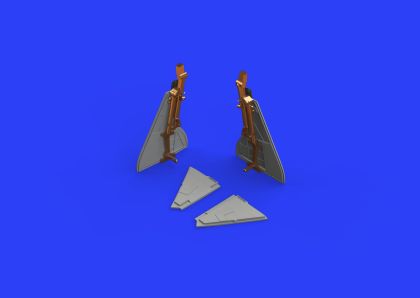 1:48 Tempest Mk.V undercarriage legs BRONZE
12.32 €
1:48 Tempest Mk.V undercarriage legs BRONZE
12.32 €
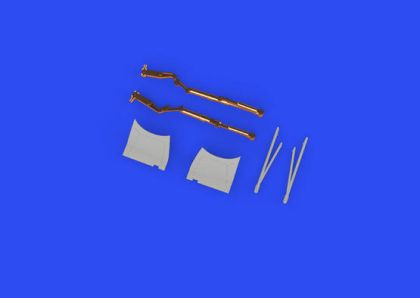 1:48 F4F undercarriage legs BRONZE
27.80 €
1:48 F4F undercarriage legs BRONZE
27.80 €
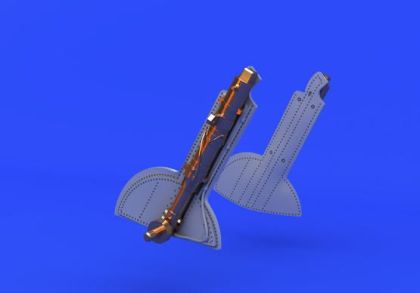 1:48 Spitfire Mk. Vc undercarriage legs BRONZE
11.24 €
1:48 Spitfire Mk. Vc undercarriage legs BRONZE
11.24 €
Injection-moulded styrene suffers from cold flow: held under constant load it deforms slowly and permanently. On a small light model that hardly matters, but a heavier build with resin castings or a metal interior will see its plastic legs splay out over a few months. Bronze and steel are several times stronger, so the leg stays at the angle you set and the undercarriage geometry still looks right years later. There is a bonus too, because metal parts usually carry sharper detail on the oleo, the locks and the retraction scissors than their plastic counterparts.
The range divides into 1:32 landing gear, 1:48 landing gear and 1:72 landing gear. The proportion is straightforward: the bigger and heavier the model, the more a metal leg earns. In 1:32 treat it as close to mandatory; in 1:72 it is more of an insurance policy for a heavier build carrying nose weight.
Undercarriage legs are not a universal part. Bronze legs and steel struts are produced for named kits, from single-engined fighters to heavy bombers, and the set title gives both the aircraft and the intended application. A set drawn for an Fw 190A-8 will not go into a Spitfire, however similar the strut looks in a photograph.
Most metal legs are drop-fit replacements that sit in the same locating points as the plastic original. Expect to degrease the part, prime it and bond it with cyanoacrylate or epoxy, because paint does not key to bare brass or bronze on its own.
A metal undercarriage is an invisible investment that holds the whole model up. Further upgrades of the same kind are listed under metal detail sets for aircraft, and the kits themselves at 1:32 aircraft kits if you are starting a heavy project.