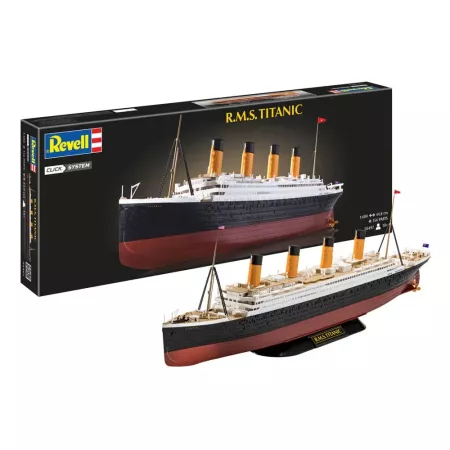
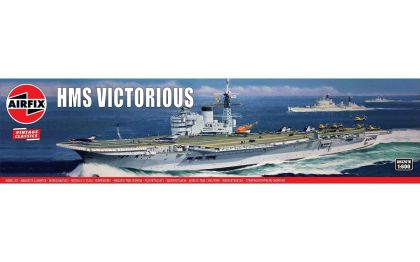
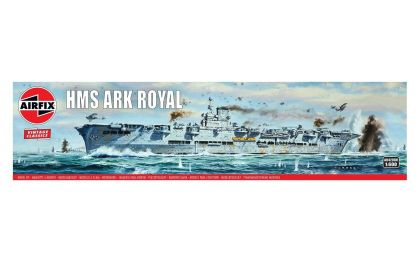
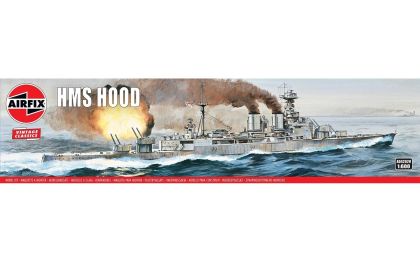
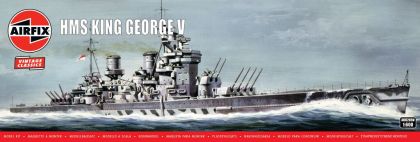
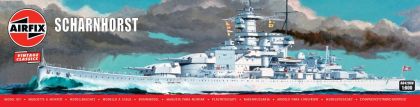
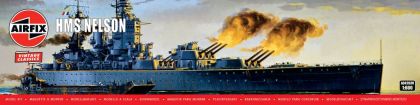
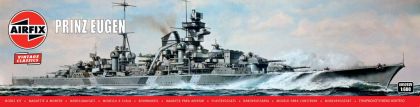
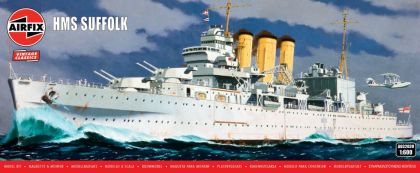
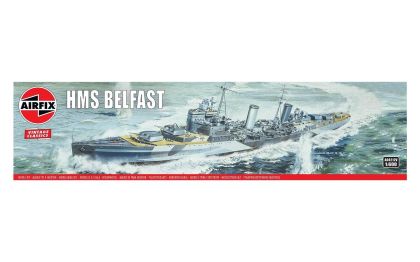
Whole generations of British modellers grew up on them. 1:600 ship model kits cover the cream of the Royal Navy, from the battlecruiser Hood through the carriers Ark Royal and Victorious to the cruiser Belfast. Scharnhorst and Prinz Eugen are there as the opposition, and Titanic rounds the shelf off. The size is close to 1:700 with a distinct whiff of the classics, and the builds ask for no special equipment at all. Below, how to get the most out of them.
The classic scale of the British modelling tradition: a battleship measures around 40 cm, only a little more than in the commoner 1:700. The catalogue maps the famous names of the Royal Navy, with German opponents and the liner Titanic alongside. For a collection built around the Atlantic and the Home Fleet it is the most coherent single group you will find, reaching from First World War dreadnoughts to the carriers of the Second.
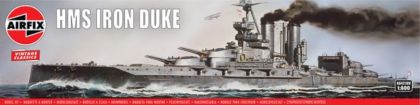
Hood and Prinz Eugen, Scharnhorst and her pursuers, the carriers from the hunt for Bismarck: the ships on this shelf genuinely fought one another. Pairing adversaries gives a collection a narrative that random buying never produces. The First World War is represented by the dreadnought HMS Iron Duke, flagship at Jutland.
Part counts are restrained and the kits take a complete brush finish, which makes them a sound choice for anyone coming back to modelling after years away. The care goes into getting the masts upright, and on Titanic into the long rows of hull windows — paint those before the final coat goes on.
Detail rises sharply with universal sheets from ship photo-etched parts, and on selected kits with laser-cut 1:600 wooden decks. Northern weathering completes the job: salt along the sides, a wash over the grey and rust at the anchor chains turn smooth styrene into a ship with years of service behind her — that work belongs to weathering products.
A more modern alternative at much the same size sits in 1:700 ship model kits, and everything else at ship model kits.