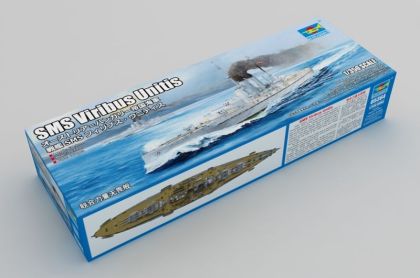
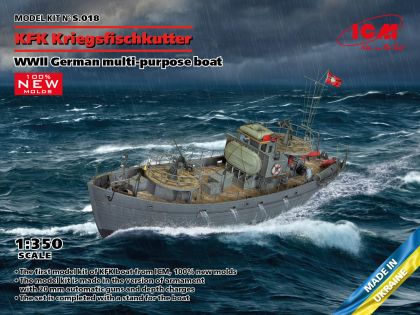
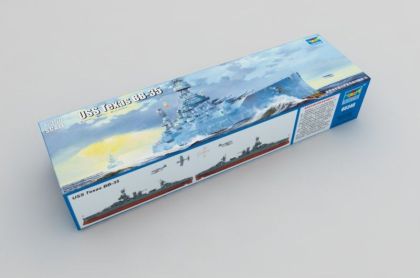
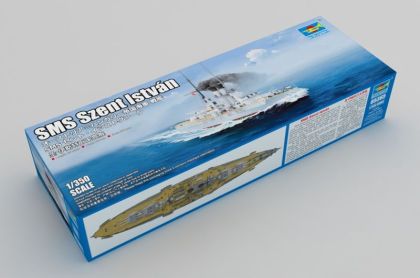
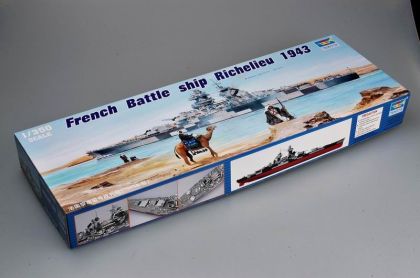
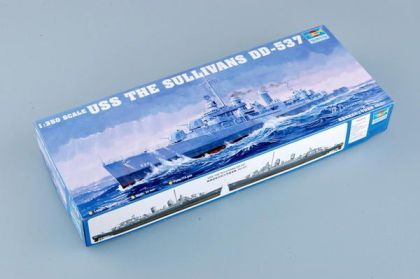
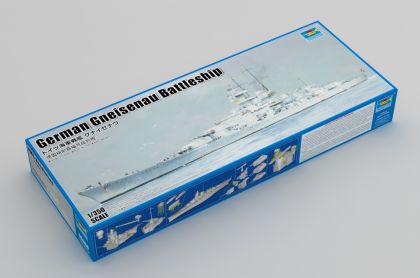
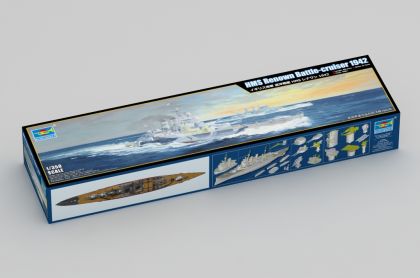
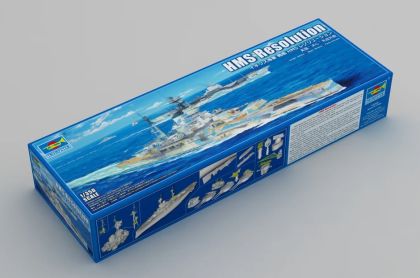
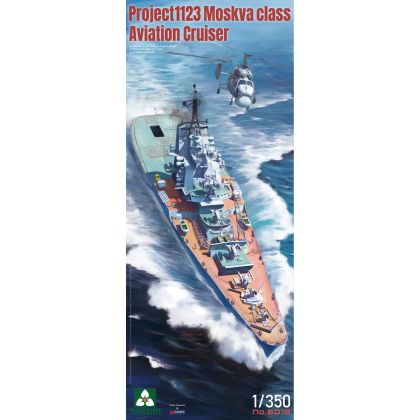
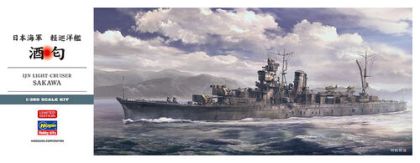
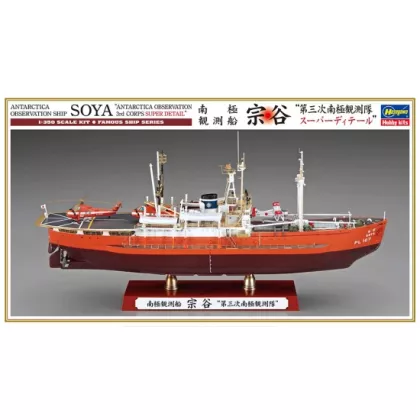
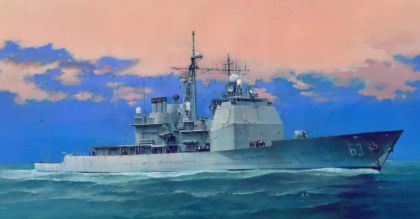
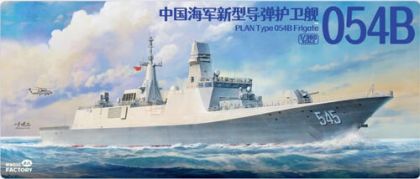
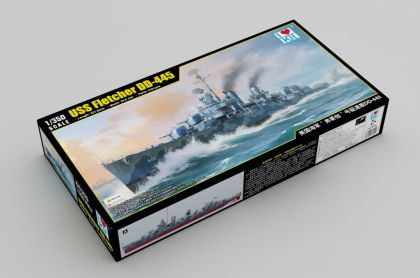
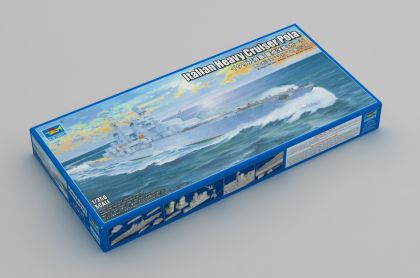
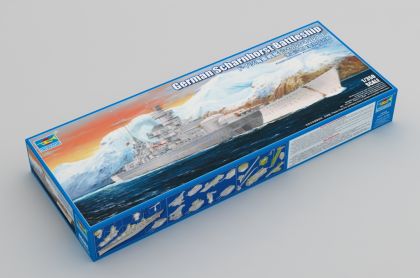
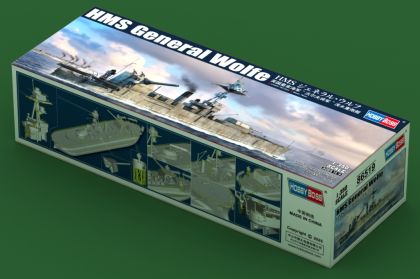
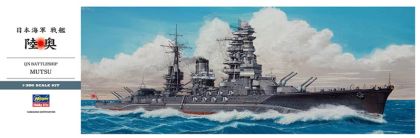
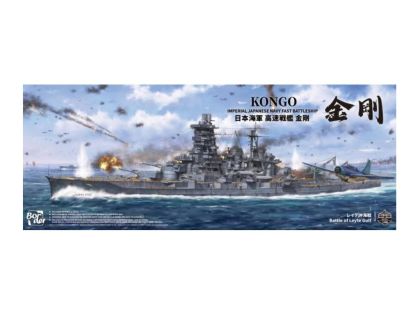
The display standard for capital ships. 1:350 ship model kits hold the best balance between detail and the space a finished hull takes up: the battleships Gneisenau and Scharnhorst, British and Japanese cruisers, modern Chinese frigates or the polar vessel Soya, all around seventy centimetres long. This scale also carries the richest supply of ship-specific detail sets anywhere, and the notes below explain how to use it. For a great many modellers, 1:350 is where the hobby finally settles.
A battleship comes out at 65 to 75 cm: enough for three-dimensional superstructure, individual flak barrels and visible deck plank relief, yet still a format you can realistically display. That is why most large surface warship kits, and most detail sets cut for named ships, exist in this size.
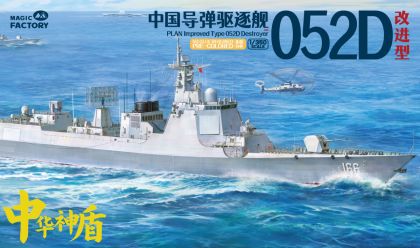
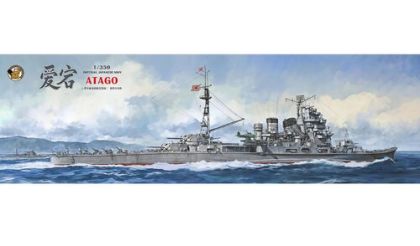
The Second World War is covered by German battleships, by HMS Renown and HMS Resolution and by Japanese cruisers; the present day by Chinese frigates and destroyers. Civilian subjects such as the polar research vessel Soya, veteran of the Japanese Antarctic expeditions, break the grey up nicely.
The same ship appears in several levels of equipment: a basic release holds styrene and decals, while richer boxings add etched or turned parts inside the lid. Pre-coloured kits save work on multi-tone hulls. Read the description of the specific boxing before you order anything extra.
Many kits allow both. A full hull shows off on cradles; a waterline bottom belongs in a sea diorama. Decide before you start building, because cutting a glued hull down afterwards is thankless work with an uncertain outcome.
The same size covers 1:350 submarine model kits; all remaining scales are indexed at ship model kits.