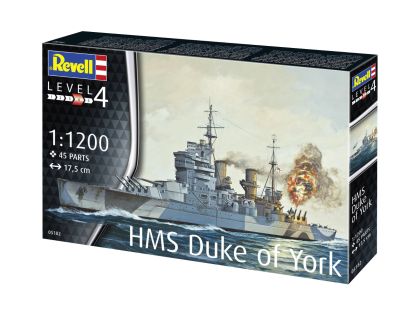
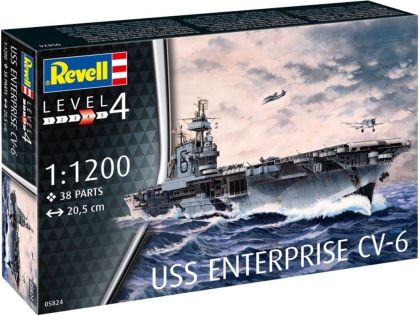
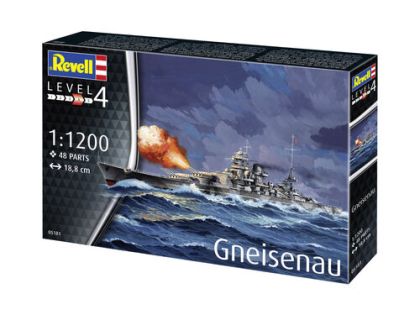
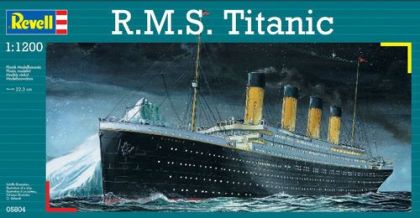
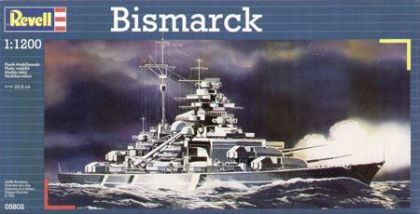
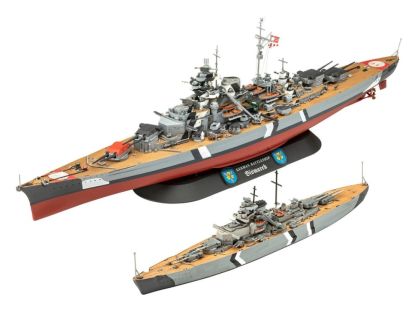
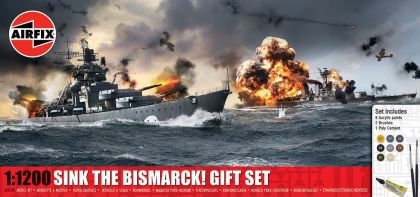
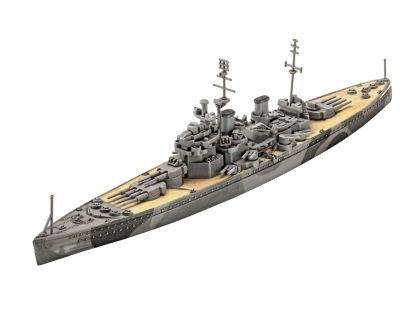
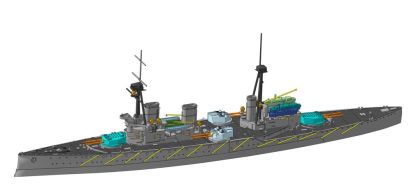
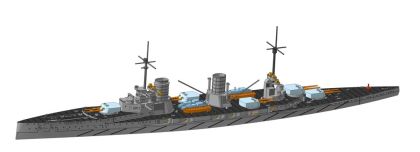
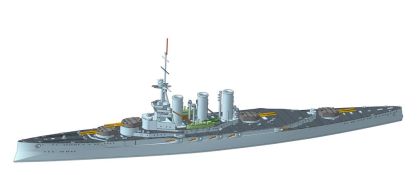
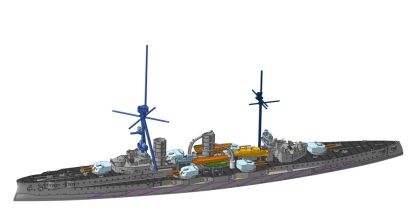
The recognition models of both world wars live on in 1:1200 ship model kits. The shelf reaches from First World War battlecruisers to the famous duels of the Second: Bismarck, HMS Duke of York, USS Enterprise. Part of the selection comes as complete sets with paints, cement and a brush, so a first ship can start from one box. Waterline hulls sit low against the board and practically invite a small naval diorama. Below, how to pick a subject and how to get the most out of a twenty-centimetre warship.
Small waterline kits, descended from the identification models once used to teach ship recognition and now collected for their own sake. A battleship measures about twenty centimetres, part counts are modest and progress is quick. The real appeal is being able to stand opponents that actually met in action side by side and compare their silhouettes on one shelf.
The First World War is represented by battlecruisers such as SMS Seydlitz, SMS Blücher and HMS Tiger; the Second by the hunt for Bismarck, HMS Duke of York and American carriers. A pair of adversaries placed together tells the whole story of an engagement.
Boxes labelled as starter or model sets include basic paints, cement and a brush alongside the kit, which makes them the gentlest way into ship modelling. A plain kit suits a bench that is already equipped; anything missing can come from starter sets with paints or from individual colours.
A board, a deep blue, a little texture stippled in with thick paint and white crests behind the stern is all a convincing sea needs. These miniatures also suit comparative rows arranged by class; the same philosophy drives 1:1250 ship model kits, which share a shelf with 1:1200 without any visible clash.
Warships of every size are gathered under ship model kits.