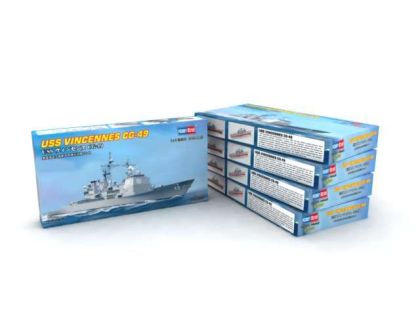
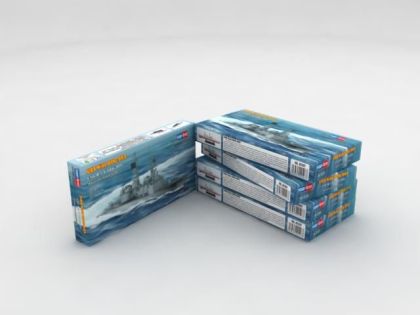
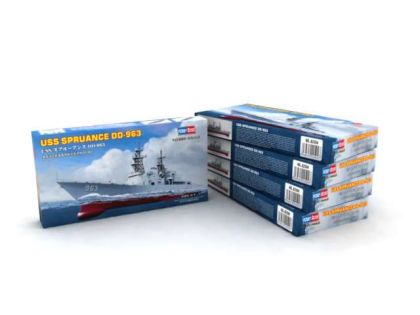
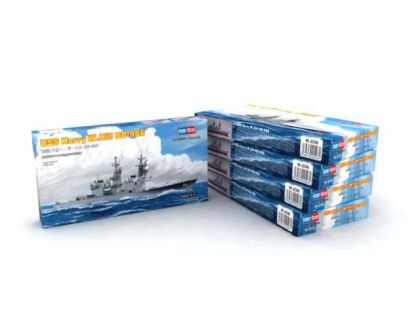
A scale with a pedigree. 1:1250 ship model kits continue the tradition of shipping-line and recognition miniatures, the models by which vessels were identified long before radar could tell them apart. Today the shelf belongs to the Cold War US Navy: Spruance class destroyers and Ticonderoga class guided-missile cruisers. This is where a collection of whole classes grows on a single shelf, and the notes below cover how to start one and how to handle parts this small.
The standard of collectors' ship miniatures: a cruiser measures around 14 cm. Metal models for shipping companies and naval staffs were made at 1:1250, and the scale still carries its reputation as the format in which a cross-section of an entire navy can be assembled. Styrene kits are the accessible way into that: they cost a fraction of cast collectors' pieces, and building one teaches you the ship down to the last radar array.
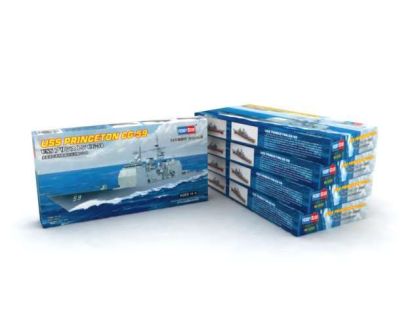
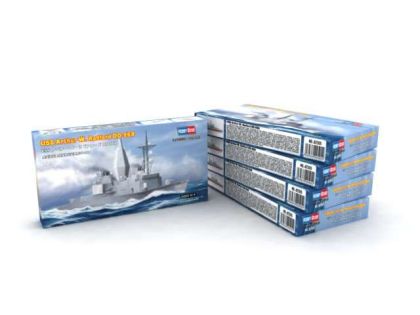
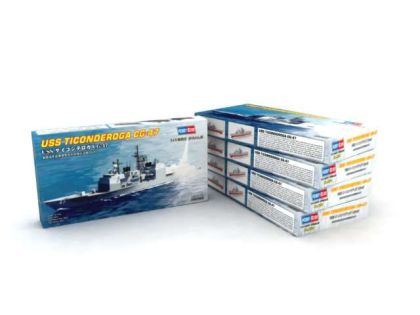
The shelf covers US Navy surface forces: the destroyers Spruance, Kidd and Radford and Ticonderoga class cruisers including USS Princeton and USS Vincennes. Stood side by side they show the shift from conventional gun armament to missile forces clearly, and because the classes share a hull form the comparison is all the more direct.
Parts are few, so one ship is an evening or two. What decides the outcome is the quality of the finish: an unbroken grey surface betrays every fingerprint and every brush mark, so work in thin coats and bring the detail back with a dark wash. Hull numbers and draught marks are handled by the kit decals.
These miniatures sit happily with 1:1200 ship model kits, a mere four per cent apart in size, and lead on to the fleet sets of 1:2000 ship model kits. All three can be mixed in one collection.
All ship categories sit together at ship model kits.