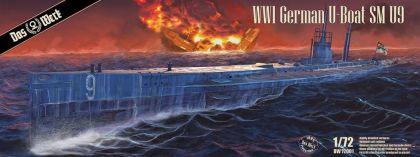
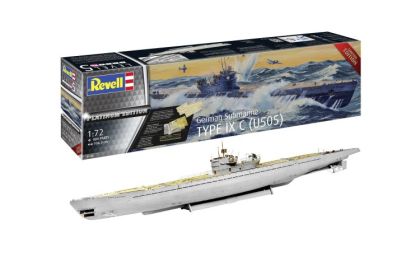
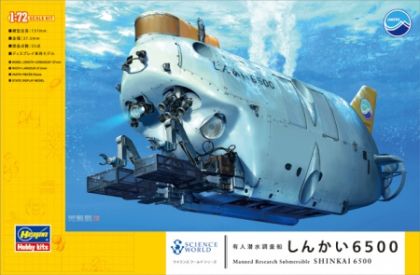
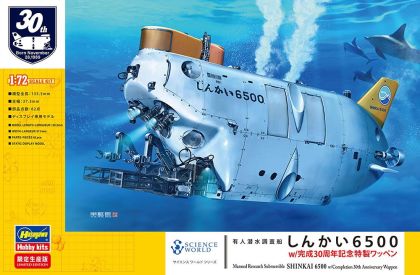
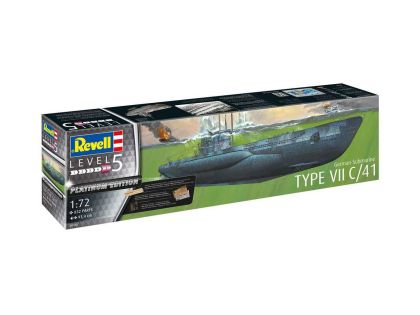
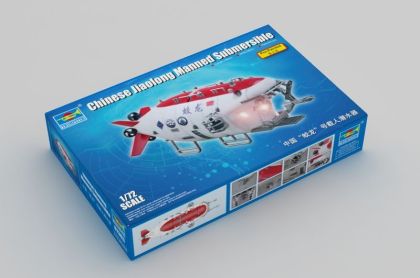
1:72 is where submarine modelling gets serious. A Type IX runs well past half a metre, and at that length the plating, free-flood slots, hatch rims and casing gratings are all large enough to detail individually. It is also the scale with by far the deepest choice of upgrade sets, from etched casings to complete resin engine rooms, which is why open-hull projects almost always start here.
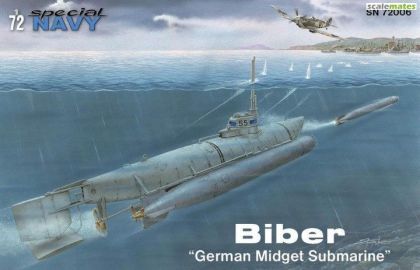
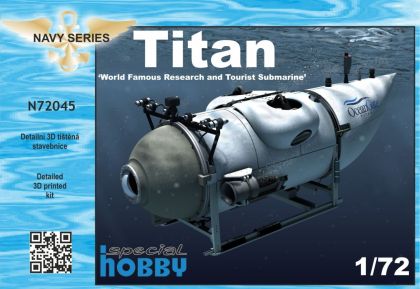
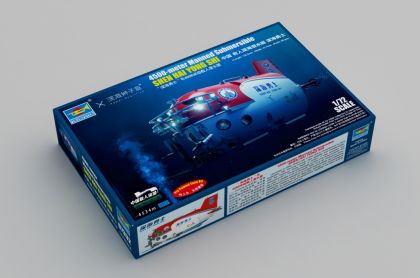
The subject range is broader than U-boats alone: midget craft, research submersibles and tourist boats all appear in 1:72. What they share is the same demand — one long seam, done right the first time.
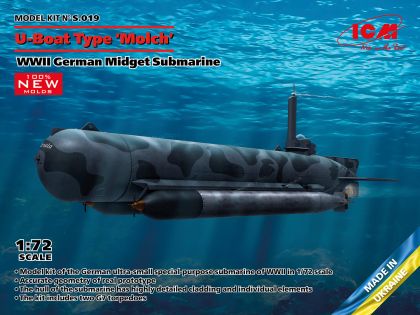
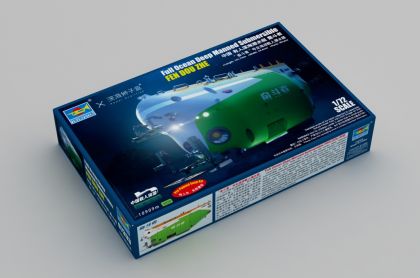
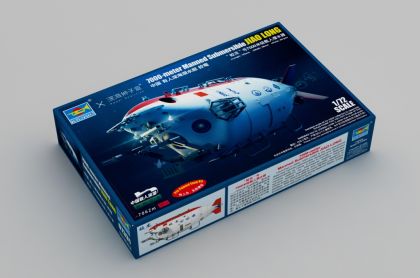
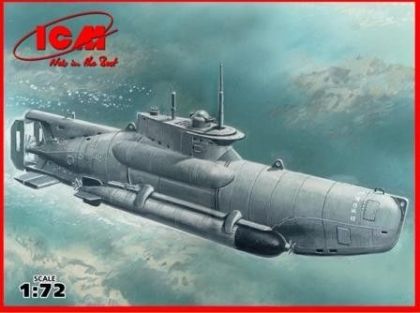
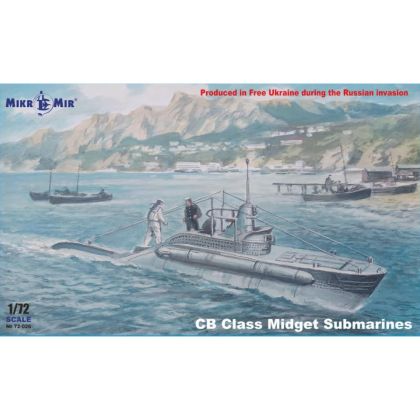
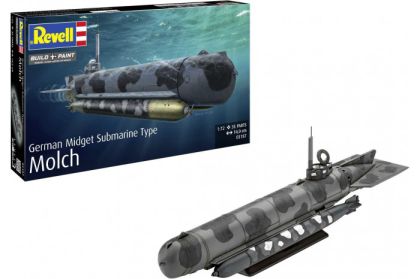
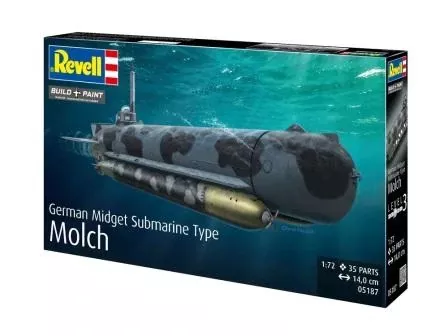
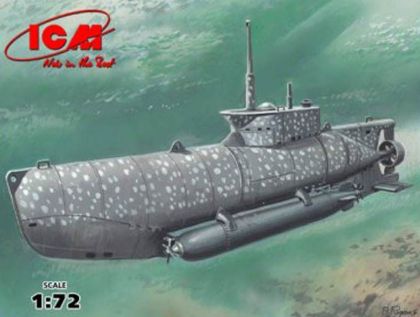
Full-size German submarines from the Type VII and Type IX families, midget boats such as the Molch, Italian CB class craft, and modern deep-diving manned submersibles. Boxings range from straightforward kits to editions with photo-etched parts and masks already included. Hull length means most of these need a cradle or a display base planned before the build, not after.
Half a metre of unbroken curve leaves no shadow line to hide a step. Dry-fit, tape, light-check and shim the halves before gluing; add internal bulkheads or strips if the halves flex. Filler on a closed hull means sanding away plating detail and re-scribing it, which is a far longer job than getting the fit right at the start.
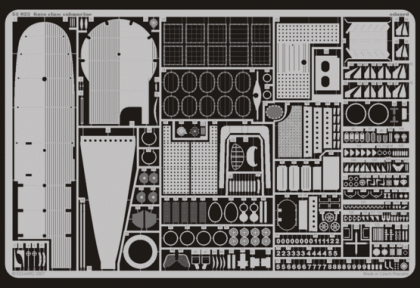
Casing gratings and free-flood slots are the single most visible upgrade at 1:72, and photo-etched submarine sets are the only way to get them thin enough. Interior compartments, deck guns and torpedo rooms are in submarine accessories, and they are the reason builders cut these hulls open at all.
Flat dark grey over half a metre of hull looks like a plastic tube. Break it up: modulate the base slightly along the hull, then work the anti-fouling boundary, the hatch rims and the waterline. A controlled base from model paints followed by layered wear from weathering products is what makes a boat of this size read as steel rather than styrene.
Every scale is listed under submarine model kits.