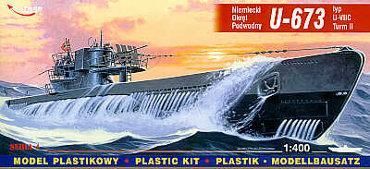
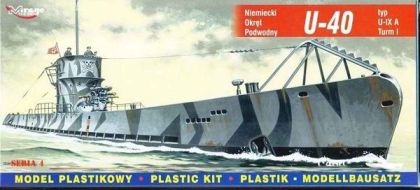
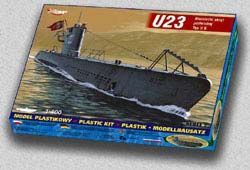
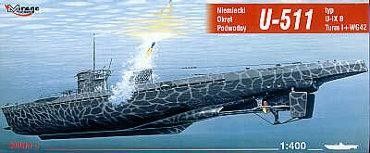
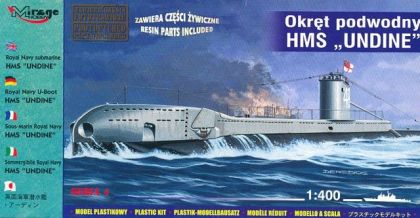
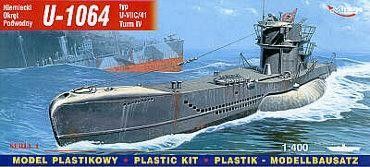
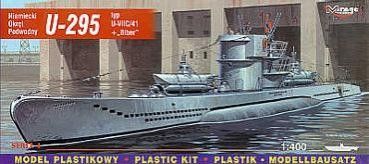
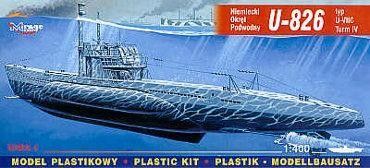
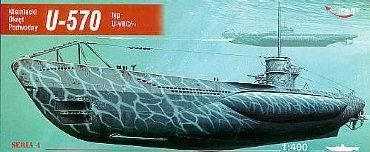
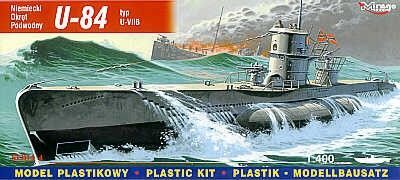
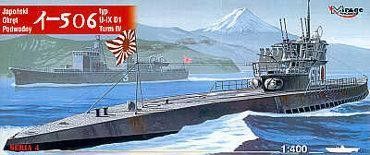
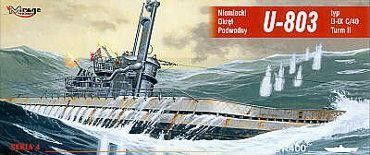
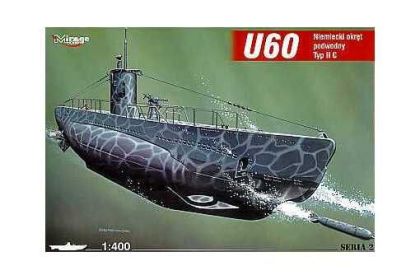
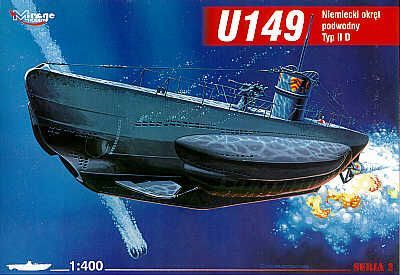
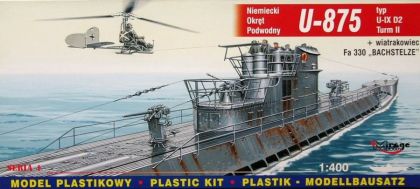
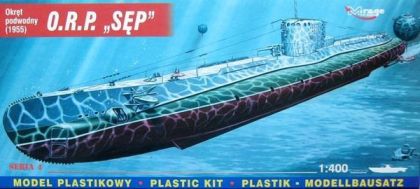
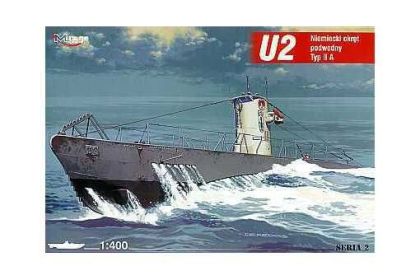
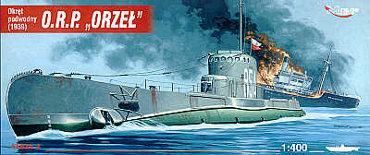
At 1:400 a full-size submarine is about 18 centimetres of hull. That changes what the build is about: there are few parts, the seam is a single short run, and almost everything that makes the finished model convincing happens with a brush. A boat this size is also easy to group — several of them on one base read as a flotilla rather than as a row of separate models.
Fittings are at the edge of what injection moulding can do, so the periscopes and railings are suggestive rather than exact. Clean paint and a sharp waterline do more here than any upgrade part.
Low part counts, one-piece or two-piece hulls, a small conning tower and a simple stand. Many of these boxings originated as collector pieces, so the mouldings prioritise outline accuracy over surface texture. That is not a drawback at this size — a correct silhouette is what the eye checks first.
Paint thickness is a real factor on an 18-centimetre hull: two thin coats from model paints keep the moulded plating visible, where one heavy coat fills it. Lightening the base slightly also helps, because small objects read darker than large ones.
A crisp, straight boot topping does more for a small submarine than any fitting. Mask it, cut it with a fine brush from modelling brushes, and keep the anti-fouling boundary parallel to the deck rather than to the table.
Use weathering products sparingly: a faint tonal break along the waterline, a hint of rust at the hatch, nothing more. Oversized effects are the fastest way to make a small hull look like a toy.
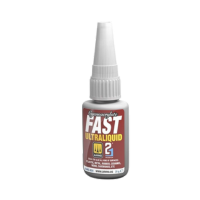
Short seams and small parts mean a thin applicator matters more than strength. Keep a liquid cement and a non-fogging cyanoacrylate from the adhesives range for the clear stand.
These kits often come with a clear or chromed stand that is the only thing holding a round hull upright. Fit and test it early: drilling a locating hole into a painted hull is a job nobody enjoys, and a boat that leans on the shelf undoes an otherwise clean finish.
The complete scale range is under submarine model kits.








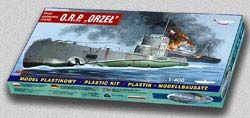
![1:400 ORP 'Orzeł' [Polski Okręt Podwodny 1939] (MODEL SET)](https://cdn.cloud404.cz/clients/cdn147/gallery/products/83056/gall_305-1-400-orp-orze-polski-okr-t-podwodny-1939-model-se-big.jpg)