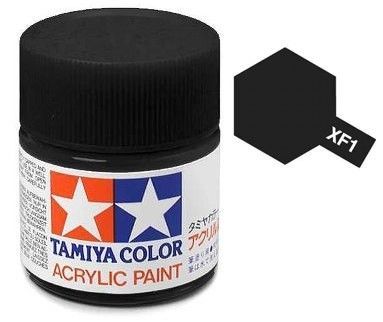
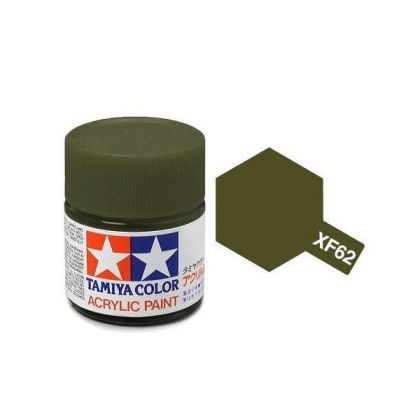
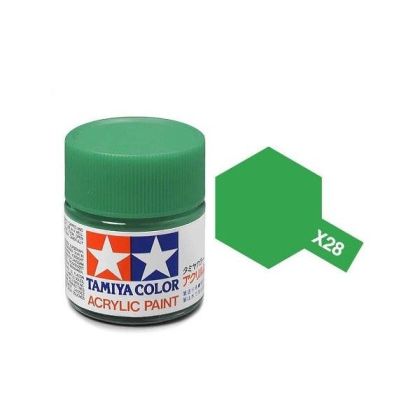
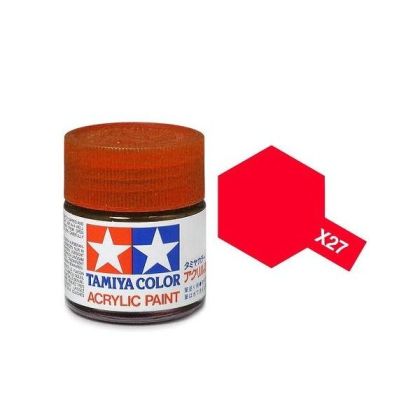
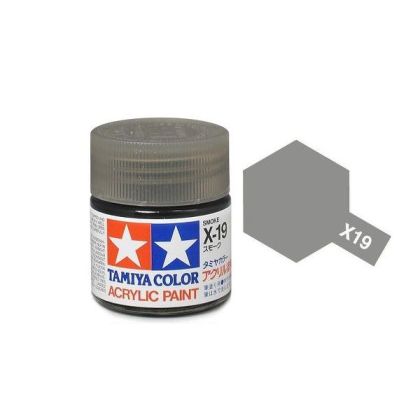
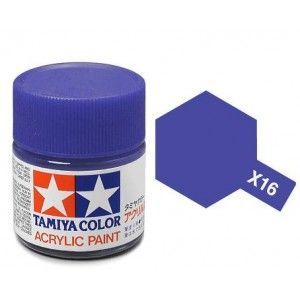
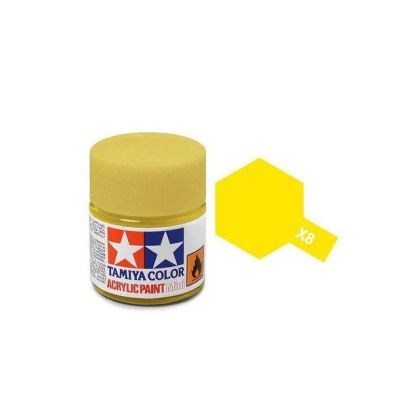
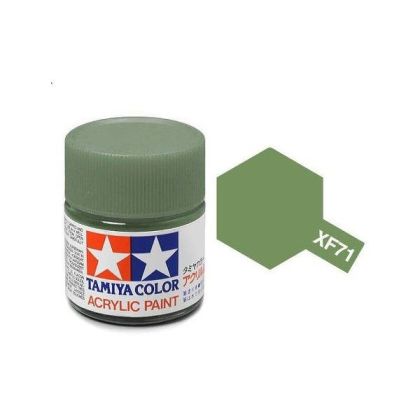
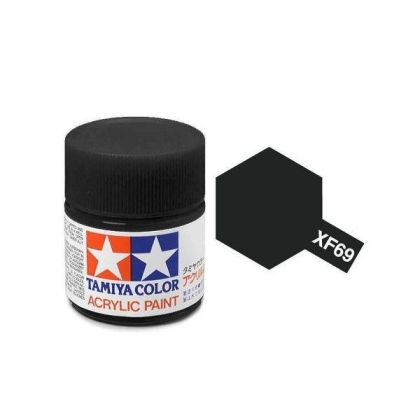
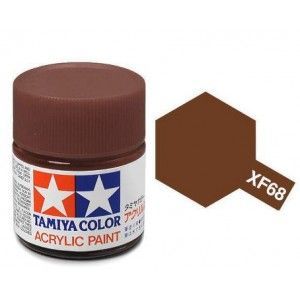
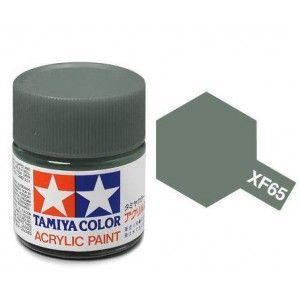
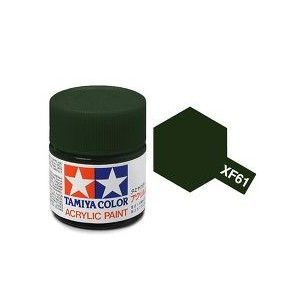
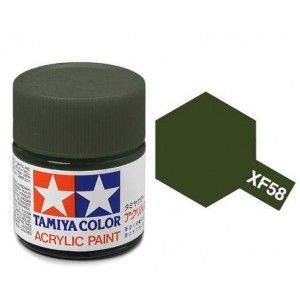
Twenty-three millilitres is the size for the paints you get through fastest: base camouflage tones, the black and white used to adjust other shades, or the colour of a complete body shell. Like the smaller jars, the range is split by sheen, gloss shades carrying the X prefix and matt ones XF.
If you build larger scales or several models in the same scheme, one bigger jar means fewer changes of bottle, and the shade stays identical throughout.
Surface area decides it. An aircraft in 1:32, a tank in 1:35 or a ship hull consumes far more of a base shade than a small kit, and topping up midway is not ideal: a new jar may come from another batch and the tone need not match exactly. A bigger jar removes that problem.
Gloss shades serve body shells, clear parts and the areas under decals. Matt shades form the basis of military camouflage and interiors. The split follows the designation on the jar, so searching is quick.
The paint takes a brush or a nozzle. For the airbrush, bring it down with the matching thinner, which gives a smoother surface than water, and spray in light passes. The equipment is in the airbrush section, while hair types for handwork are in modelling brushes.
Keep larger jars upright at a stable temperature and wipe the neck after every use. Always stir right down from the bottom: in a bigger volume the pigment sediment is heavier, and unstirred paint covers unevenly.
For a comparison with other ranges, open the acrylic model paints overview and judge the binders side by side.