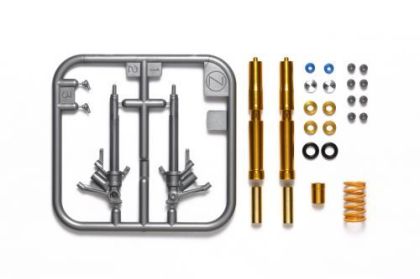
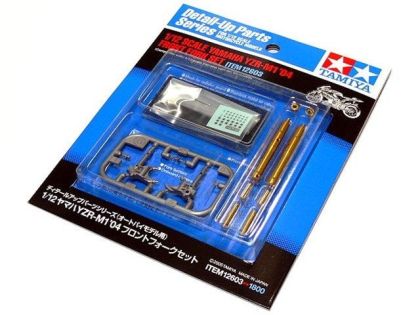
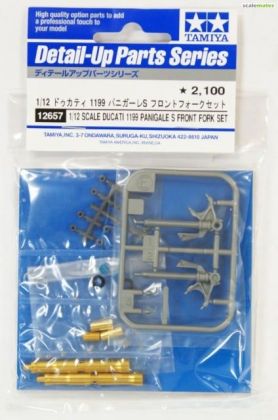
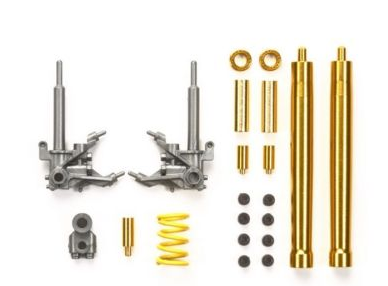
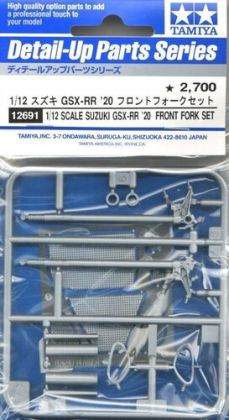
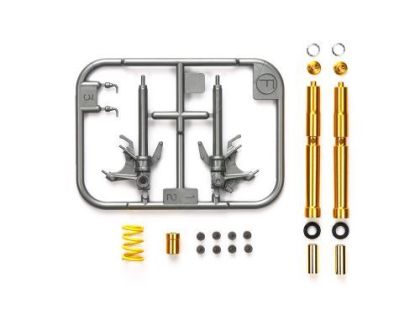
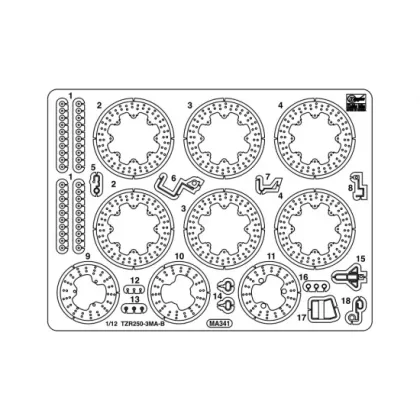
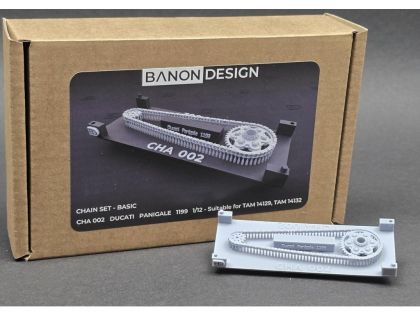
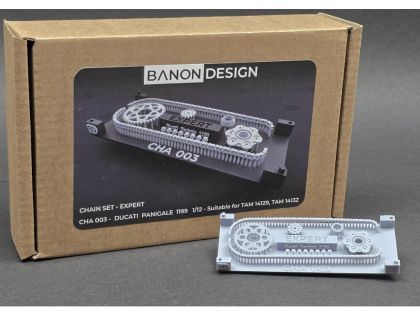
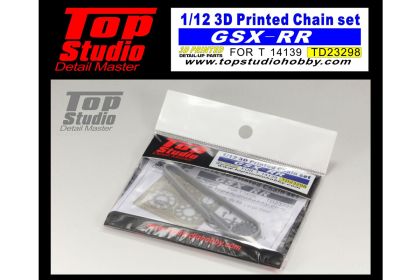
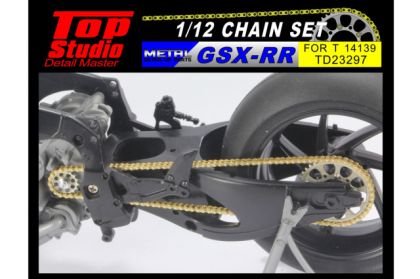
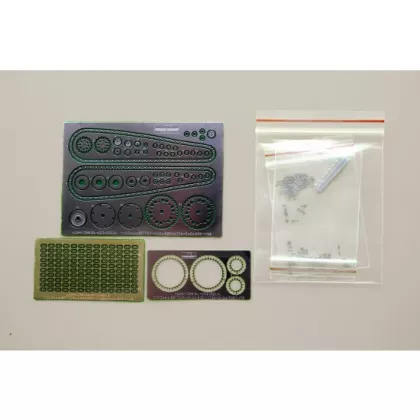
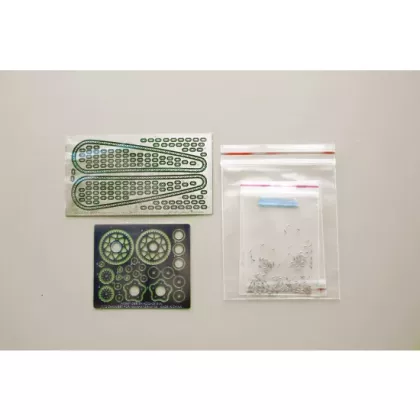
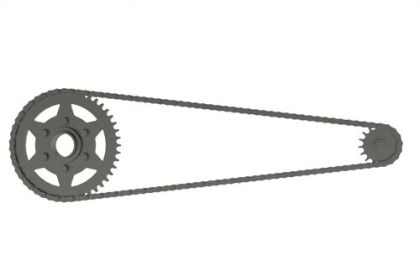
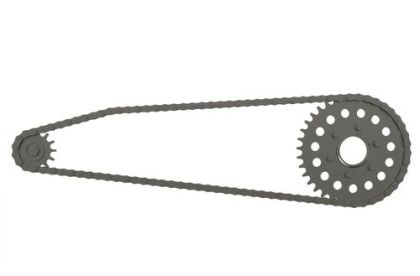
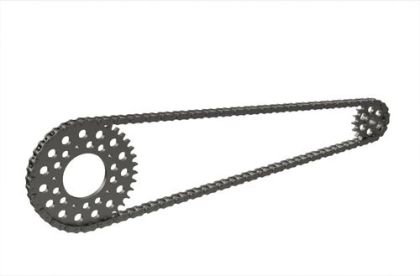
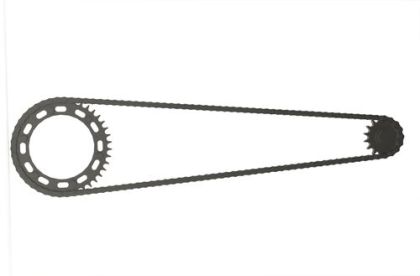
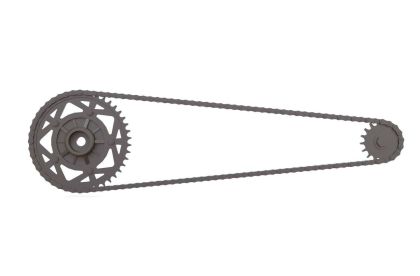
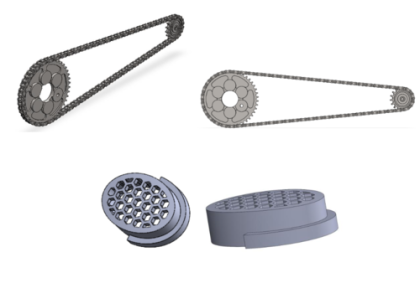
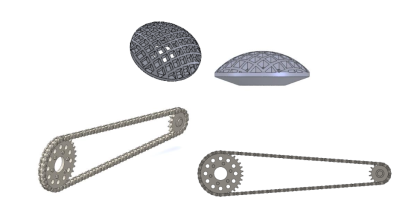
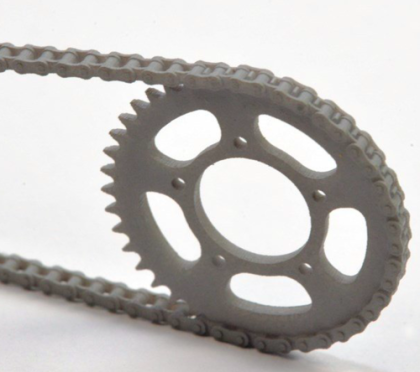
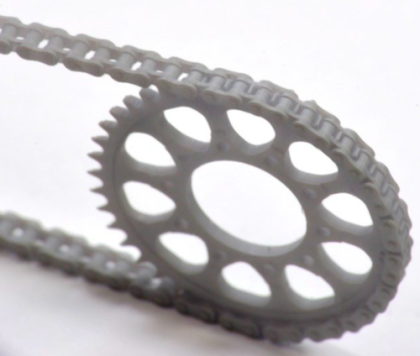
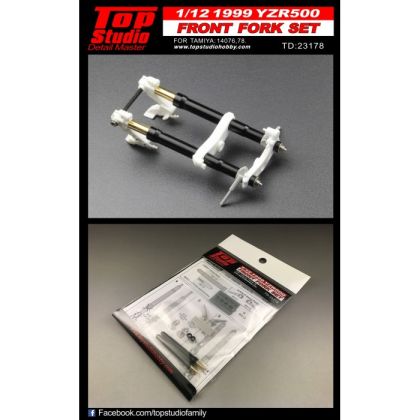
Three areas are where plastic loses most heavily on a motorcycle, and all three are covered here. A moulded chain comes as a solid loop with no daylight between the links, brake discs have drilling that is only suggested, and a plastic fork leg looks as though it could not carry the machine. Combination sets of resin, photo-etched brass and turned metal restore real structure to those parts, and the bike suddenly looks as though it only needs fuel.
Sets are produced mainly for 1:12. Below you will find what they contain and how to choose between the simpler and the more demanding kind.
Three details carry disproportionate weight on a motorcycle, and all of them sit in plain view at eye level. Daylight between chain links, a disc with crisp drilling and fine grooving, fork sliders with a genuine metal sheen: these are what decide a model at a show. Sets in this section achieve them by combining materials, typically resin discs with metal or etched chain links. A chain also sits higher and more visibly on a motorcycle than on any other subject, so the effort shows immediately.
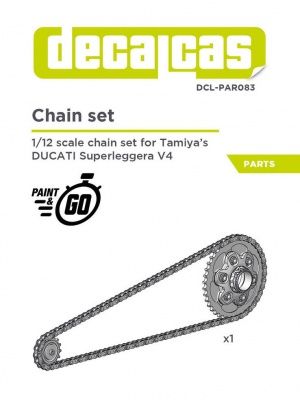
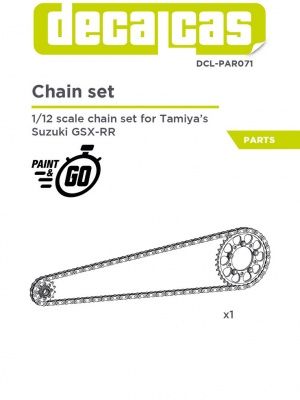
Chain pitch and disc diameter vary from bike to bike, so sets are made for named kits. The description always states the intended kit; check the type, version and scale, and note that supply is concentrated on 1:12 motorcycle kits.
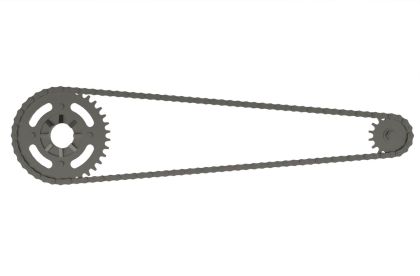
Assembling a chain link by link is a meditative job spread over several evenings. Simpler sets supply the chain as one piece with the gaps already opened out. Either option improves the model; choose according to patience. A linked chain has one real advantage: it drapes naturally over the sprockets, which a one-piece run can never do.
Running gear is assembled late and handled often, so plan for that. Glue metal and resin with cyanoacrylate, and scuff and degrease discs before painting, or the paint will lift at the first handling. Dry-fit the chain run before committing to it, and fit it only after the wheels have been painted.
Everything else that upgrades a bike is in motorcycle model accessories.