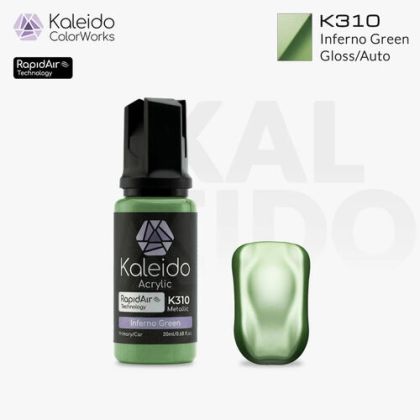
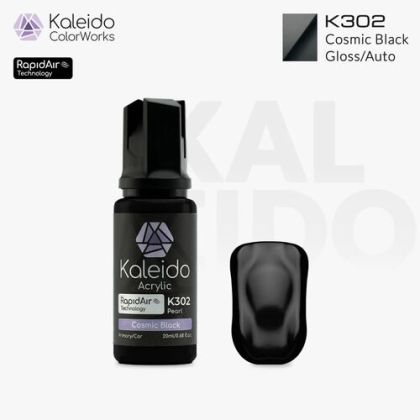
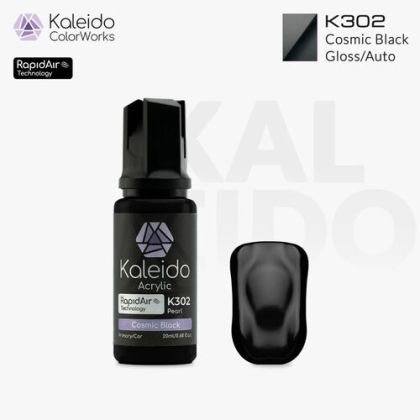
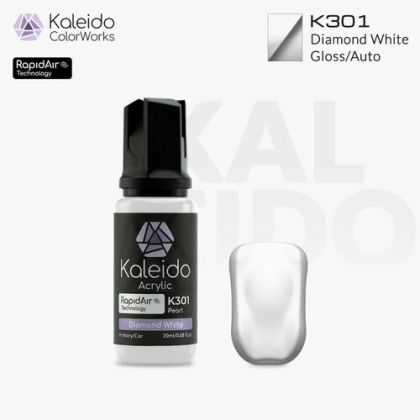
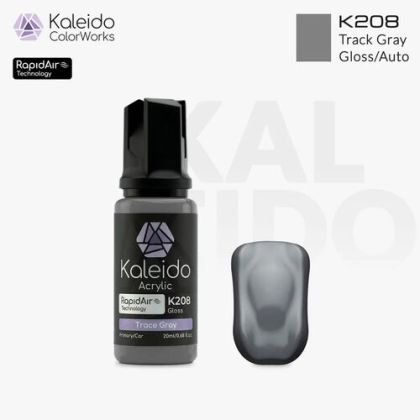
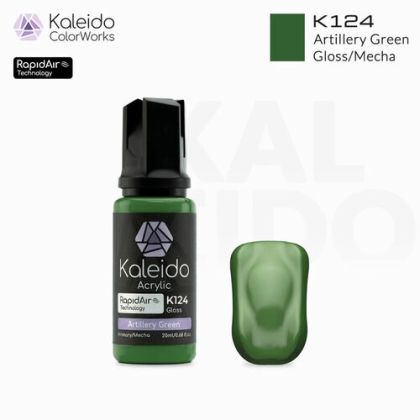
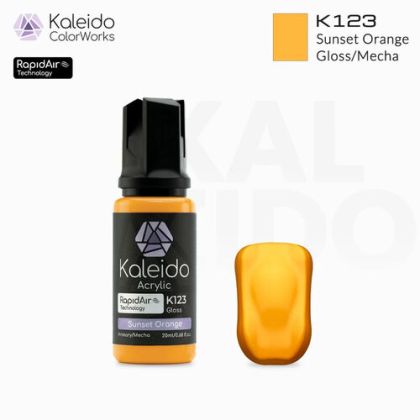
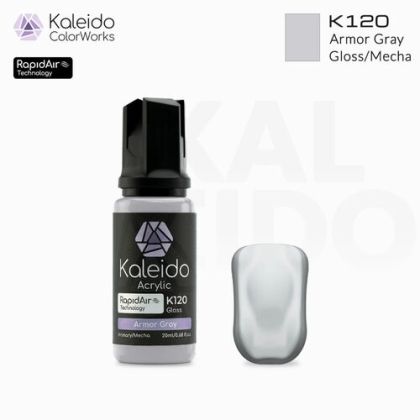
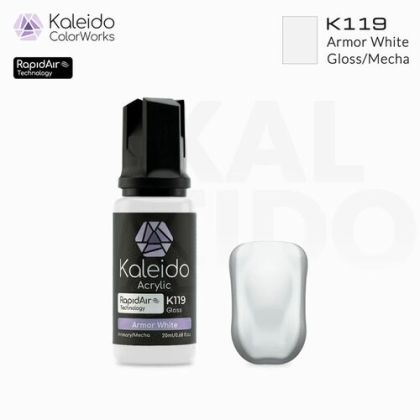
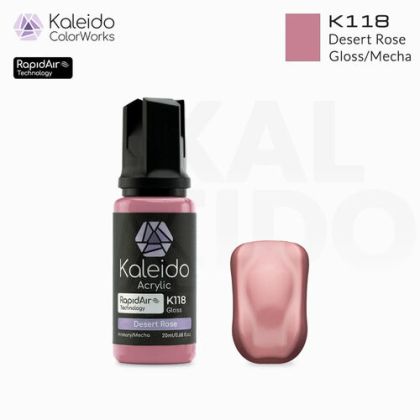
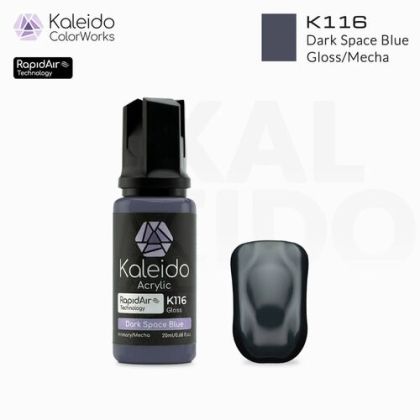
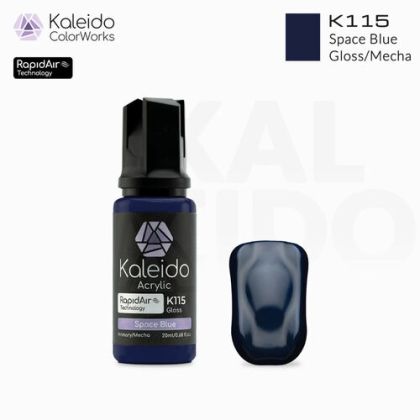
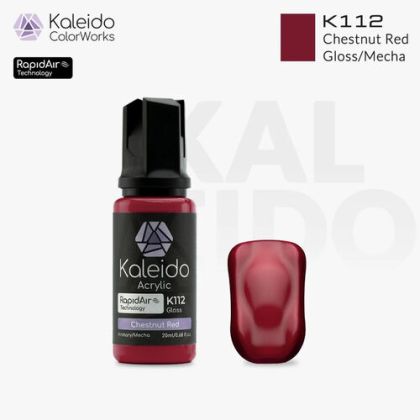
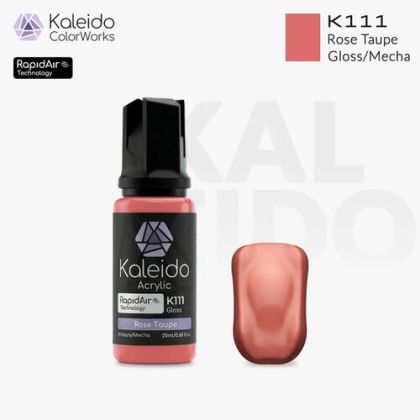
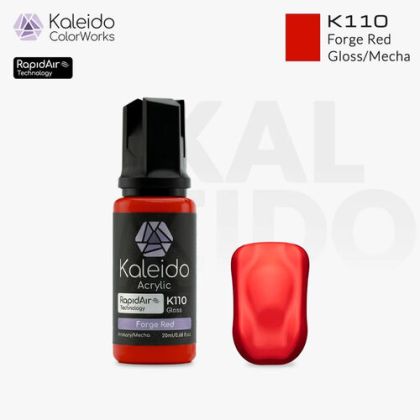
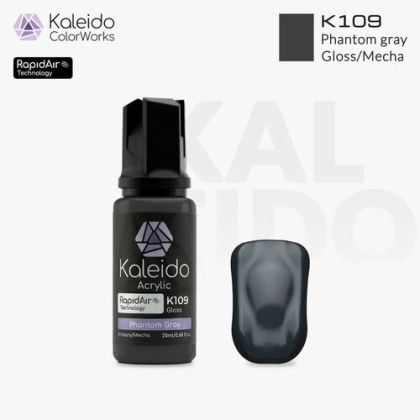
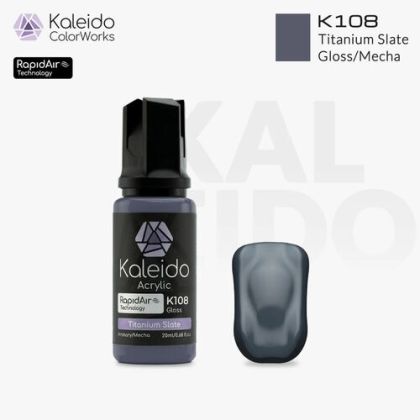
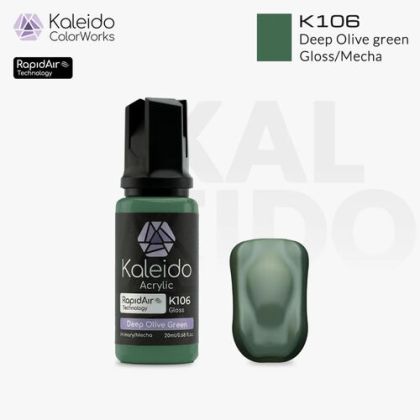
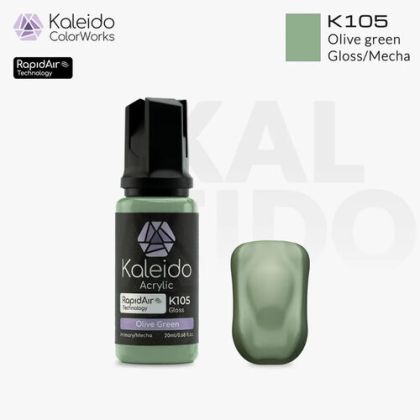
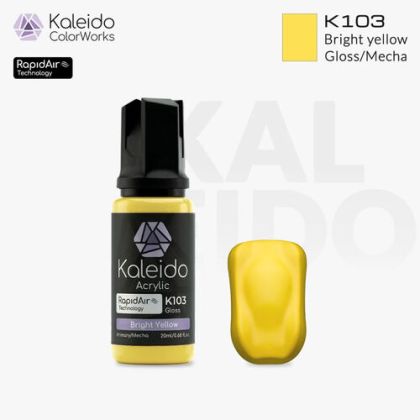
Kaleido paints dry to a gloss, and part of the palette also exists in a pearl or metallic version of the same shade. Practical tones — a grey for running gear, armour grey, white, artillery green — therefore sit beside strong colours such as cosmic black with pearl, diamond white, infernal green, sunset orange and chestnut red.
A gloss finish is demanding in one specific way: it shows everything under it and everything that lands on it while it dries. The notes below cover surface preparation, how a pearl effect is built up, and why leaving the whole model glossy works against the illusion of scale.
The interesting part of this palette is that one shade may exist in several versions. The gloss variant is the base, and some tones add a pearl or metallic effect over it. Pearl does not change the shade; it changes how the surface returns light, so from one angle you see the colour and from another a faint cast of something else.
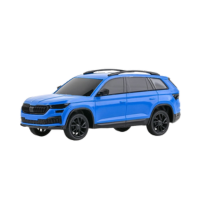
On a model that matters where a large area would otherwise look dead: a car body, a cowling, the hull of a sci-fi machine, the armour of a larger figure. Because the range also carries plainer military greys and greens, the same palette will paint armoured vehicles and racing bodywork.
Every unevenness and every speck of dust shows on a glossy surface. Finish the surface first and seal it with a base from surfacers and primers; only then is there any point reaching for colour. Spray in as dust-free a space as you can manage and let the model dry covered.
A pearl effect comes from several thin passes rather than one heavy coat. Spray lightly, let it flash off and add more until the cast appears. Equipment is in airbrush equipment.
A model glossy all over reads as a toy. Keep the gloss on the main surfaces and flatten the rest with a coat from varnishes, so there is a difference between painted bodywork and technical parts. That contrast does more for the impression of scale than the shade itself.
Other gloss and effect palettes can be compared in acrylic model paints.