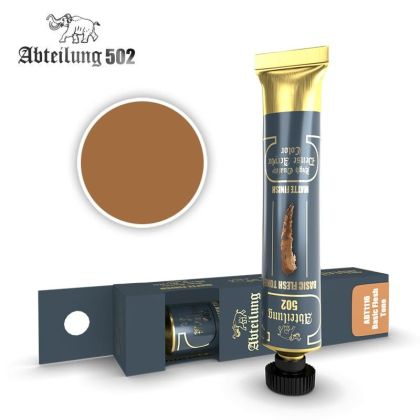
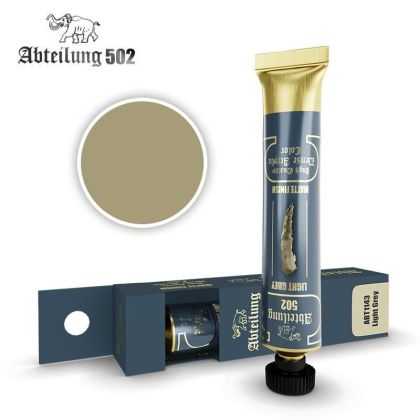
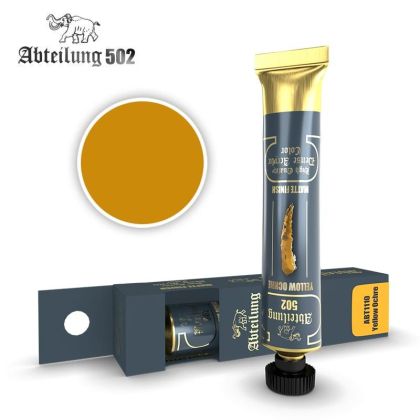
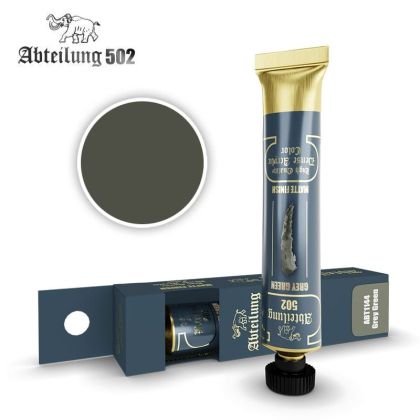
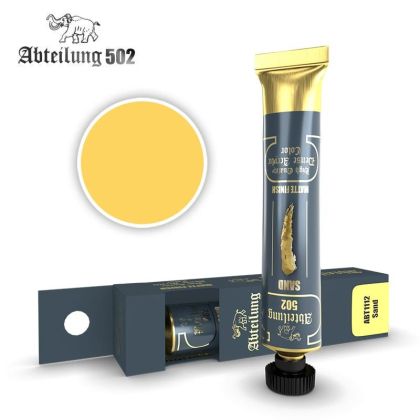
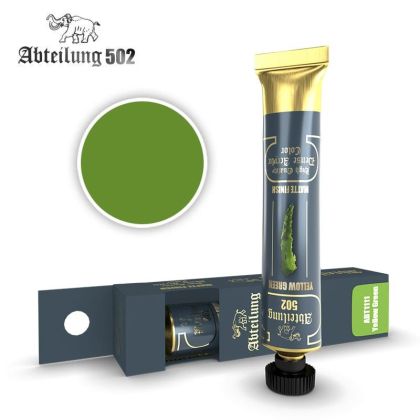
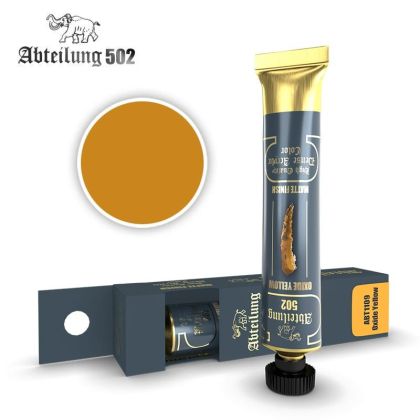
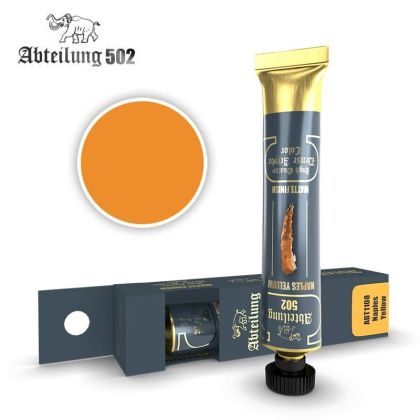
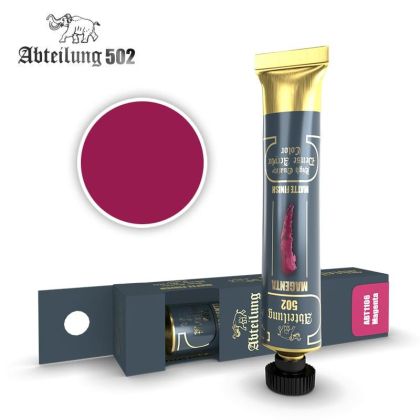
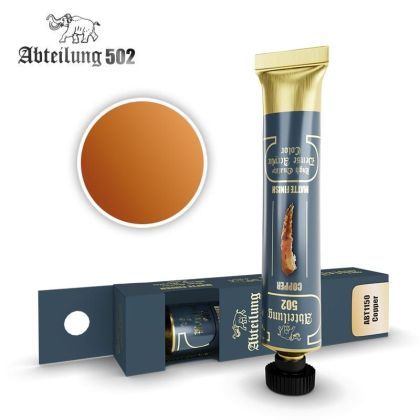
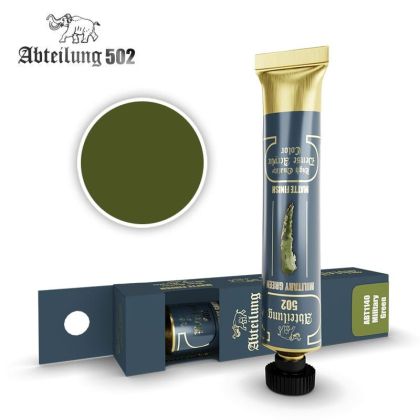
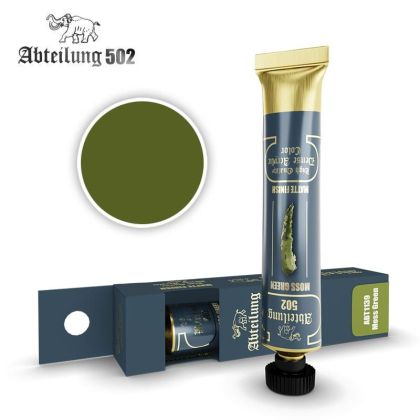
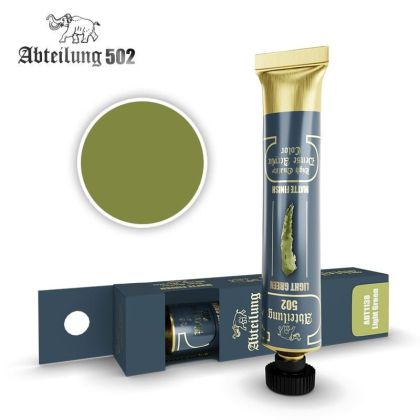
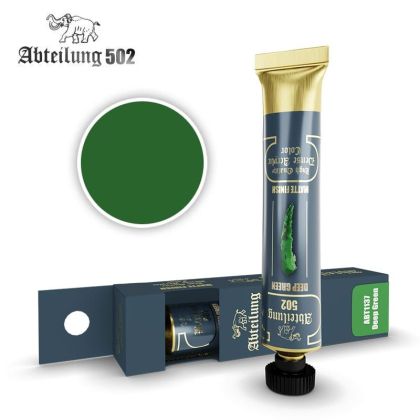
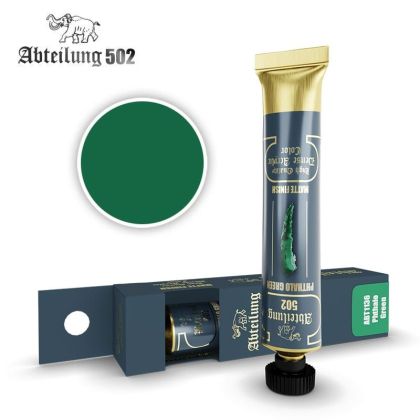
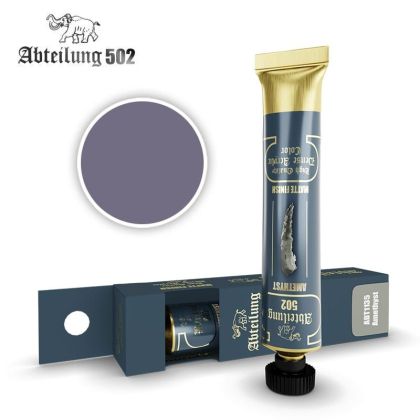
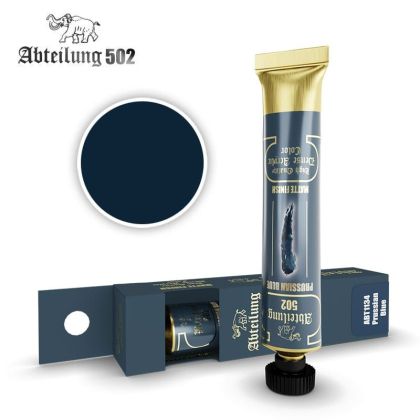
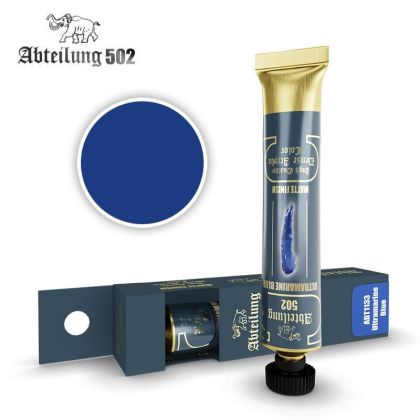
The Abteilung 502 palette is built on a different logic from a standard modelling range. Instead of camouflage codes you get names borrowed from artist pigments: ochre, Naples yellow, umber, phthalo green, Prussian and ultramarine blue. Military greens, grey-greens and a metal tone stand beside them.
A palette like this is not bought for one scheme. It is bought as a base for mixing your own tones and for working transitions on figures and dioramas.
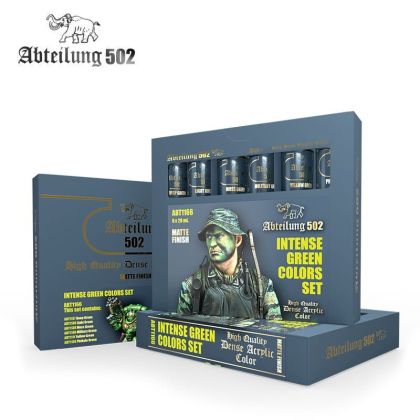
Model paints usually aim at a specific machine and a specific regulation. Here the logic runs the other way: you get clean pigment tones and mix the shade yourself. For a builder working from a photograph who wants to land a tone of their own, that is quicker than hunting for a ready-made jar that matches exactly. The range also includes a combined set of greens.
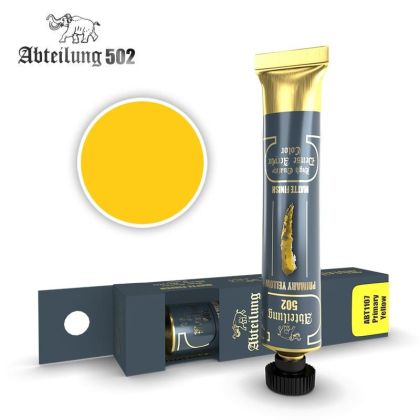
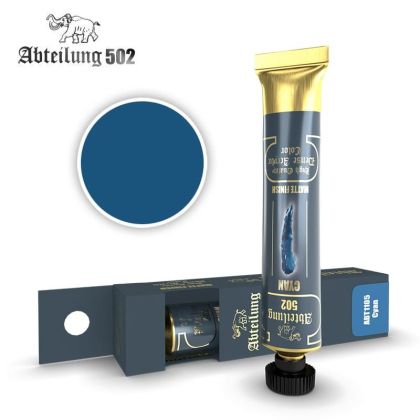
Clean tones such as magenta, cyan or primary yellow serve as the starting point from which earth and military shades are pulled in whichever direction you need. Write the ratios down, because a second batch of the same tone is needed more often than it first seems. Measure with pipettes and palettes and test the result on a scrap of styrene first.
Earth and grey-green tones layer well, so you can light and shade them the way uniforms and faces demand. For even softer blends this palette is often combined with oil paints, which stay open considerably longer.
The denser consistency is written first and foremost for modelling brushes. For spraying, bring the paint down with the appropriate thinner and plan on several light passes, since strongly pigmented tones tend to cover all at once.
If you would rather have ready-made camouflage shades tied to a regulation, look through the acrylic model paints. The complete overview of binder types is in the model paints category.