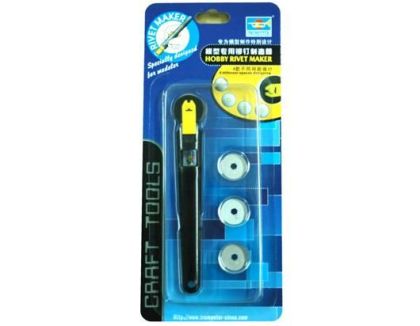
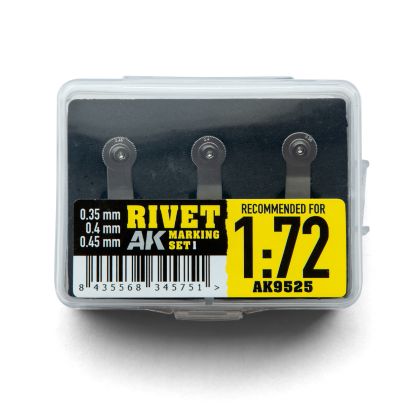
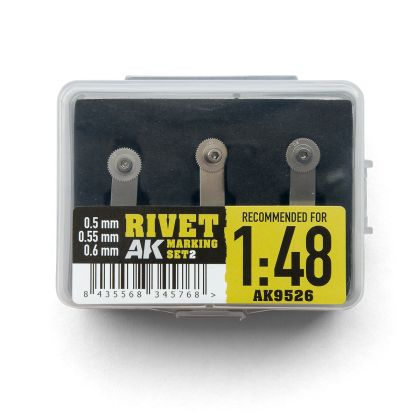
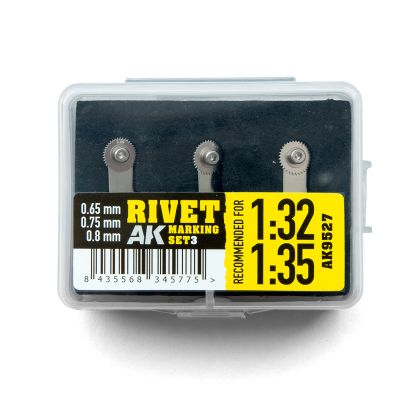
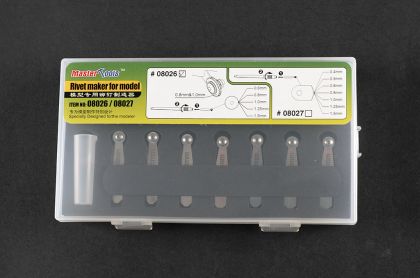
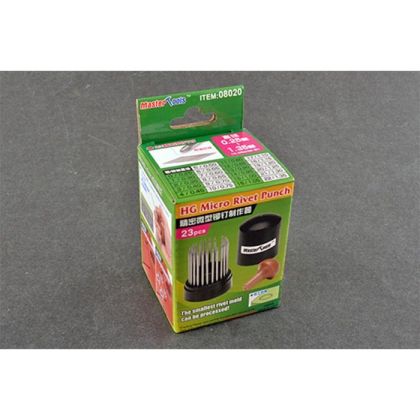
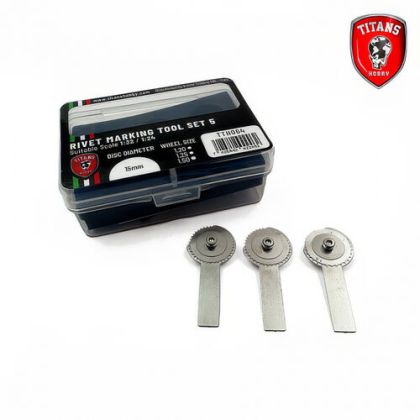
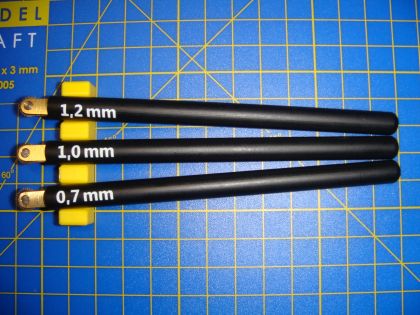
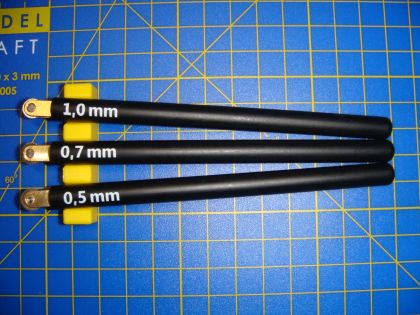
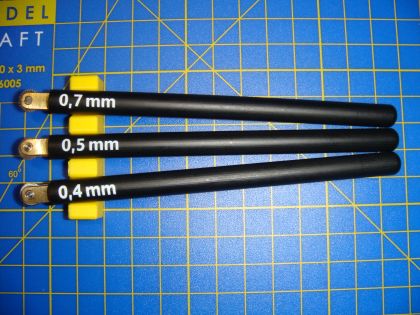
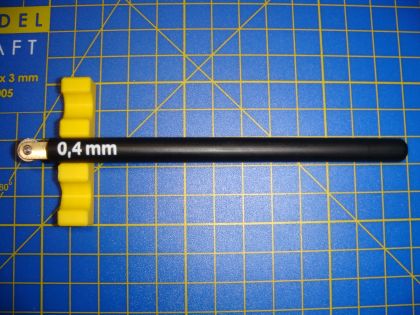
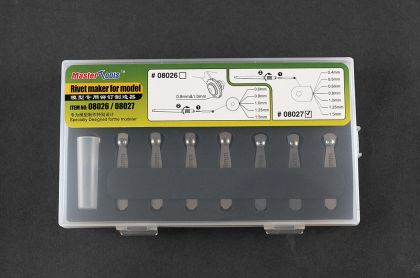
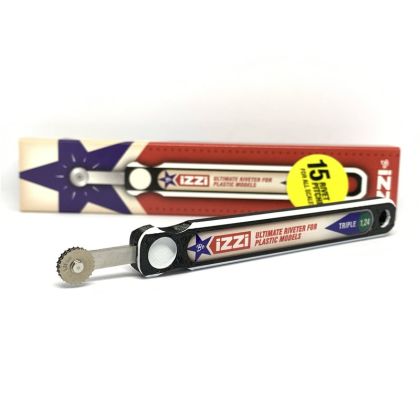
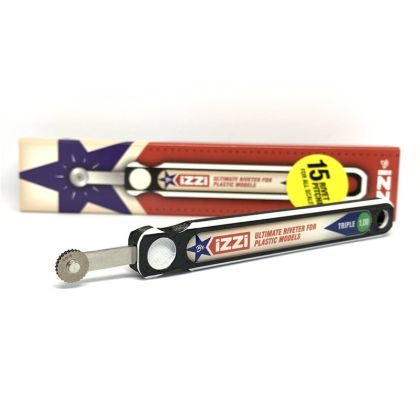
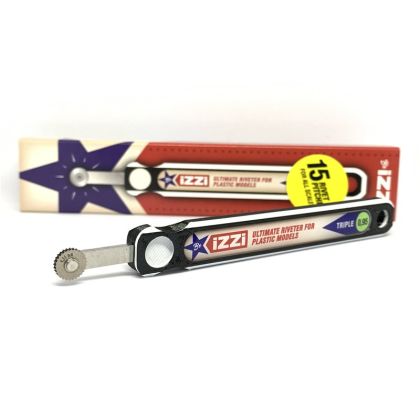
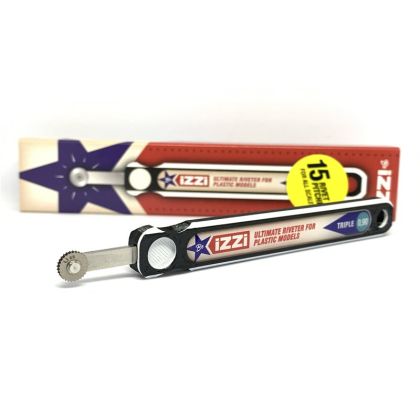
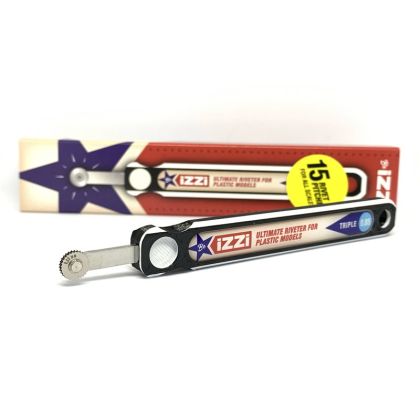
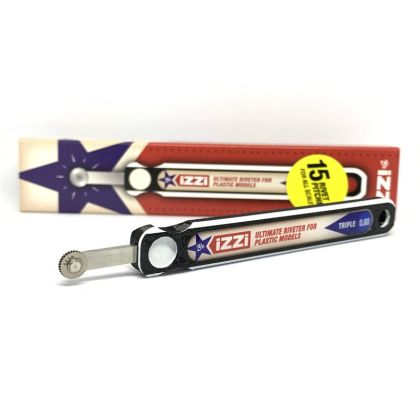
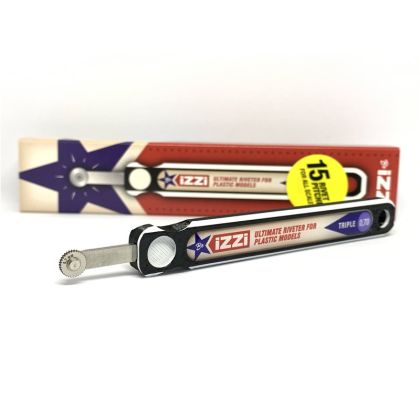
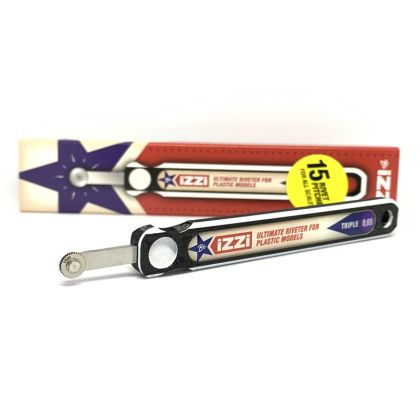
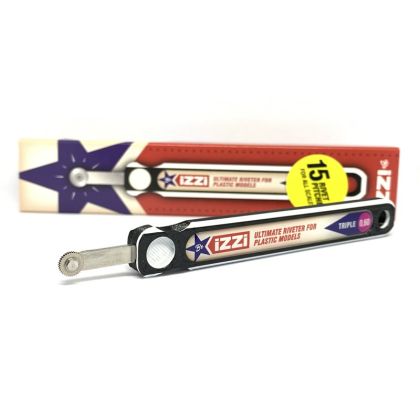
A riveter presses a row of evenly spaced dimples into the surface of a model, which after painting read as rivets. It is one of the most effective upgrades there is — a riveted surface gives a model scale and depth that a smooth panel never has. The category covers wheeled riveters with toothed discs in several pitches, point tools for pressing single rivets by hand, and complete sets whose spacings are matched to individual scales. Pitch is the one specification that matters, and it is dictated entirely by the scale you are working in.
A toothed wheel is pressed against the surface and rolled along it. Each tooth presses a small depression into the plastic as it turns, producing a row at a constant pitch. What you are making is therefore not an added rivet but a negative impression — which, once painted and accented, behaves optically just like a real rivet and has the advantage that nothing can fall off.
This is fundamental. The spacing on the real machine is divided by the scale, so a wheel suited to 1:32 produces a meaningless pattern at 1:72. That is why riveters are sold in sets where each wheel corresponds to one band of scales — from large car and aircraft subjects down to small armour.
Even within one scale, pitches differ with the type of structure. It is worth looking at a photograph of the prototype and choosing the wheel from that, rather than from whichever one happens to be on the bench.
A riveter goes wherever you let it, and a crooked row of rivets shows up even more than a crooked panel line. Always work along a tape or a template from templates and tapes, and try a pass on an offcut of sprue before you touch the model.
Use light and, above all, even pressure. Uneven pressure produces alternately deep and shallow dimples, which after painting looks unnatural. Two shallow passes beat one heavy one.
A small burr is left around each dimple. Go over the area with a fine sanding sponge so the surface is levelled but the dimples remain. The result only shows under a thin coat from surfacers and primers.
If the rivets have to stand proud of the surface, use a punch from punch and die sets.