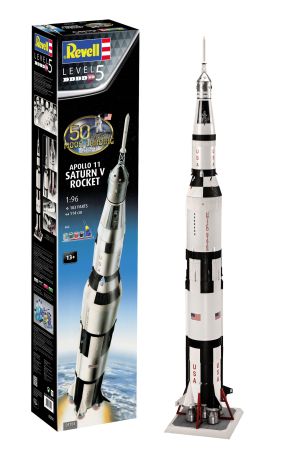
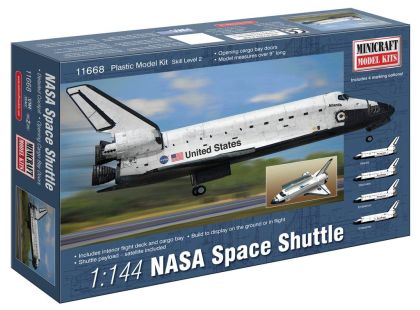
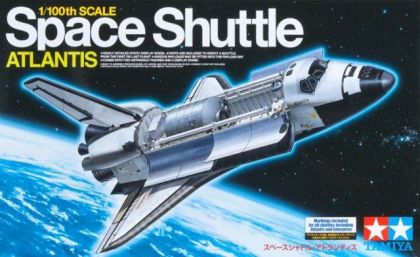
Model kits of rockets and spacecraft put the actual milestones of spaceflight on a shelf: the Saturn V of Apollo 11, Gagarin's Vostok launcher, Soyuz, Europe's Ariane 5, the Space Shuttle and the Artemis-era SLS. Unlike science fiction, every one of these machines left a pad, which turns the build into a reading of space history as much as a modelling project.
The range runs from pre-coloured snap-fit launchers to large collector pieces that stand taller than most display cases, so measure the shelf first. The notes below help you choose by programme, by build difficulty and by height.
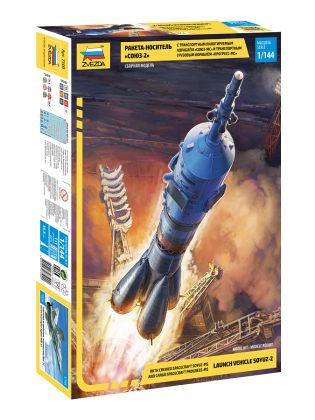
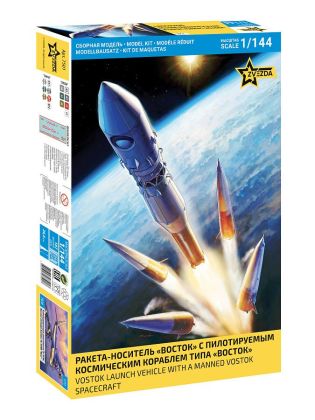
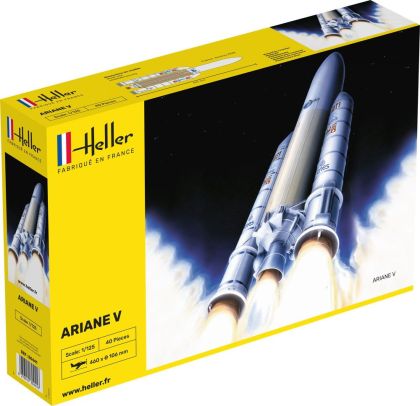
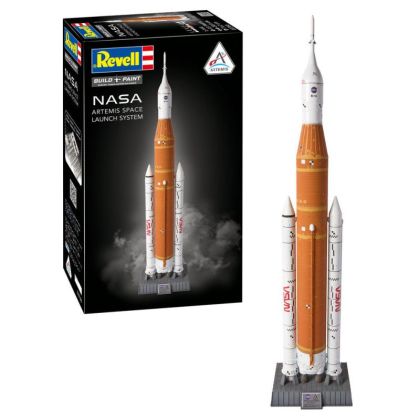
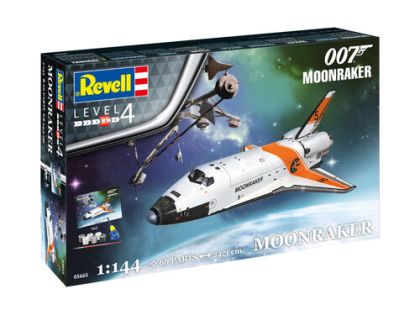
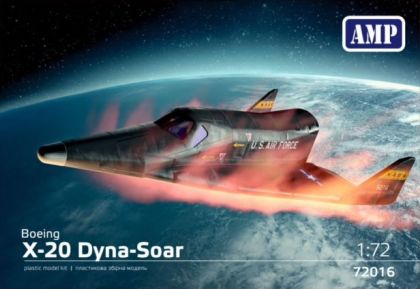
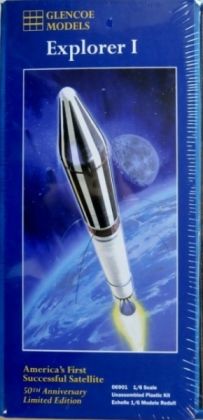
The category covers six decades and every spacefaring power: the Soviet school through Vostok and Soyuz, the American one through Saturn V, the Shuttle and Explorer I, Europe through Ariane 5 and China through the Shenzhou spacecraft and its CZ-5B launcher. The most common scale is 1:144, which is where the Shuttle, Soyuz, Antares and the Artemis SLS sit; Saturn V appears in larger and smaller scales instead, and at 1:144 that vehicle would stand about 770 mm (roughly 30 in) tall. You will also find the machines that straddle aviation and spaceflight, such as the experimental X-20 Dyna-Soar, and the occasional film subject.
A theme holds a collection together: the race to the Moon, the Shuttle era, or the current heavy-lift generation. Anniversary gift sets include paint and glue, which makes them a sensible first purchase for someone starting out.
Pre-coloured snap-fit launchers go together in an evening. Conventional glued rockets demand careful painting instead: a smooth white body panel forgives nothing, and that is exactly why it teaches clean airbrush work faster than a camouflage scheme ever will.
Rockets grow upwards rather than outwards. Measure your display space before ordering, because a metre-tall launcher will not go into an ordinary bookshelf and looks wrong lying on its side.
Fictional spacecraft from film and anime belong in sci-fi model kits; the whole genre is gathered under sci-fi and fantasy models. Here, only hardware that really flew.