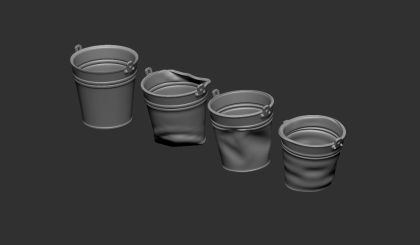
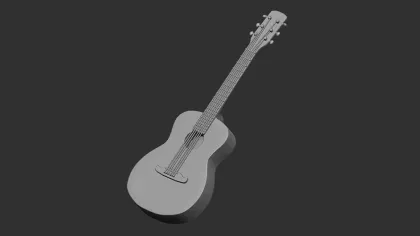
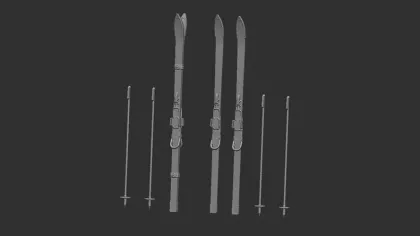
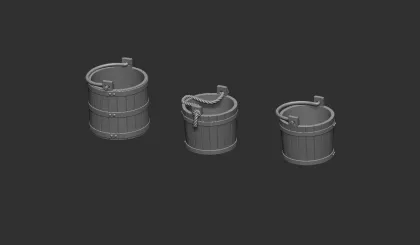
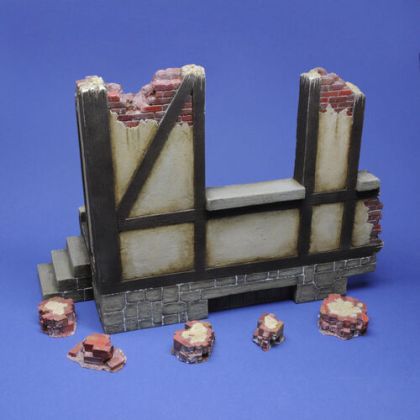
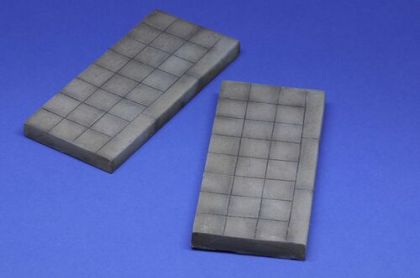
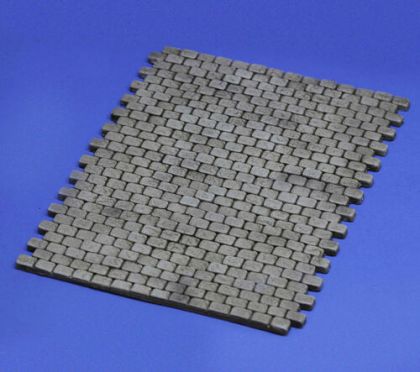
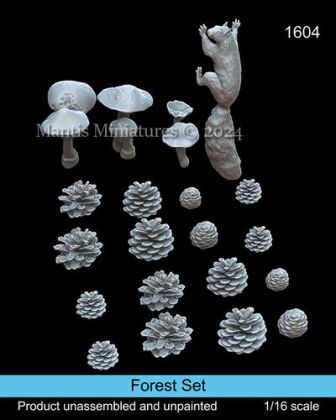
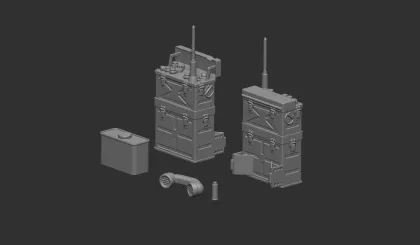
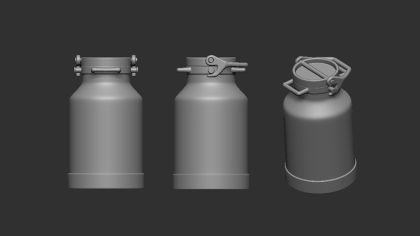
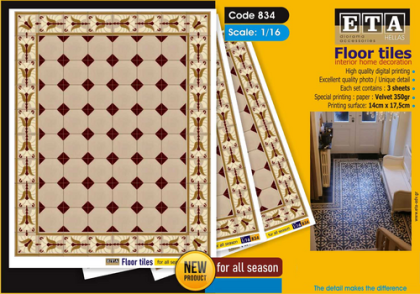
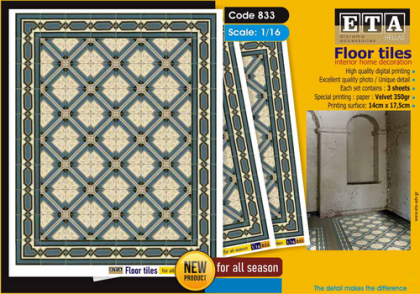
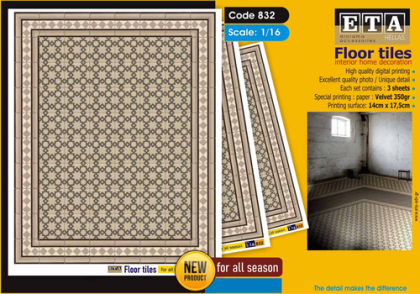
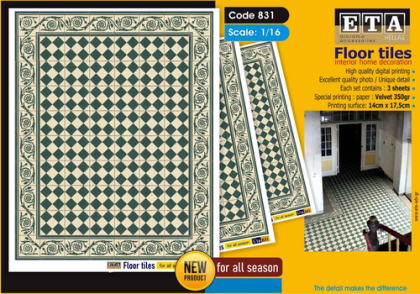
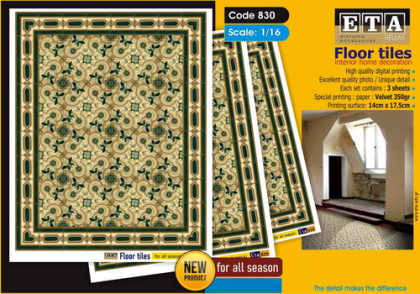
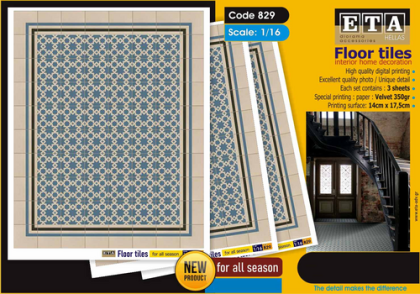
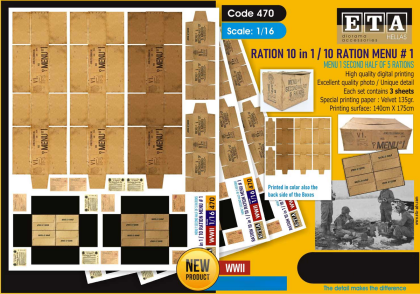
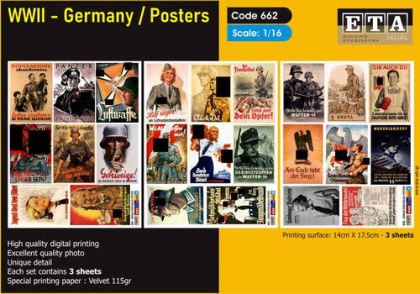
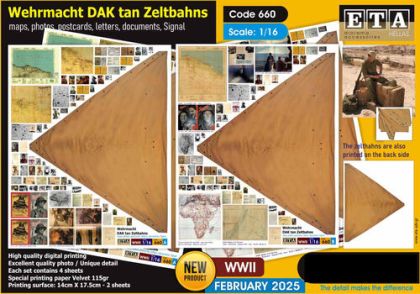
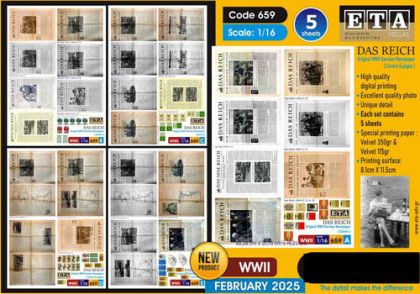
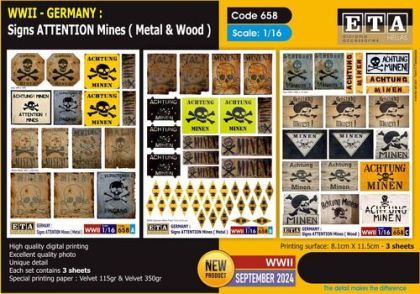
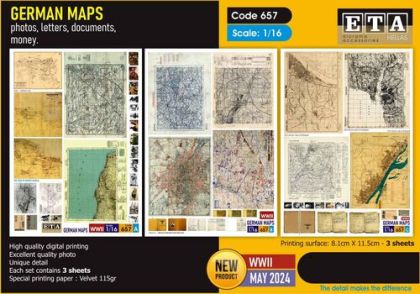
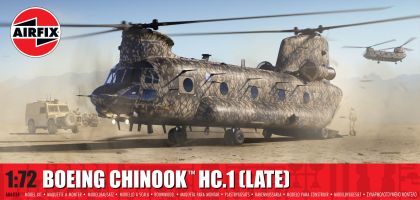
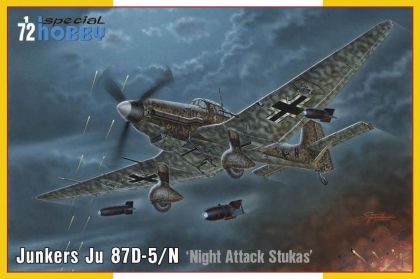
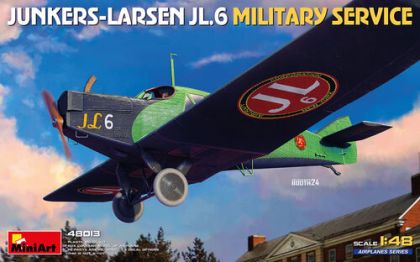
One sixteenth is among the largest scales dioramas are built in, and the parts here reflect that. There are sections of pavement and sett paving, a house ruin, a woodland set, wooden buckets and watering cans, skis, a portable radio set, and above all an extensive choice of paper prints: floor tiles, period newspapers, posters, maps, letters, banknotes, boards and printed tarpaulins.
Below you can read what this scale allows, and the routine that paper prints need if they are not to look like paper.
A figure in 1:16 stands over eleven centimetres tall, so a single figure with a few objects around it is already a finished diorama. The range follows that logic: instead of sets of small items you find individual strong elements - a length of pavement, a stretch of sett road, a corner ruin, a tree with ground at its foot. Alongside them sits an unusually broad choice of flat prints, because at this size a newspaper headline is readable and individual tracks can be made out on a map.
A large scale will not carry a crowd. One figure, one activity, two or three things that explain that activity. In 1:16 the eye reads even what the figure is holding, so the story rests on which objects you choose, not on how many.
Printed documents, posters and tiles are not glued down dry. Cut them with a sharp scalpel against a rule, paint the edges a darker shade so no white cut line glares, and lay them with diluted PVA. The paper takes up a little moisture in the process and can be shaped over any unevenness in the surface. Knock it back to matt once dry, or the reflections will give it away.
A 1:16 scene tends to be big and heavy, so start from a solid foundation and back it firmly. Thicker foam underneath, a reinforced surface and a decent frame are a necessity here rather than a luxury - otherwise moving the finished scene ends in a crack across half the paving.
A large scale rewards patience and shows up haste without mercy. If the detail appeals but you want to ask less of your shelf, look at 1:24 diorama supplies.