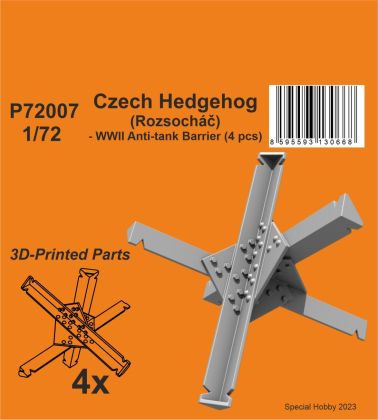
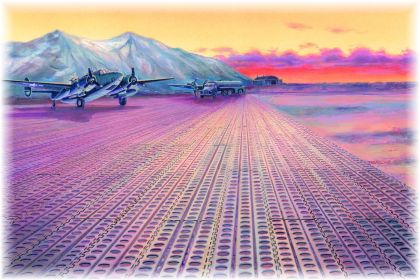
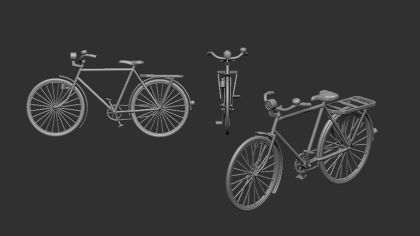
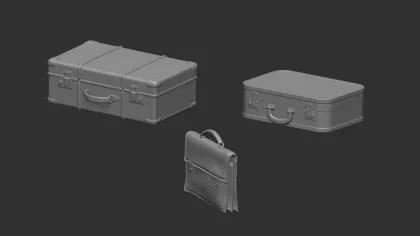
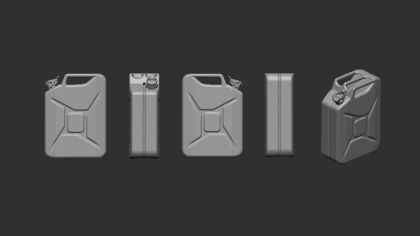
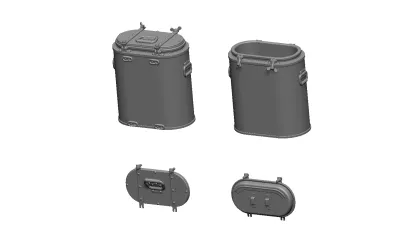
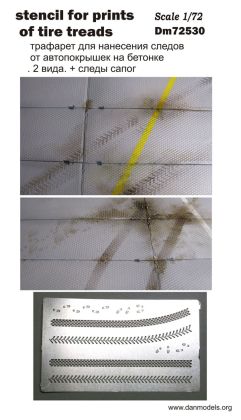
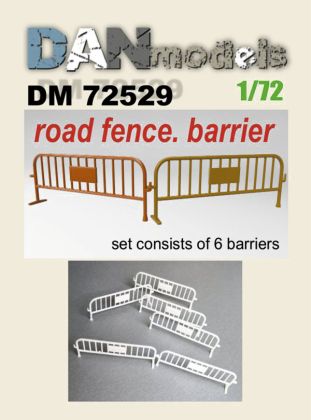
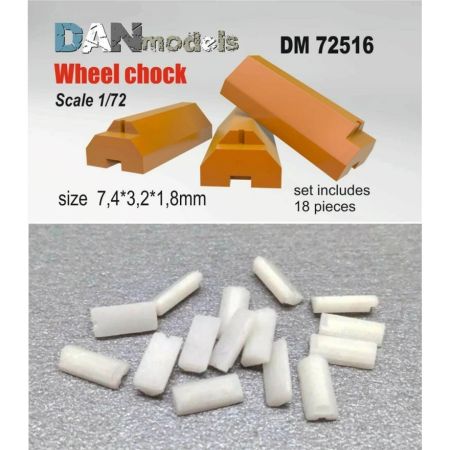
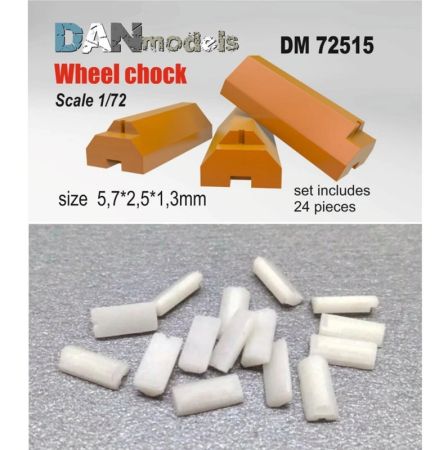
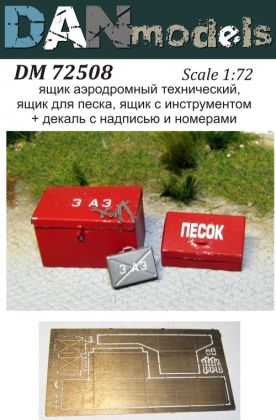
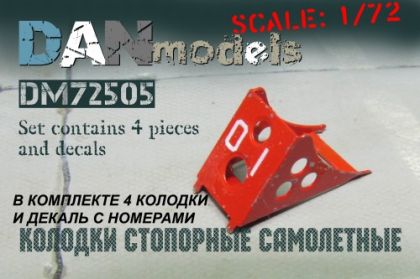
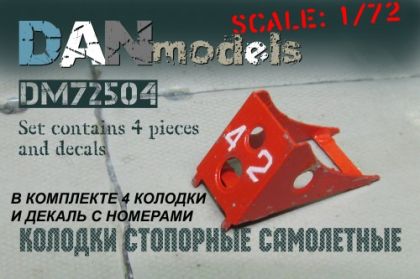
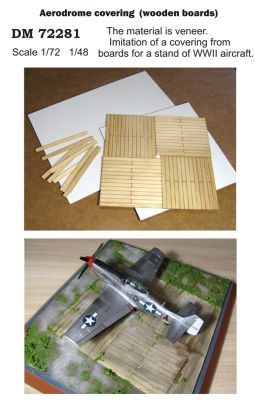
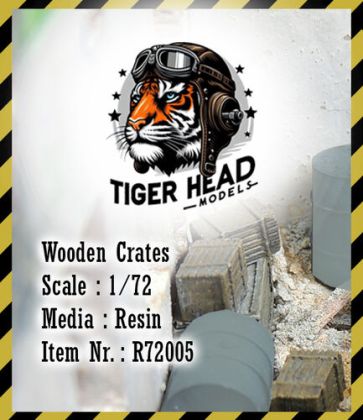
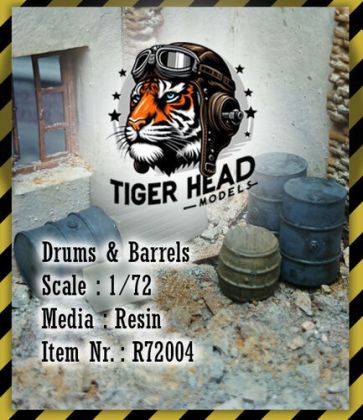
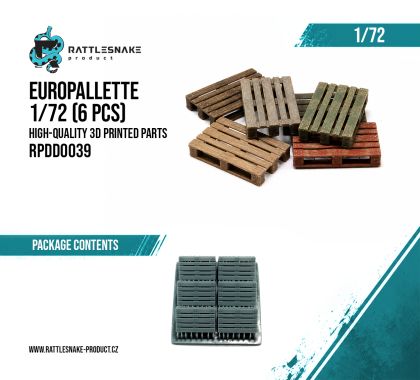
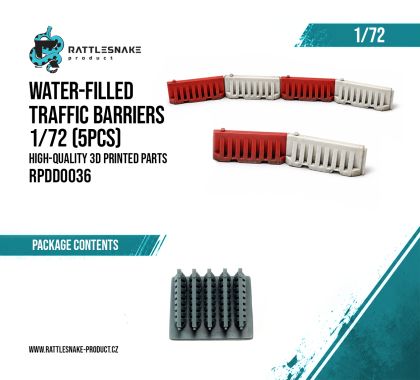
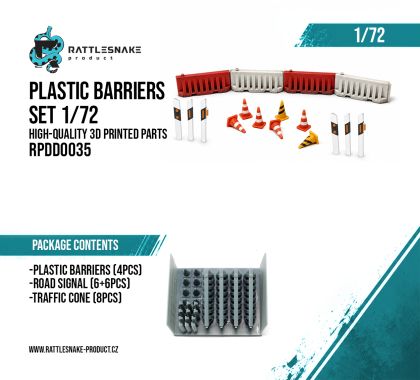
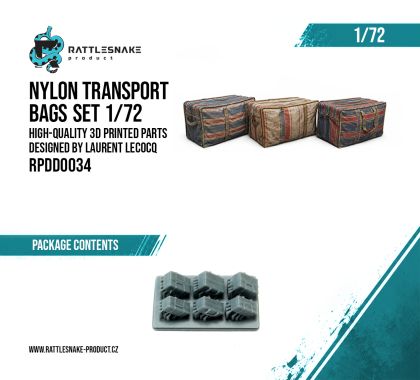
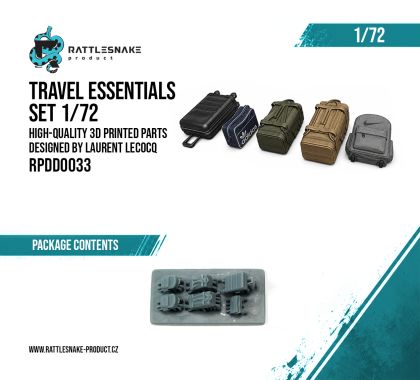
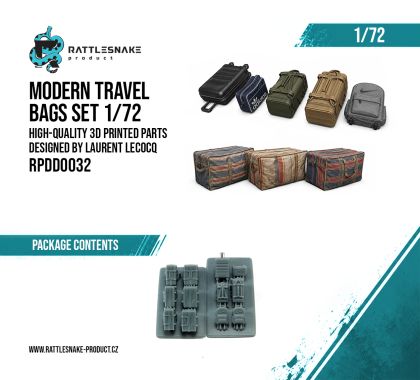
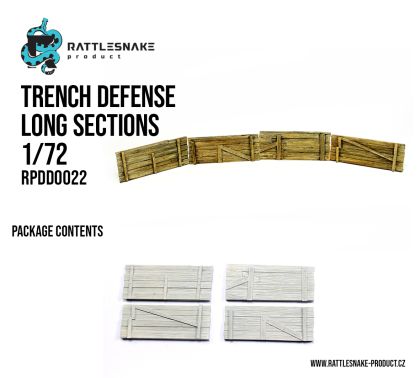
Two different settings are covered in 1:72: an airfield surface with chocks, steps and locking pads, and a civil or urban scene with Euro pallets, traffic cones, fillable barriers and plastic blockades. Beyond those there are wooden crates, drums and barrels, travel luggage, food containers, long runs of trench revetment and stencils for tyre tracks.
What the small scale makes possible, and where it runs into limits, is described in the text below.
In 1:72 the same area of base carries a far larger subject. Instead of one vehicle beside a wall you can manage a column on a road, a corner of an airfield with several machines, or a whole run of trench. The parts respect that: they come as series of identical pieces - twelve drums, ten cones, six pallets, a few metres of trench wall. Repetition is what creates reality in a small scale, because a real setting is full of the same objects lying in different positions.
One perfectly painted drum is lost in 1:72. Twelve drums, stacked and strewn against a wall, tell a story. Look for sets of several pieces rather than single items, and plan on some lying down, some standing and some loaded.
Contrast that looks natural in 1:35 is overcooked in 1:72. Aerial perspective drains saturation, so mix the base coat half a tone lighter and thin washes further than you are used to. Use dry-brushing very sparingly; on a millimetre edge it quickly builds into a white deposit.
Cones and barriers often have a contact area the size of a pinhead. It helps to glue them to a cocktail stick, paint them there, and only then snip them off and seat them with cyanoacrylate taken from a drop on a scrap of film. Tweezers with smooth jaws are more than useful for this work.
The small scale is also the easiest way to try scene-building without committing to a large project. Before you take on a big subject, build a stretch of road with two barriers on it - then look at 1:35 diorama supplies when you want to go into detail.