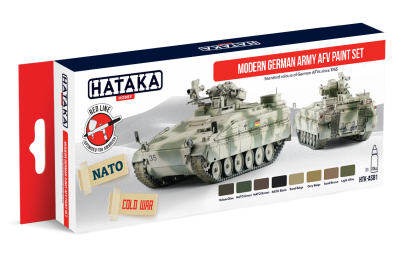
The eight-part set of the Red Line range covers the finishes of Bundeswehr equipment from the postwar Gelboliv through the three-color NATO pattern to the temporary overpaints for foreign missions. With each tone a link to the RAL or Federal Standard is given.
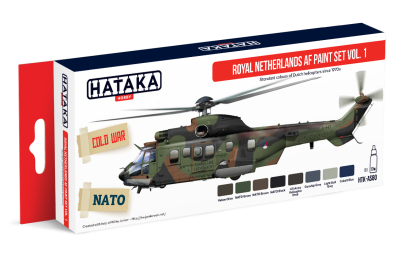
Eight shades of Dutch helicopters: the olive of the Alouette III, the alliance trio, the drab of the Apache gunships and the light gray of the NH90 type.
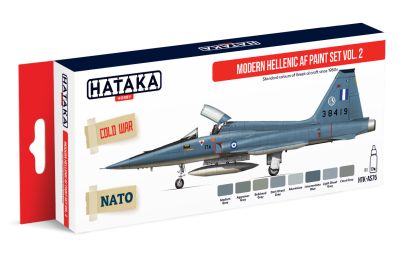
Eight gray-blue tones of Greek aircraft: the ghost scheme of the fighters, the Aegean blue of the older machines and today's gray of the transport aircraft.
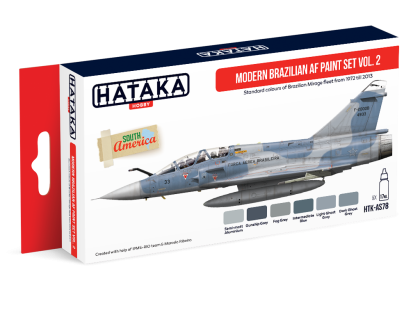
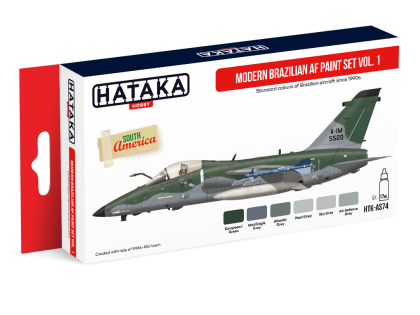
Six water-thinnable acrylic paints for the modern and the older camouflage schemes of the Brazilian Air Force, from the New Tactical Standard to the two-tone gray of the Tucano aircraft.
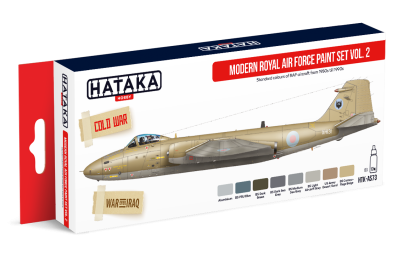
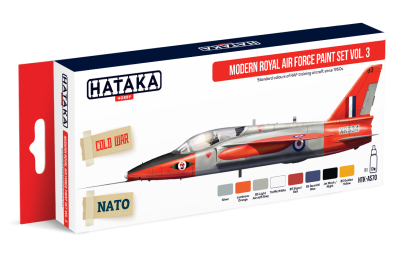
Eight shades of the combat aircraft of the Royal Air Force: the postwar silver, the classic British camouflage, the desert finish of 1991 and the hemp gray.
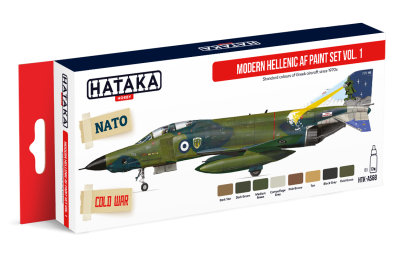
An eight-color lineup for Greek machines: the quartet of the Southeast Asia scheme, the pair of the taken-over Jordanian fighters and the wraparound Norm 83.
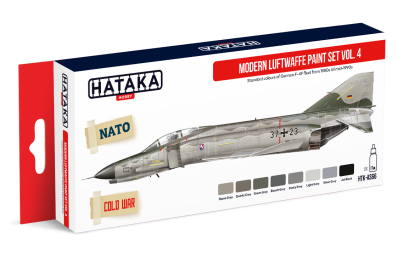
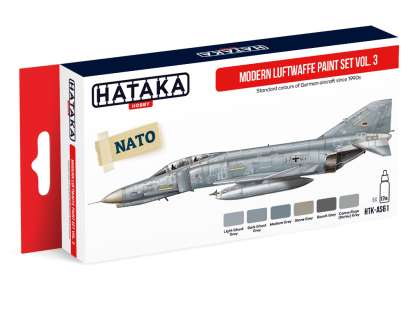
Eight shades of the Red Line range for the Norm 81A/B camouflage of the kind the German F-4F Phantoms carried. Nothing but grays to the RAL scale and a black for the radome.
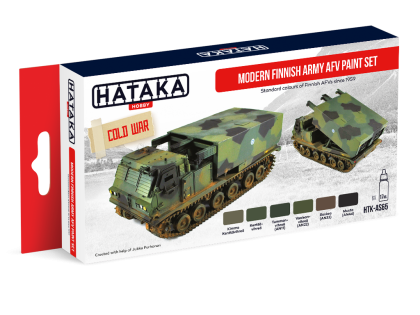
Six tones for Finnish ground equipment from the end of the fifties to the introduction of the angular pattern of 1981. It holds two generations of the uniform green and the whole quartet of colors of the later camouflage.
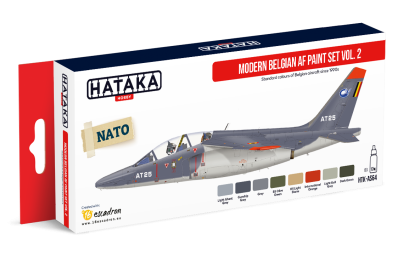
The continuation of the Belgian range aims at equipment after re-equipping. Three gray tones belong to the upgraded fighters and the training machines, a pair of earth colors to the search helicopters and the last two shades to the new transport machines.
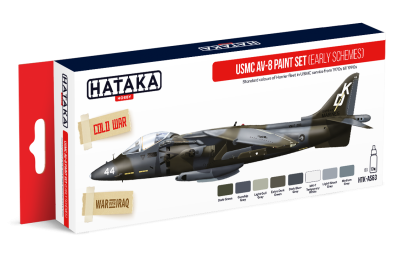
Paints for the vertical take-off machines of the Marine Corps from their introduction in 1971. It includes the original green and gray camouflage, the later ground pattern, the improvised winter finish and the shades of the desert deployment.
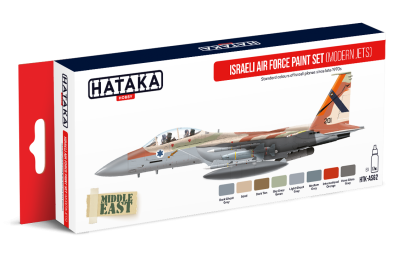
Eight tones for Israeli jets from the 1970s to today. It holds the gray air superiority scheme, the desert combination used from 1980 and the colors of the newest trainers and combat machines.
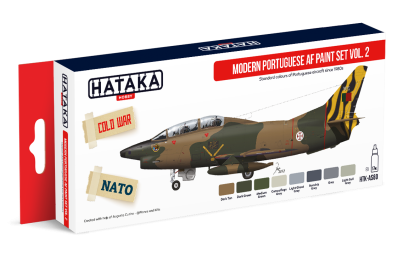
The second part of the Portuguese range captures more modern equipment. A trio of brown and green tones with a lower gray belongs to helicopters and ground-attack machines, three further grays cover the F-16 aircraft and the last tone the patrol and naval machines.
With your consent, we may use the information below for the following purposes or share it with selected partners. You can adjust your settings for individual purposes (types of processing) and confirm your choice with the "Save settings" button:
Always active
Necessary cookies
These are technical files that are necessary for the correct behavior of our website and all its functions. They are used, among other things, to store products in the shopping cart, display products on request, control filters, personal settings and also set consent to the use of cookies. Your consent is not required for these cookies and it is not possible to remove it.
Analytical cookies
They count website traffic and, by collecting anonymous statistics, enable the operator to better understand their visitors and thus constantly improve the site.
Marketing cookies
They collect information to better tailor advertising to your interests, both on and off this website.
To make it easier for you to browse the site, to offer you customized content or advertising, and to analyze traffic anonymously, we use cookies that we share with our partners for social media, advertising, and analytics. You can adjust their settings with the "Edit settings" link and you can change it at any time in the footer of the website. You can find more detailed information in our Policy on the protection of personal data and the use of cookies.