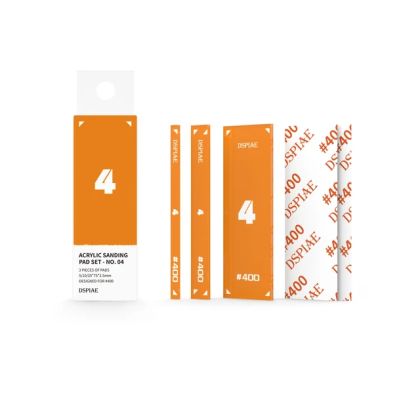
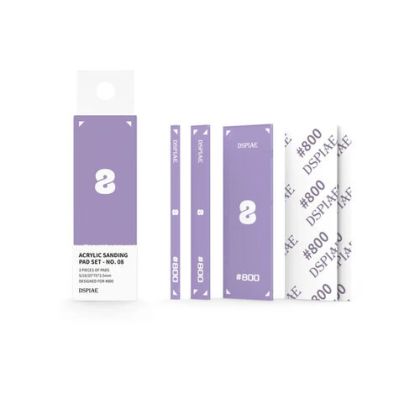
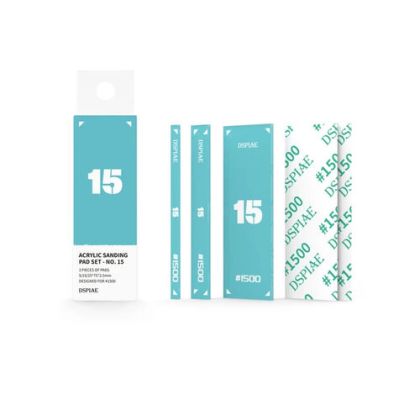
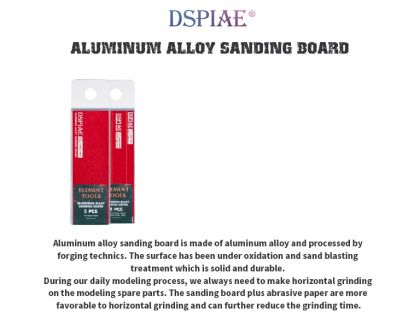
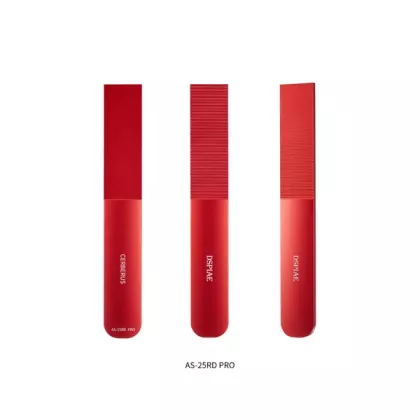
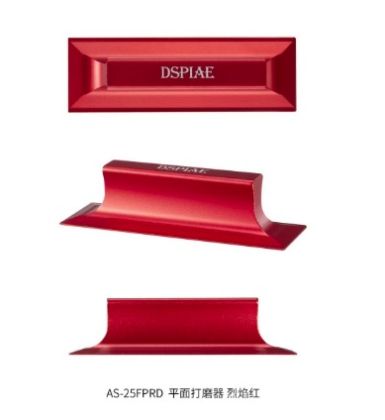
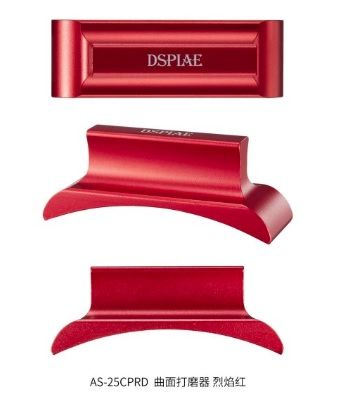
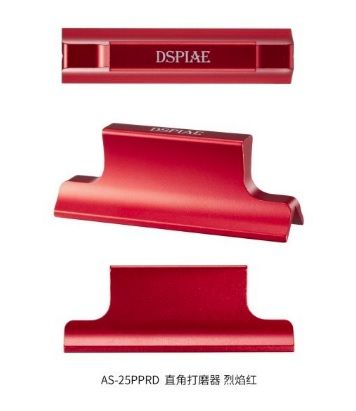
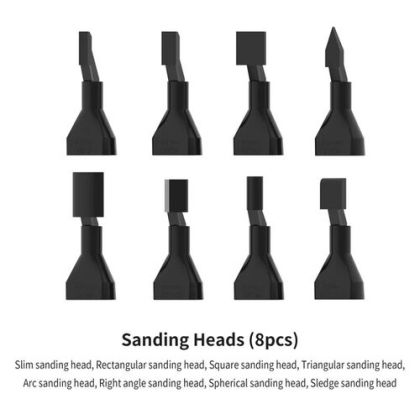
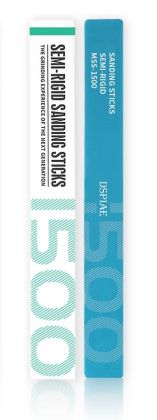
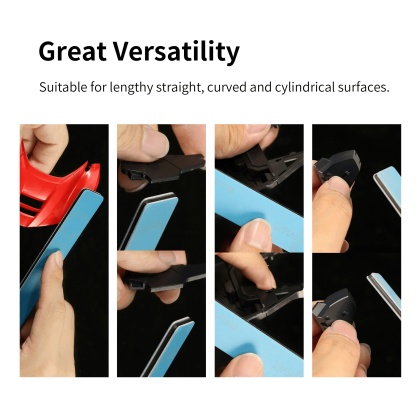
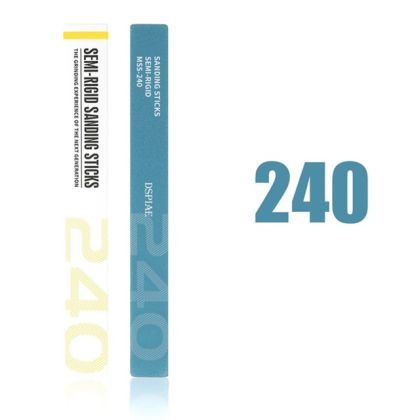
Where a surface has to stay genuinely flat, the abrasive needs a rigid backing — and that is what sanding sticks provide. They are tools with a solid core carrying bonded or clamped abrasive: aluminium and acrylic plates, semi-flexible sanding sticks, round sticks for internal curves, and sanding plates with replaceable segments. Unlike a sponge they do not follow the shape of the part, they hold a plane, which is why they are the right tool for levelling seams, truing mating faces and keeping an edge crisp.
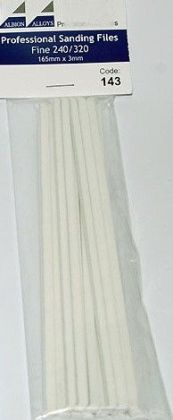 Brousítko úzké (3 mm) jemné (bílé)
0.60 €
Brousítko úzké (3 mm) jemné (bílé)
0.60 €
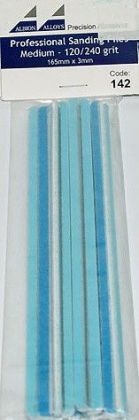 Brousítko úzké (3 mm) středně hrubé (modré)
0.48 €
Brousítko úzké (3 mm) středně hrubé (modré)
0.48 €
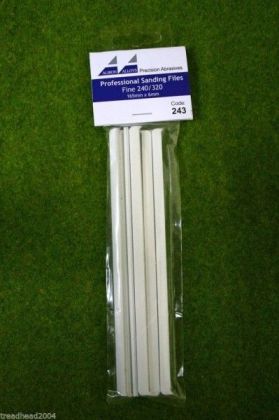 Brousítko (6 mm) jemné (bílé)
0.60 €
Brousítko (6 mm) jemné (bílé)
0.60 €
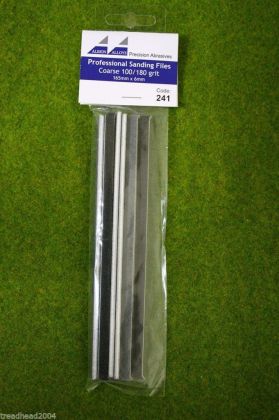 Brousítko (6 mm) hrubé (šedé)
0.60 €
Brousítko (6 mm) hrubé (šedé)
0.60 €
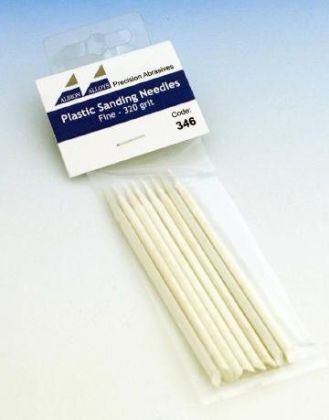 Albion Alloys - Brusné tyčinky (jemné bílé) - cena za kus !
0.88 €
Albion Alloys - Brusné tyčinky (jemné bílé) - cena za kus !
0.88 €
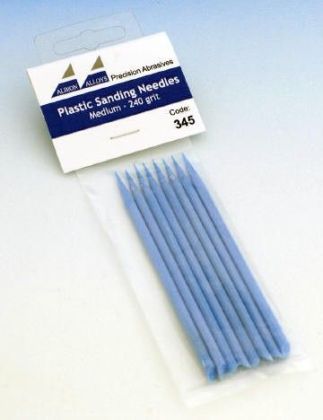 Albion Alloys - Brusné tyčinky (střední modré) - cena za kus !
0.88 €
Albion Alloys - Brusné tyčinky (střední modré) - cena za kus !
0.88 €
A fingertip is soft and uneven. Run abrasive paper down a flat panel with your fingers alone and the surface ripples, with a shallow hollow exactly where you pressed hardest. A stick spreads the load along its whole length and the panel stays flat. On the long seam between fuselage halves or at a wing root the difference shows immediately.
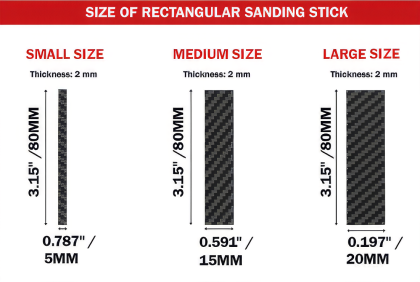
A flat body with abrasive bonded on, or with a paper that can be swapped. They suit larger flat areas, truing the mating faces of resin parts and squaring a cut edge. Replaceable segments last longer, because you change the abrasive and not the tool.
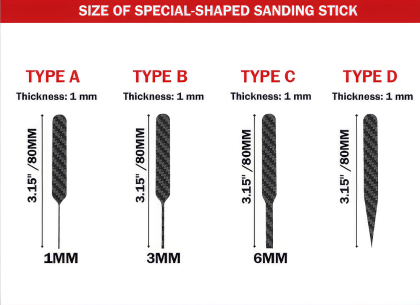
Long, narrow sticks in individual grits with a slight amount of give. They are a compromise between a hard plate and a sponge and belong to the most-used tools on a bench, because they reach between details while still holding direction.
A circular or profiled surface for sanding internal curves, recesses, leading edges and openings. A flat tool cannot enter a concave surface at all, which is exactly why this group exists.
A tool with abrasive filaments that behaves like a very fine abrasive with freedom of shape. It is used to key a surface, to clear paint residue out of recessed areas and to prepare metal.
Keep it flat and work in short strokes. Do not tilt it, or you remove material with one edge only and create a new step. On a long seam go the whole length rather than only where the filler was — the transition has to be continuous. Clean and inspect the surface after each grade in raking light, and if in doubt lay down a thin coat from surfacers and primers.
If a stick takes a panel line off with the filler, restore it with a tool from scribing and panel lines.